AAA Verano de Escándalo 2026: How Dominik Mysterio’s Betrayal Changed the Road to TripleManía
Dominik Mysterio did not simply abandon El Grande Americano at AAA Verano de Escándalo 2026. He turned a fragile alliance into a calculated trap, allowed Daga and Angel of Los Perros del Mal to finish his future TripleManía challenger, and then walked onto the entrance stage beside Dorian Roldán and Omos. The final image transformed what had appeared to be a temporary partnership into a much larger struggle over control of AAA, the Mega Championship and the authority of General Manager Rey Mysterio.
The result was clear: Daga and Angel defeated Dominik Mysterio and El Grande Americano after the AAA Mega Champion pulled away from a needed tag, left Americano outnumbered and watched Los Perros del Mal complete the pinfall. Dominik did not formally join Los Perros del Mal. Instead, he aligned himself with the separate power bloc known as El Ojo, represented on this night by Roldán and Omos. That distinction matters because it creates more than a simple two-sided feud. AAA now has multiple groups pursuing overlapping goals, with Dominik positioned as the champion who may benefit from all of the disorder.
Week 1 also produced a consequential championship change. La Hiedra and Laredo Kid defeated Lola Vice and Mr. Iguana to win the AAA World Mixed Tag Team Championship. La Hiedra pinned Vice after exploiting a moment of divided attention, bringing a long-running title pursuit to a successful conclusion and ending the champions’ reign that had begun on February 7, 2026.
The one-hour broadcast was compact, but it carried unusual narrative density. It opened with Dorian Roldán demanding that Omos be handed the vacant AAA Latin American Championship, moved through a mixed-tag title change, and ended with the Mega Champion revealing where his loyalties currently lie. Rather than treating Verano de Escándalo as a conventional single-night card, AAA presented the event as a three-week series taped at Arena San Marcos in Aguascalientes. Week 1 therefore functioned as both an event chapter and a launch point for the remaining broadcasts on August 1 and August 8.
Sponsored • Adults 18+ Only
Discover New Social Connections at Your Pace
Browse an adult-focused social platform designed for people who want to explore profiles, interests and possible conversations without unrealistic promises.
Availability, registration requirements and features vary by provider and location. Review the service terms before joining.
AAA Verano de Escándalo 2026 Week 1 at a Glance
- Promotion: Lucha Libre AAA Worldwide, presented in partnership with WWE
- Event: AAA Verano de Escándalo 2026, Week 1
- Date: Saturday, July 25, 2026
- Venue: Arena San Marcos
- Location: Aguascalientes, Aguascalientes, Mexico
- Broadcast format: Live Week 1 episode from a three-week event taping
- Primary English-language platform: WWE’s YouTube channel in the United States
- Spanish-language platform: Lucha Libre AAA’s YouTube channel
- Latin American television: FOX, subject to regional availability
- Main event: Dominik Mysterio and El Grande Americano vs. Daga and Angel
- Main-event winners: Daga and Angel of Los Perros del Mal
- Championship result: La Hiedra and Laredo Kid defeated Lola Vice and Mr. Iguana to win the AAA World Mixed Tag Team Championship
- Closing development: Dominik Mysterio stood with Dorian Roldán and Omos after abandoning El Grande Americano
- Research cutoff: July 26, 2026
Last updated: July 26, 2026, 9:00 p.m. CEST.
AAA Verano de Escándalo Week 1 Results
- AAA World Mixed Tag Team Championship: La Hiedra and Laredo Kid defeated Lola Vice and Mr. Iguana to win the titles. La Hiedra pinned Lola Vice.
- Tag team main event: Daga and Angel of Los Perros del Mal defeated Dominik Mysterio and El Grande Americano. Dominik withdrew from the match, leaving Americano to be pinned after a coordinated finish by the Perros.
The official WWE results page also recorded the major non-wrestling developments: Dorian Roldán and Omos threatened Rey Mysterio over the vacant AAA Latin American Championship, and Dominik later joined Roldán and Omos on the stage. The event did not include a Mega Championship defense, but almost everything in the main event was designed to influence the scheduled Dominik-versus-Americano title match at TripleManía 34.
Why the Dominant Story Was Dominik Mysterio’s Choice
Professional-wrestling betrayals are often built around a single visual: the refused tag, the walkout, the weapon strike or the handshake with a new ally. Verano de Escándalo used three of those images in quick succession. Dominik first offered El Grande Americano a metal plate that could be inserted into the mask, a shortcut consistent with the loaded-mask methods attached to the Americano character. Americano refused. Later, when he fought toward the corner, Dominik withdrew his hand. Finally, after Daga and Angel won, Dominik shook hands with Dorian Roldán while Omos stood beside them.
The sequence was effective because each image clarified a different part of Dominik’s motivation. The metal plate tested whether Americano would compromise himself. The refused tag demonstrated that Dominik had retained control over the partnership. The handshake revealed that he had an alternative source of power waiting beyond the match. The angle did not require a long speech because the hierarchy was visible: Roldán represented political influence, Omos represented physical force, and Dominik brought the company’s most important championship.
One possible interpretation is that Dominik’s earlier promise to “protect” the TripleManía match was never a promise to protect Americano. It was a promise to protect Dominik’s preferred conditions. He wanted the challenger healthy enough to reach the event, but not confident, united or fully prepared. By allowing Los Perros del Mal to damage Americano without personally delivering the decisive attack, Dominik gained plausible distance from the violence while still benefiting from it.
That is more sophisticated than a standard partner-turns-on-partner finish. Dominik and Americano were already scheduled opponents, so the audience did not need to be convinced that trust was permanent. The suspense came from whether two rivals could cooperate for one night. Dominik’s betrayal answered that question while preserving the larger singles match. Americano was beaten in a tag match rather than pinned by the champion. Dominik escaped without taking the fall. Daga and Angel received a meaningful win. El Ojo closed the show with increased influence. Nearly every involved act advanced.
How Verano de Escándalo Was Presented as a Three-Week Event
AAA announced that the 2026 edition of Verano de Escándalo would unfold across three consecutive Saturday broadcasts. The matches were recorded at Arena San Marcos on July 25, but the audience watching internationally will receive the event in chapters. Week 1 aired live on July 25. Week 2 is scheduled for August 1, and Week 3 for August 8.
This distinction is important for both historical records and viewer expectations. July 25 was the taping date for the full event material, but it was not the broadcast date for every match. A responsible results article should not present unaired outcomes as though viewers saw them on Week 1. It should also avoid confusing a future episode date with the date the match physically took place. In an era when promotions routinely combine live segments, taped episodes and later digital releases, those details affect how story chronology is understood.
The three-week structure gives AAA several advantages. It allows the promotion to present a major event identity without requiring a three-hour or four-hour single sitting. It creates a recurring Saturday destination. It also gives each championship program room to headline its own week: the Mixed Tag Team title on Week 1, the Cruiserweight title on Week 2 and the Reina de Reinas title on Week 3.
There is a tradeoff. Wrestling fans are accustomed to treating a named event as one complete card. Dividing the show can make the event feel less like a single climactic night and more like a themed television cycle. Spoilers from the taping may circulate before the later episodes air. The success of the format therefore depends on strong weekly endings. Week 1 met that requirement by ending on an alliance reveal that created immediate questions rather than merely promoting the next match.
Sponsored • Adults 18+ Only
Build a Virtual AI Companion Around You
Choose personality traits, conversation preferences and visual options to create a private AI character tailored to the kind of interaction you want.
AI companions are virtual characters and are not real people. Features, subscriptions and pricing may vary by provider.
The Road to Dominik Mysterio and El Grande Americano’s Uneasy Alliance
Americano earned the title opportunity at Rey de Reyes
El Grande Americano’s claim to the AAA Mega Championship was not created for Verano de Escándalo. It began with the 2026 Rey de Reyes tournament. On March 14, Americano defeated La Parka, “Original” El Grande Americano and Santos Escobar in the four-way final. The victory gave him the ceremonial sword associated with the tournament and a future Mega Championship opportunity.
The tournament result served several purposes. It elevated Americano beyond a comedy-adjacent masked act, connected him to an established AAA tradition and provided a sports-like route to the top title. It also kept several rivalries moving within one match. The “Original” Americano conflict remained active, Santos Escobar’s issues with El Hijo de Dr. Wagner Jr. affected the final, and Americano left with the most important prize.
Dominik Mysterio retained the Mega Championship against El Hijo del Vikingo on the same Week 1 Rey de Reyes broadcast. That created a clean eventual direction: the tournament winner against the surviving champion. The promotion did not rush directly to the singles match. Instead, it let both men move through separate and intersecting stories before announcing the TripleManía destination.
The Americano identity had already become more complicated
The El Grande Americano name carries an intentionally absurd history within WWE and AAA continuity. Chad Gable was later identified as the “Original” El Grande Americano, while the current masked Americano character is associated publicly with Ludwig Kaiser. WWE’s own profiles distinguish the two versions. By the middle of 2026, the current Americano had moved from impersonation and controversy into a presentation built around respect for lucha libre, support from Bravo Americano and Rayo Americano, and a stronger emotional connection with AAA crowds.
The May 30 Mask vs. Mask match at AAA Noche de Los Grandes was central to that transition. The current Americano defeated the “Original” Americano, leading to Chad Gable’s unmasking. That victory resolved the most direct identity conflict, but it also left Americano with a higher standard to meet. Once a character is presented as having earned acceptance, cheating becomes more consequential. That is why the refusal to use Dominik’s metal plate at Verano de Escándalo mattered. It showed that Americano would not sacrifice the legitimacy he had recently gained merely to win a tag match.
Los Perros del Mal targeted Americano
The revived Los Perros del Mal group emerged as a destructive faction featuring Daga, Angel, Berto, Bronco Nima and Karmen Petrovic. On the June 20 AAA broadcast, the group attacked El Grande Americano during his first appearance after Noche de Los Grandes. The choice of target immediately established Americano as a central enemy and positioned the faction against someone who had become increasingly popular in Mexico.
AAA then used subsequent episodes to escalate the threat. Los Perros interfered in matches, overwhelmed opponents and forced other wrestlers to decide whether to confront them. Dominik’s involvement began to look almost reasonable on the surface. If Los Perros injured Americano before TripleManía, Dominik would lose a major title match and the prestige attached to defeating the Rey de Reyes winner.
Dominik made the offer on July 11
On the July 11 episode, Dominik proposed that he and Americano watch each other’s backs against Los Perros del Mal. Later in the show, Dominik used a chair to help Americano during another Perros attack and proposed a tag match against two faction members. His stated motive was not friendship. He wanted to protect their planned championship encounter.
This was strong character logic because it did not require Dominik to become virtuous. A self-interested champion can still rescue a challenger when the challenger represents future value. The alliance was therefore credible without being trustworthy. The audience could accept the temporary cooperation while expecting a betrayal.
The July 18 brawl made the match unavoidable
The final week of build included Daga formally accepting the challenge and a broader confrontation involving Americano’s allies. The show ended with physical conflict among Los Perros, Dominik, Americano, Bravo and Rayo. By Verano de Escándalo, the issue was no longer whether the match would happen. The issue was which version of Dominik would appear: the champion protecting his investment, the opportunist waiting to weaken his challenger, or a member of a larger conspiracy.
The answer was all three. Dominik helped Americano enough to make the team competitive, encouraged a shortcut when the referee was down, then abandoned him at the precise moment when the damage would be greatest. That progression made the turn feel planned rather than impulsive.
Rey Mysterio, Dorian Roldán and Omos Open the Show with a Power Struggle
Verano de Escándalo began with Rey Mysterio addressing the Aguascalientes crowd. In his role as AAA General Manager, Rey spoke about expanding the promotion’s international reach and creating opportunities for AAA talent. Before he could complete his announcement, Dorian Roldán and Omos interrupted.
Roldán’s argument centered on the vacant AAA Latin American Championship. El Hijo del Vikingo had won the title from El Hijo de Dr. Wagner Jr. at Noche de Los Grandes, but a knee injury later forced him to vacate it. WWE’s July 11 results confirmed Rey’s decision to declare the championship vacant rather than transfer it to Omos. The vacancy led to a qualifying structure for a future multi-person title match.
Roldán rejected the idea that Omos should have to qualify. He blamed Rey for Vikingo’s injury by arguing that Rey had exposed him to unnecessary danger through appearances on WWE programming. The accusation was presented as a storyline claim, not an independently established medical conclusion. What is confirmed is that Vikingo underwent surgery and the title was vacated. Roldán used those facts to challenge Rey’s competence and demand an administrative shortcut.
Rey refused. Omos stepped toward him, and Roldán warned that there would be personal and professional consequences. The segment made the Latin American title more than a vacant championship. It became a test of whether Rey’s authority could survive pressure from a faction with both executive influence and overwhelming physical presence.
The later reveal of Dominik beside El Ojo intensified the family dimension without requiring an immediate father-versus-son match. Rey is trying to govern AAA through announced competition. Dominik has now aligned with people who want outcomes delivered through intimidation. The Mega Champion is therefore not merely feuding with his TripleManía challenger. He may be undermining the authority structure that guarantees the challenger’s opportunity.
One of the most promising aspects of the story is that the alliance has not yet been fully explained. Dominik could be seeking protection from Los Perros del Mal. He could be helping Roldán gain leverage over Rey. He could be using Omos as insurance against Americano. He could also believe that El Ojo offers a more stable power base than his existing allies. The broadcast confirmed the public alignment but did not confirm every term behind it. Future episodes need to preserve that distinction instead of retroactively claiming that every earlier action was obviously part of the same plan.
Sponsored • Adults 18+ Only
Explore Connections Built Around Shared Interests
Visit an adult social-discovery service that lets users browse available profiles and decide when they want to begin a conversation.
Profiles, features and registration requirements vary by provider. Connections and replies are not guaranteed.
La Hiedra and Laredo Kid Win the AAA World Mixed Tag Team Championship
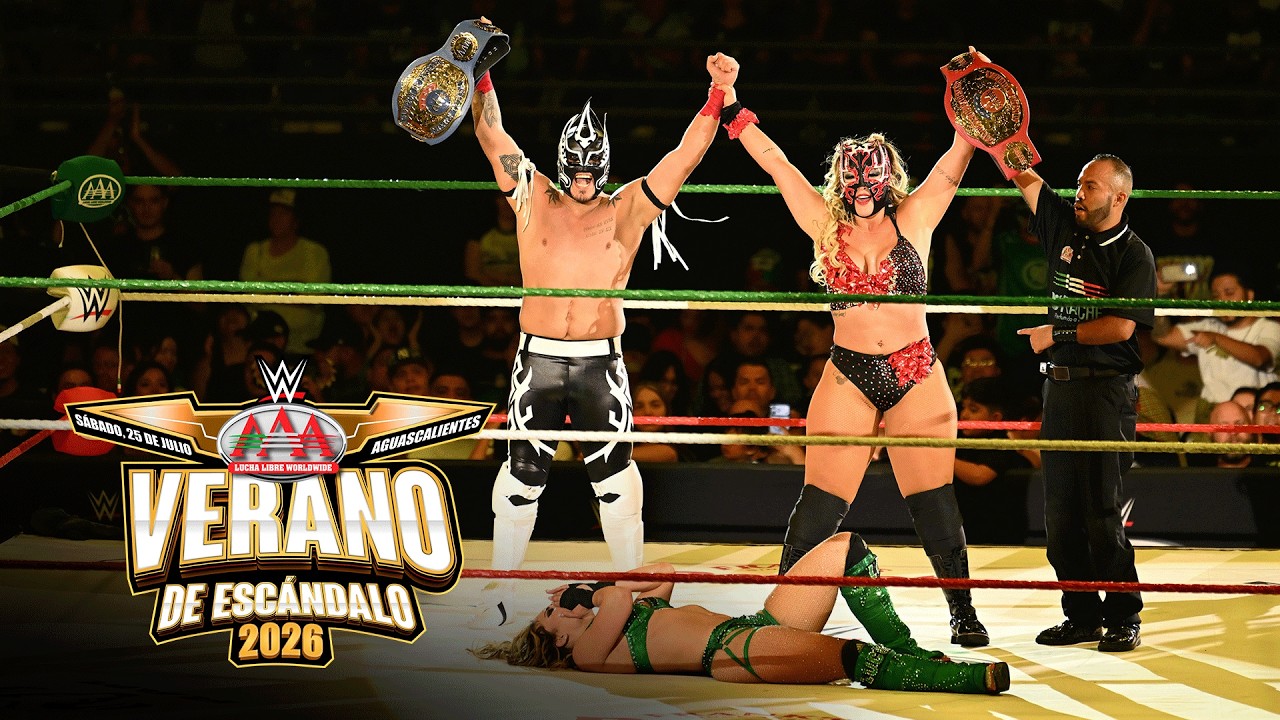
The first match of Week 1 delivered the event’s only championship decision, and it changed the division immediately. La Hiedra and Laredo Kid defeated Lola Vice and Mr. Iguana to become the new AAA World Mixed Tag Team Champions. La Hiedra scored the decisive pinfall on Vice after the champion was pulled into a moment of divided attention involving Laredo Kid.
The title change was not treated as a random upset. La Hiedra had remained connected to Mr. Iguana and the mixed-tag championship story through several combinations of partners and opponents. She and Laredo Kid earned this specific opportunity by defeating Faby Apache and Joaquin Wilde in a number-one-contender match. The Verano de Escándalo bout was also framed as a last opportunity for La Hiedra, increasing the pressure on the challenger and giving the finish a sense of finality.
Lola Vice and Mr. Iguana had won the titles on February 7, 2026, defeating Ethan Page and a substitute partner. Their pairing was unconventional but commercially useful. Vice brought NXT visibility, striking credibility and a serious competitive edge. Iguana brought one of AAA’s most recognizable personalities, an unpredictable movement style and the ever-present La Yezka prop. Together they could move between comedy, spectacle and legitimate championship matches without either performer abandoning the qualities that made the team distinctive.
The reign also illustrated the growing movement of talent between AAA and WWE platforms. The champions defended against opponents from different roster contexts, including appearances connected to WWE World and regular AAA programming. That crossover exposure helped make the Mixed Tag Team Championship a practical bridge title: a championship that could connect NXT wrestlers, established AAA acts and internationally recognizable personalities in the same program.
How the champions controlled the early tone
Laredo Kid and Mr. Iguana opened the match with a contrast in temperament. Laredo carried visible hostility, using shoves and slaps to challenge Iguana’s playful presentation. Iguana responded with speed, armdrags and quick directional changes. The exchange established that the challengers were not going to let the champions turn the match into a celebration of eccentricity. They wanted to strip away the humor and force Iguana into a direct contest.
When La Hiedra entered, the emotional focus shifted. Her history with Iguana hung over the match, but the active exchange with Lola Vice gave the bout its competitive center. La Hiedra used power and compact offense. Vice answered with kicks, rapid combinations and the kind of sudden strikes that can make a near-fall feel possible without a long setup.
The champions’ best sequences came when their different styles became coordinated. A double running attack sent the challengers to the floor, and the team repeatedly used momentum to prevent either challenger from settling into complete control. The structure showed why Vice and Iguana had remained champions for months: they did not wrestle alike, but their differences made it difficult for opponents to predict the next transition.
Laredo Kid gave the match its aerial danger
Laredo’s offense against Iguana raised the pace. A Michinoku Driver followed by a 450 splash produced one of the strongest near-falls. The kickout did more than extend the match. It established that Iguana could survive a sequence associated with a high-level singles wrestler, while Laredo’s argument with the referee displayed the frustration of a challenger who believed the title opportunity was slipping away.
The sequence also demonstrated how a mixed tag match can avoid feeling like two separate singles contests. Laredo’s offense affected Iguana’s ability to assist Vice. Iguana’s dive and ringside exchanges pulled Laredo away from La Hiedra. Each partner’s position changed the options available to the other. The best mixed-tag matches are not simply alternating pairings; they are contests in which all four people shape the finish.
The finish rewarded awareness rather than overwhelming dominance
Lola Vice appeared close to escaping with the titles when she rolled up La Hiedra. La Hiedra survived and pushed Vice toward the ropes. Vice then struck Laredo Kid off the apron with a backfist. That response was logical—Laredo had repeatedly interfered with the champions’ control—but it created the opening La Hiedra needed. She drove Vice down and secured the pin.
The finish protected the champions without weakening the challengers’ achievement. Vice was not decisively outclassed for the entire match. She lost because the challengers successfully made her account for both opponents. La Hiedra, meanwhile, won the most important exchange and completed the storyline promise attached to her last chance.
After the bell, Laredo Kid and La Hiedra celebrated while Mr. Iguana consoled Vice near the steps. That image avoided an immediate breakup angle. The former champions were disappointed but still connected. AAA can choose a rematch, move Vice toward another NXT priority or redirect Iguana into a different team without pretending that the partnership failed because of internal hostility.
Sponsored • Adults 18+ Only
Explore a More Social Way to Unwind
Discover an adult chat or social-conversation service where available features may include profiles, private messaging and interest-based interaction.
Services, eligibility, registration requirements and pricing vary. Review the provider’s terms before joining.
What the Mixed Tag Team Title Change Means
La Hiedra finally converted pursuit into possession
La Hiedra’s victory matters because repeated title challenges can either deepen a character’s determination or gradually define that character as someone who cannot win the important match. Verano de Escándalo chose the first route. By placing a last-chance condition around the opportunity and allowing La Hiedra to score the fall herself, AAA gave the victory more value than a partner securing the championship while she watched from the apron.
The title also gives La Hiedra a clearer platform beyond her existing faction associations and rivalries. She can remain a threatening personality while carrying a championship that naturally creates unusual match combinations. Her chemistry with Laredo Kid does not depend on identical styles. La Hiedra supplies force, confrontation and opportunism; Laredo supplies acceleration, range and aerial danger.
Laredo Kid adds established championship credibility
Laredo Kid entered the match with extensive AAA experience and a history in the company’s cruiserweight scene. WWE’s official profile emphasizes his roots in Real Fuerza Aérea and his reputation as one of the promotion’s prominent highflyers. He had also recently appeared at Saturday Night’s Main Event in Madison Square Garden, a fact Rey Mysterio highlighted during the event’s press-conference segment as an example of AAA talent receiving wider exposure.
Putting a championship on Laredo at this moment helps AAA connect domestic history with the company’s newer global distribution. He is not being introduced as a prospect who needs validation from outside Mexico. He is an established luchador receiving additional stages. That distinction is important in a partnership where audiences may otherwise assume WWE visibility is the only measure of importance.
Lola Vice can lose without losing her direction
Lola Vice entered Verano de Escándalo after losing the NXT Women’s Championship to Kendal Grey at the Great American Bash. Losing a second title in a relatively short span could be used to tell a story of instability, but the Week 1 finish did not portray Vice as collapsing. She was active in the decisive sequence, nearly won with a roll-up and was defeated after accounting for Laredo on the apron.
The next step will determine the value of that protection. If Vice immediately disappears from AAA without acknowledgment, the title change may feel like administrative clearing. If the loss becomes part of a character response—more aggression, a demand for a rematch or a renewed focus on NXT—it can become a useful turning point.
Mr. Iguana remains valuable beyond a championship
Mr. Iguana’s popularity does not depend entirely on holding a title. His recognizable presentation, La Yezka and crowd interaction make him adaptable. The more difficult booking question is how to preserve competitive credibility after a character becomes widely known for comedy and novelty. The Verano de Escándalo match helped by giving Iguana serious near-falls, sustained offense and a willingness to absorb Laredo Kid’s strongest attacks.
A rematch could be justified because Iguana was occupied with Laredo when Vice was pinned. A new partner could reopen the history with La Hiedra. A singles program could test whether his broader popularity transfers outside the mixed-tag format. AAA has options because the loss was decisive enough to establish new champions but not so destructive that the former champions need to be rebuilt from nothing.
Dominik Mysterio and El Grande Americano vs. Daga and Angel: Full Match Analysis
The main event was less about discovering which team had superior chemistry and more about measuring how long Dominik’s cooperation would remain useful to him. Daga and Angel represented an established faction with a numerical advantage waiting around ringside. Dominik and Americano represented a temporary arrangement between a champion and the challenger scheduled to face him at the biggest event of the year.
The opening phase made the alliance look functional
Dominik began against Daga. The champion played to the crowd and traded control with the Perros leader before bringing in Americano. Early double-team work between Dominik and Americano was deliberately smooth. They did not wrestle like strangers forced together five minutes before bell time. They isolated Daga, changed positions efficiently and showed enough timing to make the audience consider the possibility that their self-interest might hold the team together.
This was necessary for the betrayal to have impact. If the partners had argued from the opening lockup, the walkout would have felt inevitable rather than revealing. By allowing them to succeed first, the match created a credible alternative future: perhaps they could defeat Los Perros, acknowledge each other’s ability and carry a more complex respect into TripleManía.
Angel and Daga targeted separation
Angel’s interference from the apron shifted control by knocking Americano off balance. Once legal, Angel used his size and power to slow the masked wrestler. The Perros then worked over Dominik, taking turns and exploiting the referee’s attention when Americano tried to intervene.
The control period served two purposes. It showed the cohesion of Los Perros del Mal, and it allowed Dominik to occupy the sympathetic role temporarily. That is a useful trick in a match built around a heel champion. The audience can respond to a wrestler fighting toward a tag without forgetting that the same wrestler may betray his partner later.
Dominik eventually created separation with a DDT, leading to simultaneous tags. Americano’s entry accelerated the match. He attacked both opponents, used a double diving neckbreaker and generated a near-fall on Daga. The hot tag reinforced Americano’s position as the team’s emotional center. Dominik could attract attention, but Americano was the wrestler the crowd was encouraged to trust.
The Three Amigos sequence borrowed family symbolism
Dominik began the Three Amigos suplex sequence on Daga, then tagged Americano so they could complete the third suplex together. The moment combined Dominik’s inherited presentation with the temporary “Gringos Locos 2.0” label attached to the partnership. It was a playful use of history without claiming that the team had earned the legacy of the original Los Gringos Locos.
That difference matters. Art Barr and Eddie Guerrero’s team carries a specific place in lucha history, and the modern label was intentionally provocative. Dominik and Americano’s version was never presented as a long-term continuation built through years of teamwork. It was a storyline nickname for two outsiders whose uneasy partnership evoked the older image. The match wisely treated it as a motif rather than a full historical equivalence.
Americano followed with a superplex, and Dominik delivered a frog splash. Angel broke the pin by pushing Americano into Dominik. The near-fall was one of the match’s cleanest examples of how outside relationships shaped the action: even when Dominik and Americano coordinated successfully, Los Perros could use one partner as a weapon against the other.
The referee bump opened the door to competing forms of cheating
The match became more chaotic after the referee was knocked to the floor. Dominik hit Angel with a 619, and Americano followed with a flying headbutt, but no official was available to count. At that point, Dominik retrieved a metal plate and offered it to Americano.
The plate is a key object in the El Grande Americano mythology. It can be used to load the mask and turn a headbutt into a concealed weapon. Dominik’s offer was therefore not random. It asked Americano to return to the shortcut most associated with the character’s controversial origins.
Americano refused. From a match-psychology perspective, this was the moment that separated the partners even before the visible walkout. Dominik wanted control through rule-breaking. Americano wanted to win without surrendering the credibility he had gained. The refusal gave Dominik a character-based justification—however dishonest—for deciding that Americano was no longer useful on his terms.
Los Perros del Mal turned the match into a faction battle
Bronco Nima and Berto arrived to attack Dominik. Americano tried to help, but the numbers quickly overwhelmed the team. Bravo Americano and Rayo Americano then appeared with kendo sticks, expanding the match beyond the four legal participants.
The ringside sequence was chaotic but purposeful. Bronco’s power allowed him to dominate multiple opponents. Bravo used the environment for a high-risk dive. Karmen Petrovic appeared on the entrance ramp, maintaining the sense that Los Perros had layers of support. The commentary area was destroyed during the brawl, creating the most visually spectacular damage of the match without changing the legal result by itself.
Americano’s response was to dive onto Bronco, again positioning him as the partner willing to enter danger for the team. Dominik, by contrast, gradually removed himself from the crisis. The difference in commitment became visible before the final refused tag.
Sponsored • Adults 18+ Only
See Which Adult Social Offer Is Available
Continue to a location- or device-selected adult service that may involve social discovery, chat, dating or an AI-powered experience.
The destination may vary by device, region and provider. Registration, subscriptions or charges may apply.
The refused tag was the decisive move
After surviving Angel and Daga’s combination offense, Americano fought back with a double lariat and crawled toward his corner. Dominik extended his hand long enough to create hope, then pulled it away. He stepped down and left.
The timing was crueler than an immediate pre-match walkout. Americano had already invested energy in protecting Dominik from the faction attack. He had rejected the metal plate. He had reached the corner believing the match could still be saved. Dominik waited until that exact moment to clarify that the partnership had always been conditional.
Daga and Angel attacked from behind. Angel used a sit-out powerbomb, then positioned Americano for Daga’s diving double foot stomp. The combination produced the pinfall. Importantly, Daga and Angel did not win through a meaningless count-out after Dominik left. They physically completed the victory and gained credit as a functioning team.
The post-match handshake changed the meaning of the finish
If Dominik had simply walked to the back, the story would have been that he weakened a challenger. By stopping on the stage with Dorian Roldán and Omos, he revealed a broader alignment. The handshake suggested planning, shared interests or both.
The visual also prevented Los Perros del Mal from absorbing every heel role in the story. Daga and Angel won the match, but they were not shown celebrating with Dominik. El Ojo remained separate. That separation creates possible tension rather than a single oversized faction. Los Perros may resent Dominik for using their violence. El Ojo may see the Perros as disposable disruption. Americano and his allies now have enemies on more than one front.
Five Turning Points That Defined the Main Event
- Americano and Dominik’s early cooperation: Their smooth double-team offense made the alliance plausible enough that the later betrayal felt like a choice, not a foregone conclusion.
- Angel’s intervention against Americano: The apron involvement allowed Los Perros to isolate the masked challenger and demonstrated the advantage of established faction coordination.
- The combined Three Amigos: The sequence briefly united Dominik’s family symbolism with Americano’s lucha presentation and created the strongest image of what the team could have become.
- Americano’s refusal of the metal plate: The decision established a moral and tactical difference between the partners. Americano chose legitimacy; Dominik chose control.
- Dominik pulling away from the tag: The final refusal converted every earlier promise of protection into evidence of manipulation and directly enabled the finish.
Was the Main Event Overbooked?
The match included a referee bump, a concealed foreign object, interference from Bronco Nima and Berto, a rescue by Bravo and Rayo Americano, Karmen Petrovic’s presence, a broken commentary table, a partner walkout and a post-match alliance reveal. By ordinary standards, that is a large amount of machinery for one television main event.
Some viewers will reasonably consider the closing stretch overbooked. The volume of bodies at ringside made it difficult for any single move to remain important for long. The referee’s absence delayed a possible finish. Multiple rescue attempts created temporary solutions rather than lasting control. Fans who prefer a cleaner tag match may feel Daga and Angel’s victory was buried beneath the angle.
However, the chaos was connected to existing factions rather than random cameos. Every participant belonged to the story: Bronco, Berto and Karmen represented Los Perros; Bravo and Rayo represented Americano’s support; Dominik’s metal plate connected to the Americano identity; Omos and Roldán connected the finish to the opening segment. The match was designed as a collision of alliances, not a pure athletic contest.
The better criticism concerns emphasis. Daga and Angel were the official winners, but the broadcast’s final image belonged to Dominik and El Ojo. Future episodes need to let Los Perros capitalize on the win. If they are treated only as tools in Dominik’s plan, the faction’s threat will diminish. If they use the victory to claim influence over the Mega Championship picture or demand something from Dominik, the crowded finish will have produced multiple consequences.
Sponsored • Adults 18+ Only
Shape a Virtual Companion to Match Your Preferences
Customize the appearance, personality and conversation style of a virtual AI companion and explore the provider’s private interactive features.
AI companions are virtual characters, not real people. Features, subscriptions and pricing vary by provider.
What the Betrayal Means for Dominik Mysterio
Dominik Mysterio entered Verano de Escándalo as AAA Mega Champion and left with more apparent protection than he had at the start of the night. That is the most practical consequence of the angle. Before the show, he had an upcoming challenger, a hostile faction threatening that challenger and a father serving as General Manager. After the show, he had publicly aligned with a group capable of pressuring the General Manager and physically overwhelming most of the roster.
The alliance also returns Dominik to a familiar character strength: surviving through relationships. His best work rarely depends on presenting him as the strongest wrestler in the room. It depends on his ability to identify who can protect him, whom he can manipulate and when he should leave someone else to absorb the damage. Standing beside Omos is an exaggerated visual expression of that instinct.
At the same time, the booking creates a risk. Dominik had shown flashes of independence in AAA, including moments when he fought through interference and retained the Mega Championship against El Hijo del Vikingo. If El Ojo now solves every problem for him, the champion could lose some of the credibility those performances established. The most effective version of the story will allow Dominik to remain crafty and capable while using Omos and Roldán selectively.
The finish may also indicate that Dominik views the TripleManía match as politically dangerous, not merely athletically difficult. Americano won Rey de Reyes, defeated the “Original” Americano in a Mask vs. Mask match and built visible support in Mexico. A champion can prepare for an opponent’s offense; it is harder to prepare for an opponent who is becoming a symbol. Aligning with Roldán allows Dominik to contest the environment around the match as well as the match itself.
What the Loss Means for El Grande Americano
El Grande Americano lost the main event, but the booking appears designed to increase sympathy rather than reduce his status. He fought for the team, refused the metal plate, survived interference, received help from Bravo and Rayo, and was defeated only after his own partner abandoned him. The pinfall gives him a grievance without undermining the legitimacy of his TripleManía title opportunity.
More importantly, the match clarified his current character. Earlier versions of the Americano concept relied on concealed metal and exaggerated claims of lucha superiority. The current presentation has gradually moved toward respect, belonging and earned acceptance. Refusing the plate was a simple action that showed the transformation in real time.
That choice creates a stronger challenger for TripleManía. Americano is no longer merely the tournament winner who happens to have a title shot. He is the wrestler who rejected the champion’s method and paid for it. A championship match can now be framed around competing ideas of survival: Dominik believes power comes from controlling allies and shortcuts; Americano believes he has to win without returning to the tactics that once defined the mask.
The danger is excessive victimization. A sympathetic challenger still needs victories. If Americano spends every week being attacked by Los Perros, El Ojo or both, the audience may stop viewing him as capable of winning the Mega Championship. AAA should let him respond strategically—perhaps by defeating a member of El Ojo, forcing conditions on the TripleManía match or organizing his allies more effectively.
Sponsored • Adults 18+ Only
Find a Social Platform That Suits Your Style
Explore an adult-oriented discovery service with options that may include browsing profiles, matching by interests and starting conversations when both users choose to engage.
No response or connection is guaranteed. Features and eligibility depend on the provider and your region.
Why Los Perros del Mal Needed the Victory
The Los Perros del Mal name carries historical weight. The original faction was closely associated with Perro Aguayo Jr. and became one of the defining rudo groups of its era. Any revival faces a difficult balance: use the name too lightly and it becomes borrowed branding; lean too heavily on nostalgia and the current members struggle to establish their own identity.
The 2026 version has been built around Daga, Angel, Berto, Bronco Nima and Karmen Petrovic. The group’s presentation emphasizes intimidation, numbers and the ability to interrupt normal competition. Verano de Escándalo gave Daga and Angel a main-event victory over the Mega Champion’s team. Even with Dominik’s betrayal, that result is more valuable than another attack after a bell.
Daga’s role is especially important. He is positioned as a leader who can speak for the group and finish matches. Angel brings WWE name recognition, family lineage and enough size to change the physical tone of exchanges. Berto and Bronco provide additional force, while Karmen’s presence broadens the faction’s reach across roster lines.
The faction now needs a goal beyond generalized destruction. Attacking Americano created heat. Winning the main event created status. The next stage should define what Los Perros want: championship access, control of AAA, revenge against specific officials or proof that they—not El Ojo—are the promotion’s dominant group. Without a concrete objective, repeated interference can become atmosphere rather than story.
El Ojo’s Expanding Influence
El Ojo entered the story through Dorian Roldán’s political authority, Omos’ size and El Hijo del Vikingo’s increasingly ruthless presentation. Vikingo’s injury altered that configuration. The Latin American Championship became vacant, and Roldán attempted to convert the disruption into an immediate title award for Omos.
Rey Mysterio’s refusal forced El Ojo to adapt. Dominik’s alliance is therefore a major acquisition. The group now has a reigning world champion even while Omos pursues the Latin American title. That creates the possibility of controlling multiple levels of AAA’s championship structure.
It also creates internal questions. Dominik is not naturally subordinate. Roldán is accustomed to presenting himself as the decision-maker. Omos is being positioned as someone who should not have to qualify. If Dominik expects El Ojo to serve him rather than the reverse, the alliance could become unstable.
For now, the ambiguity helps. A faction is often most interesting before every relationship has been explained. The audience can see the shared interests: weakening Rey, gaining championships and influencing major events. The exact hierarchy can emerge through conflict.
Rey Mysterio’s Role as AAA General Manager
Rey Mysterio’s authority-figure role is unusual because his identity is built on being an active legendary luchador rather than a detached executive. He can credibly speak about AAA’s international ambitions, represent the promotion in major announcements and still make the threat of physical confrontation feel meaningful.
At Verano de Escándalo, Rey’s strongest moment was refusing Roldán’s demand. He did not hand Omos a championship and did not retreat when threatened. That established a governing principle: titles are supposed to be decided through competition.
The role will become less effective if Rey repeatedly announces matches but cannot enforce them. Dominik’s closing alliance was therefore a direct challenge to his credibility. His own son is now standing with the people who tried to force an administrative title decision. Rey must respond in a way that protects the announced process without simply using unlimited authority to punish everyone he dislikes.
A stipulation for TripleManía, a rule controlling seconds at ringside or a qualification requirement for El Ojo would fit that approach. The key is that Rey should appear principled rather than omnipotent. A babyface authority figure is most compelling when the rules create difficult choices for allies as well as enemies.
The AAA Mega Championship Context
The AAA Mega Championship is the promotion’s top singles title, which makes every surrounding alliance more consequential. Dominik Mysterio’s reign places a WWE-developed star at the center of AAA’s biggest programs while allowing him to work with established AAA names and crossover talent.
Dominik’s path through 2026 included a successful No Disqualification defense against El Hijo del Vikingo at Rey de Reyes. That match carried major stipulations: Dominik would have been forced to leave AAA had he lost, while Vikingo was barred from challenging Dominik again after defeat. The champion survived interference and retained, giving him a significant accomplishment before the Americano program fully developed.
Americano earned his shot through the Rey de Reyes tournament rather than an informal challenge. That difference gives the TripleManía match institutional legitimacy. Roldán and Omos can threaten Rey, and Dominik can manipulate the challenger, but the title opportunity exists because Americano won a recognized competition.
The booking question is whether the championship match remains one-on-one. As of the research cutoff, Dominik Mysterio versus El Grande Americano is the announced direction for TripleManía 34. The Verano de Escándalo finish could justify additional conditions or participants, but those possibilities remain analysis rather than confirmation.
A one-on-one match would keep the moral conflict clear. A multi-person match could incorporate Daga, Omos or another contender but would dilute the payoff to Americano’s tournament win. The strongest route may be to preserve the singles match while using the surrounding factions to establish a stipulation that limits or redirects interference.
TripleManía 34 Raises the Stakes Beyond One Match
TripleManía 34 is scheduled as the first two-night TripleManía. WWE announced Night 1 for Friday, September 11, 2026, at the Luxor Hotel and Casino in Las Vegas, and Night 2 for Sunday, September 13, at Arena CDMX in Mexico City. The format expands AAA’s flagship event across the United States and Mexico.
That geographic structure gives Dominik versus Americano additional symbolism. Dominik is a U.S.-born wrestler with deep Mexican-American wrestling lineage. Americano is a deliberately complicated outsider character who has sought acceptance within lucha culture. The match can play differently depending on which night hosts it, but the announced event itself already reflects AAA’s attempt to operate across borders.
Rey Mysterio’s press-conference comments during Verano de Escándalo emphasized opportunities for AAA wrestlers on larger platforms. He cited Laredo Kid’s Madison Square Garden appearance and Mr. Iguana’s San Diego Comic-Con exposure. Those examples fit the broader strategy behind a two-country TripleManía weekend.
The danger is that global expansion can make AAA feel like an accessory to WWE rather than a promotion with its own priorities. The use of AAA traditions such as Rey de Reyes, the Mega Championship and established luchadores helps counter that risk. Verano de Escándalo was strongest when crossover talent entered stories that depended on AAA history rather than replacing it.
Sponsored • Adults 18+ Only
Create an AI Character for Private Conversation
Personalize a virtual AI companion’s appearance, interests and conversational style, then explore the available interactive features privately.
The companion is an artificial-intelligence character, not a human. Provider features, costs and content controls may differ.
AAA’s WWE Partnership and the Importance of Free Distribution
WWE announced its acquisition of AAA in partnership with the Mexico-based holding company Fillip in April 2025. By 2026, the relationship was visible in roster movement, production, official results coverage and distribution. Verano de Escándalo was available in English on WWE’s YouTube channel and in Spanish through AAA’s channel, while FOX carried AAA programming in Latin America according to regional availability.
Free YouTube distribution lowers the barrier for viewers who do not regularly follow Mexican wrestling. It also allows AAA to present separate language feeds rather than expecting one commentary team to serve every audience. That matters for a show in which storyline details—Roldán’s accusation, Dominik’s promise and Rey’s announcements—are as important as the matches.
The strategy can increase reach, but view counts should not be treated as equivalent to television ratings, paid streaming subscriptions or ticket sales. Each metric measures a different behavior. A free video view may represent a full episode, a brief visit or repeat playback. Unless AAA or WWE publishes a defined methodology, comparisons with gates, paid attendance or subscription figures should be avoided.
Week 1 also showed how YouTube packaging influences article search intent. The supplied Spanish-language upload was titled as the full AAA Verano de Escándalo broadcast for July 25, 2026. Viewers searching for “full match” may actually find a complete episode containing two matches and multiple segments. A useful article should clarify that distinction instead of describing the upload as a single uninterrupted match.
Event Production, Commentary and Crowd Response
Arena San Marcos provided a compact environment in which crowd noise remained present throughout the major exchanges. Reports of the broadcast noted strong reactions for Rey Mysterio, visible hostility toward Dorian Roldán and repeated “This is wrestling” chants during the main event. Those specific reactions were audible or reported in detailed event coverage; broader claims about universal fan opinion would be unjustified.
The production prioritized story recaps and short backstage segments. A pre-match package explained the mixed-tag rivalry. Dominik and Americano’s backstage conversation established the trust question. Damián 666’s brief appearance in a Perros del Mal shirt added historical texture. Rey’s press-conference segment allowed announcements without requiring another long in-ring promo.
The one-hour structure kept the show moving. Neither match had to compete with six unrelated bouts. The limitation was that several developments arrived close together. The Mixed Tag Team title change had little time to breathe before the broadcast moved into the next announcement and main event. A longer post-match interview with the new champions could have strengthened the importance of the title.
Commentary’s primary task was to distinguish faction relationships and explain why Dominik’s behavior mattered. The closing angle succeeded visually even for viewers who did not follow every line, but the program’s full value depended on understanding that El Ojo and Los Perros del Mal are separate groups.
Critical Assessment of Week 1
What worked best: The main event had a clear trust question, the mixed-tag match delivered a decisive title change, and the opening and closing segments connected. Dominik’s alignment with El Ojo was not an isolated surprise; it answered the threat introduced at the start of the show.
What could have been stronger: The main-event interference was extensive, and the new Mixed Tag Team Champions received limited celebration time. Daga and Angel’s victory risks being remembered only as the mechanism for Dominik’s turn unless Los Perros capitalize later.
Overall assessment: Week 1 was more successful as serialized television than as a standalone supercard. It offered two meaningful results and advanced several programs without filler. Fans seeking a long event with a deep undercard may find the one-hour chapter small. Fans seeking concentrated storyline movement received one of AAA’s most consequential episodes of the summer.
Historical Parallels: Betrayals Before Major Title Matches
The basic idea of rivals teaming before a championship match is a durable wrestling device. It forces opponents to reveal whether shared danger can temporarily outweigh competition. The most effective versions do not pretend the rivalry has disappeared. They make every tag and save feel like a negotiation.
Verano de Escándalo’s version stood out because the champion initiated the alliance. Dominik argued that he needed to protect the future match from Los Perros del Mal. That gave him a rational public motive and allowed the eventual betrayal to expose how narrowly he defined “protection.”
The angle also resembles faction-era stories in which a champion does not need to join every heel group. Dominik benefited from Los Perros’ attack while aligning with El Ojo. Historically, promotions sometimes flatten multiple villains into one alliance for convenience. AAA instead preserved competing centers of power. That creates more future combinations but requires careful explanation.
Americano’s refusal of the plate added a classic temptation element. The challenger could have used the same shortcut associated with his identity and perhaps won. He refused, lost and gained moral clarity. Such moments work when the object has established meaning. A random weapon would not have carried the same history.
How Week 1 Fits the Verano de Escándalo Tradition
AAA has used the Verano de Escándalo name since the late 1990s, though the scheduling and prominence of individual editions have varied. The Spanish title translates as “Summer of Scandal,” making betrayal, interference and shifting alliances natural thematic material.
The 2026 edition is historically notable for its placement in the first full cycle after WWE’s acquisition arrangement took effect and for the three-week presentation. It is also part of the build toward the first two-night TripleManía. Those structural facts may ultimately be more important to the event’s legacy than any isolated match rating.
Week 1 used the event name literally without relying on a championship change in the main event. The scandal was Dominik’s decision. That gave the title a narrative function instead of treating it only as branding.
What Is Confirmed for Weeks 2 and 3
AAA announced Rey Fénix versus Mini Vikingo for the AAA World Cruiserweight Championship as the central Week 2 title match. Mini Vikingo earned the opportunity by defeating Dragon Lee and Jack Cartwheel in a three-way match on July 11. Additional announced Week 2 material includes a Latin American Championship qualifier involving Lince Dorado, La Parka and Mecha Wolf, plus a tag match involving El Hijo de Dr. Wagner Jr. and Galeno.
Week 3 is scheduled to feature Flammer defending the AAA Reina de Reinas Championship against La Catalina and Lady Shani. Another announced match places Damian Priest, Omos and Galeno in a qualifier connected to the vacant Latin American Championship.
Because the matches were taped on July 25 but had not aired by the July 26 research cutoff, this article does not publish unaired results. Announced cards can also change before broadcast. Readers should consult complete AAA results and the official promotion listings for the final televised lineups.
A Booking Scorecard for Every Major Week 1 Story
The Mega Championship program: advanced decisively
The central championship program entered the show with a familiar question: could scheduled opponents cooperate against a common enemy? It left with a more important question: can the challenger even reach the title match under fair conditions? That is meaningful escalation. Dominik did not need to pin Americano or attack him with the belt. The champion changed the balance of power around the match.
The story also preserved the value of Americano’s tournament victory. His TripleManía opportunity was earned in March, and nothing at Verano de Escándalo invalidated it. The loss created adversity rather than a new number-one contender. That distinction prevents the summer build from feeling like AAA is continually restarting its top-title direction.
Los Perros del Mal: advanced, but follow-up is essential
Daga and Angel won a televised main event against a team containing the AAA Mega Champion and the Rey de Reyes winner. On paper, that is a major result. In presentation, however, Dominik’s betrayal and alliance reveal overshadowed their celebration. The faction gained credibility from the pinfall but still needs to demonstrate that it was not simply a hired weapon in someone else’s story.
A clear follow-up could involve Daga demanding recognition, Los Perros targeting another championship or the faction confronting El Ojo over who truly controlled the outcome. Without that next step, fans may remember the turn and forget the winners.
The Mixed Tag Team division: refreshed at the right moment
Lola Vice and Mr. Iguana had held the titles long enough to establish the partnership. La Hiedra had challenged through different combinations and needed either a victory or a new direction. The title change solved both issues. It gave the challengers a concrete payoff and freed the former champions for separate developments.
The division’s next challenge is depth. Mixed-tag championships require enough credible pairings to avoid endless rematches. AAA’s access to NXT and WWE talent can help, but the title should continue to produce combinations rooted in AAA stories rather than depending only on surprise crossover names.
The Latin American Championship: elevated without a match
Vacant titles can become administrative objects discussed more than contested. The confrontation among Rey, Roldán and Omos prevented that. The championship now represents competing ideas: Rey insists on qualification, while Roldán claims Omos’ status should make competition unnecessary.
The upcoming qualifiers must justify the attention. If the process is confusing, repeatedly interrupted or changed without explanation, Rey’s refusal will lose force. If the qualifiers produce clear winners and distinct matchups, the title can emerge from the vacancy with greater importance.
Rey Mysterio’s authority story: strengthened by restraint
Rey did not respond to a threat by immediately booking himself in a match, stripping Dominik of the Mega Championship or handing out arbitrary suspensions. He said no and allowed the announced competitive process to continue. That restraint made his authority feel less like a device for instant revenge.
The next response must be similarly measured. The audience should understand that Rey can enforce rules, but opponents should still be able to challenge him through legal competition and political pressure. An authority story becomes tedious when every week ends with a new decree. Week 1 avoided that problem.
Sponsored • Adults 18+ Only
Choose a New Space for Adult Conversation
Explore an adult chat service that may offer profiles, messaging and interest-based social features for eligible users.
Availability, moderation, registration and pricing vary. No conversation or response is guaranteed.
Four Details That Could Decide Whether the Story Peaks at TripleManía
1. The alliance needs defined limits
Dominik standing with El Ojo was an effective ending because it was concise. The next episodes need to define what the alliance allows. Does Omos accompany Dominik? Does Roldán negotiate on his behalf? Is El Hijo del Vikingo still part of the group while injured? Clear limits make later betrayals or failures meaningful.
2. Americano needs an active victory
Sympathy alone will not sell the idea that Americano can defeat the Mega Champion. Before TripleManía, he should win a match that addresses the new threat. Defeating a Perros member would avenge Week 1. Defeating an El Ojo representative would show that Dominik’s protection is not absolute. The opponent matters less than the challenger demonstrating agency.
3. Daga and Angel need ownership of their win
The Perros should speak as the team that won, not as bystanders to Dominik’s decision. They can accurately claim that Americano could not survive their finish and that Dominik was wise to leave. Such a promo would turn the same event into evidence for their power rather than allowing El Ojo to control the narrative.
4. The title match needs a reason interference will not simply decide it
Once a champion aligns with Omos and Roldán, viewers naturally expect outside involvement. AAA does not need to promise a perfectly clean match, but it should create a rule, ally or consequence that makes the outcome uncertain. Otherwise the audience may assume the TripleManía defense will repeat Week 1 on a larger stage.
A cage, a ringside ban, a special enforcer or a championship-loss penalty for interference are possible mechanisms, not confirmed plans. The essential point is competitive tension. The challenger must appear to have a route to victory even when the champion controls more resources.
The Principal Wrestlers and What Each Brought to Week 1
Dominik Mysterio: the champion who treats loyalty as currency
Dominik’s value to the story comes from the gap between his public confidence and his constant need to manage risk. WWE’s official profile lists him as a two-time Intercontinental Champion, two-time NXT North American Champion and AAA Mega Champion. Those accomplishments give him more authority than the inexperienced son character of his early career, but his tactics still depend on timing and relationships.
At Verano de Escándalo, Dominik did not wrestle as someone afraid to engage. He started the main event, took punishment from Daga and Angel, contributed to the team’s most coordinated sequences and delivered the 619 and frog splash. The betrayal therefore cannot be reduced to cowardice. It was a strategic decision made after he had demonstrated that the team could win. That makes him more frustrating and more effective as a villain: he abandoned Americano not because cooperation was impossible, but because control mattered more than victory.
El Grande Americano: a masked identity seeking legitimacy
The current El Grande Americano is associated publicly with Ludwig Kaiser, while WWE recognizes Chad Gable as the “Original” version who was unmasked after losing their Mask vs. Mask match. The character began as deliberate cultural parody and rule-breaking. By mid-2026, the story had evolved into a question of whether the current Americano could earn acceptance through commitment rather than imitation.
His Rey de Reyes victory and Noche de Los Grandes performance gave that evolution competitive weight. Verano de Escándalo added a moral test. Refusing the metal plate was not the safest decision, but it showed that the character understood why the shortcut had become unacceptable. Americano’s future depends on continuing that progression without removing all eccentricity. A completely conventional heroic wrestler would lose the unusual energy that made the identity notable in the first place.
Daga: the Perros leader who needed a result
Daga’s role requires more than delivering threats. A faction leader must demonstrate that the group’s strategy works in sanctioned matches. His main-event performance combined control, opportunism and the decisive diving stomp. The victory gives him evidence when he claims Los Perros del Mal can affect AAA’s championship picture.
He also serves as the link between the revived name and the group’s current ambitions. Damián 666’s appearance added a visual connection to the original Perros tradition, but Daga must lead the 2026 version rather than rely on historic figures to supply importance. The Week 1 win was a useful step toward that independence.
Angel: power, lineage and crossover recognition
Angel is a third-generation member of the Garza wrestling family and a former NXT Cruiserweight Champion. In the main event, his size and explosive offense contrasted with Daga’s sharper leadership role. He repeatedly disrupted Americano and produced several of the match’s strongest near-falls.
His presence also strengthens the faction’s crossover identity. Viewers who know him from WWE television can recognize him immediately, while his family background fits naturally within Mexican wrestling. AAA should avoid using that familiarity as a substitute for character development. Week 1 helped by presenting Angel as an active finisher rather than a famous supporting member.
La Hiedra: persistence with consequences
La Hiedra’s title win was the clearest resolution on the episode. She entered under a last-chance framing and left as champion. Her offense against Lola Vice emphasized physical impact rather than attempting to match Laredo Kid’s aerial range.
The pinfall matters for her individual standing. Mixed-tag teams can sometimes position the woman as an accessory to a male partner’s larger story. Verano de Escándalo did the opposite at the finish: Laredo’s presence created the opening, but La Hiedra recognized it, executed the decisive move and won the championship herself.
Laredo Kid: speed with an increasingly hostile edge
Laredo Kid’s official WWE profile highlights his history with AAA’s Real Fuerza Aérea and his international reputation as a highflyer. Against Mr. Iguana, he used those athletic strengths while showing a more confrontational attitude. The shoves, slaps and argument over the near-fall prevented his performance from becoming a neutral exhibition.
That edge will help the new champions. La Hiedra and Laredo do not need to become interchangeable villains. Their partnership can work because both are willing to exploit openings, even though their methods and histories differ.
Lola Vice: striking credibility across two brands
Lola Vice’s presentation is built around martial-arts-inspired striking and confidence. Her involvement gave the Mixed Tag Team Championship visibility among NXT viewers and made rapid momentum changes believable. A backfist or kick could alter the match immediately.
Her loss followed the end of her NXT Women’s Championship reign, but the Week 1 match did not portray her as physically inferior. The challenge is follow-up. A wrestler who loses two titles can become more dangerous, more focused or uncertain. Any of those directions can work if the promotion acknowledges the pattern rather than resetting her without explanation.
Mr. Iguana: spectacle that still requires competitive stakes
Mr. Iguana and La Yezka have become recognizable beyond regular AAA programming. His appeal comes from physical creativity, humor and audience interaction. Those strengths can create a perception problem when championships are involved: opponents and viewers may treat the match as novelty before competition.
Week 1 addressed that problem through difficult kickouts, a fast comeback and committed ringside offense. Iguana did not need to abandon his personality to be credible. He needed the match to show that the personality exists alongside athletic resilience. The result preserved that balance.
Why the Full-Episode Format Changes the Way the Show Should Be Reviewed
A viewer searching for one match may encounter the complete Week 1 broadcast. That means the quality of the upload depends on transitions as much as isolated bell-to-bell action. The opening threat against Rey established El Ojo’s priorities. The press-conference material explained AAA’s global presentation. The mixed-tag match changed a championship. The main event brought those political and athletic threads together.
Reviewing only the final match would miss the reason Dominik’s handshake mattered. Reviewing only the results would miss Americano’s refusal of the plate. Reviewing the show as a traditional pay-per-view would create an opposite problem, because Week 1 was intentionally one chapter of a three-week event.
The fairest assessment is therefore episodic. Did the hour answer an immediate question, produce meaningful developments and create reasons to return? Yes. The temporary alliance failed, new champions were crowned and El Ojo gained the Mega Champion. Did the hour provide a complete resolution to Verano de Escándalo? No, and it was not designed to do so.
What Could Happen Next for Dominik Mysterio and El Grande Americano?
A formal explanation from Dominik
The most immediate requirement is a promo that explains enough without explaining everything. Dominik should clarify why he stood with Dorian Roldán and Omos, whether the arrangement is permanent and what he believes El Ojo can provide. He does not need to reveal every private term of the alliance, but the audience should hear his version of the betrayal.
His strongest argument is already available: Americano refused to do what was necessary, while Dominik believes champions survive by using every advantage. He can claim that he offered Americano a path to victory and that the challenger’s pride endangered them both. That explanation would be self-serving, but it would connect directly to the metal-plate sequence rather than reducing the turn to “Dominik is bad.”
Americano must answer with more than anger
El Grande Americano can demand revenge, but a simple attack may not be enough. Dominik has Omos, Roldán and potentially other El Ojo resources. Los Perros del Mal remain active. Americano needs a strategic response that shows growth.
One route would be to use his Rey de Reyes status to request a contract clause controlling outside interference. Another would be to win a match against an El Ojo representative. AAA could also use Bravo and Rayo Americano more deliberately, turning the supporting trio into an organized counterweight rather than recurring rescue figures who arrive after the damage is done.
Los Perros del Mal may demand payment
Daga and Angel did the physical work that weakened Americano. Dominik benefited. That creates a natural question: did Los Perros know about Dominik’s plan, or were they used?
If they were unaware, Daga can argue that Dominik stole their moment. If they were aware, the faction may expect compensation. Either answer gives Los Perros a reason to interact with the champion without joining El Ojo. A three-way conflict among Americano’s allies, Los Perros and El Ojo could carry AAA through the remaining summer episodes.
Rey Mysterio can impose competitive consequences
Rey’s response should reinforce the principle established in the opening segment. He refused to award Omos a title without competition. He can similarly refuse to let Dominik’s political alliance dictate the TripleManía environment.
Possible measures include barring El Ojo from ringside, assigning a special enforcer, requiring Dominik to face an Americano ally before TripleManía or adding consequences if outside interference occurs. None of those options had been officially announced by the research cutoff; they are booking possibilities created by the Week 1 finish.
The Latin American title tournament can intersect with the Mega title story
Omos’ pursuit of the vacant Latin American Championship gives El Ojo a second objective. If Omos advances, Roldán can argue that the group is winning through the very competition Rey demanded. If Omos fails, the group may intensify its attacks and blame Rey’s structure.
Dominik’s presence raises the possibility that the Mega Champion will influence those qualifiers. That could stretch the alliance across too many programs, so AAA should preserve distinct goals: Dominik protects the Mega Championship, Omos pursues the Latin American title, and Roldán attempts to control the system connecting both.
Sponsored • Adults 18+ Only
Ready to Discover a Different Conversation?
Explore an adult social or chat service intended for users who want a new online space to browse, communicate and decide whom they wish to engage with.
Participation and replies are never guaranteed. Eligibility, moderation, pricing and available tools vary by service.
Related Matches and Episodes Worth Watching
El Grande Americano wins the 2026 Rey de Reyes tournament
The March 14 four-way final explains why Americano has a Mega Championship opportunity. It also shows how the current version of the character moved into AAA’s main-event structure. The match includes La Parka, Santos Escobar and the “Original” El Grande Americano, connecting several stories that shaped the first half of the year.
Dominik Mysterio vs. El Hijo del Vikingo at Rey de Reyes
Dominik’s No Disqualification defense provides important evidence that his AAA reign is not based only on avoidance. The champion survived a heavily interfered match with severe stipulations. Watching that performance before Verano de Escándalo makes his alliance with El Ojo more complicated, because he had previously fought against a version of the same power structure.
El Grande Americano vs. “Original” El Grande Americano at Noche de Los Grandes
The May 30 Mask vs. Mask match is essential to Americano’s character development. It resolves the conflict between the two versions of the identity and explains why the current Americano’s refusal to use the metal plate carried moral significance.
Los Perros del Mal attack El Grande Americano on June 20
This segment establishes the revived faction’s target and introduces its current membership. It is the beginning of the direct road to the Verano de Escándalo main event.
Dominik saves Americano on July 11
The rescue and subsequent tag-team proposal provide the clearest contrast with the betrayal. Dominik’s stated reason—protecting the TripleManía title match—can be evaluated against his later decision to leave Americano in danger.
La Hiedra and Laredo Kid become number-one contenders
The contenders’ victory over Faby Apache and Joaquin Wilde demonstrates that their title shot was earned within the storyline. It also shows the development of a partnership that was still new compared with the established reign of Vice and Iguana.
Readers can also explore more Dominik Mysterio match analysis, the history of the AAA Mega Championship, our TripleManía 34 guide and the global professional-wrestling calendar.
Sponsored • Adults 18+ Only
Discover a Personalized Adult Entertainment Option
Continue to a personalized adult-oriented offer selected according to location, device and current provider availability.
The destination may vary and could require registration, a subscription or payment. Review the provider’s terms.
Frequently Asked Questions
Who won the AAA Verano de Escándalo 2026 Week 1 main event?
Daga and Angel of Los Perros del Mal defeated Dominik Mysterio and El Grande Americano. Dominik withdrew from the match instead of accepting Americano’s tag, leaving his partner to be pinned after a powerbomb and diving double-foot-stomp combination.
Why did Dominik Mysterio betray El Grande Americano?
The broadcast confirmed that Dominik abandoned Americano and then stood with Dorian Roldán and Omos. It did not provide a complete verbal explanation. The match suggested that Dominik wanted control, disapproved of Americano refusing the metal plate and intended to weaken his future challenger before TripleManía.
Did Dominik Mysterio join Los Perros del Mal?
No formal alliance with Los Perros del Mal was shown. Daga and Angel won the match, but Dominik stood with Dorian Roldán and Omos of El Ojo after the bell. The groups should be treated as separate unless AAA later announces otherwise.
Who are the new AAA World Mixed Tag Team Champions?
La Hiedra and Laredo Kid won the championship by defeating Lola Vice and Mr. Iguana at Verano de Escándalo Week 1. La Hiedra pinned Lola Vice.
When did Lola Vice and Mr. Iguana win the Mixed Tag Team titles?
They won the AAA World Mixed Tag Team Championship on February 7, 2026, defeating Ethan Page and a last-minute substitute partner.
Was the AAA Mega Championship defended at Verano de Escándalo Week 1?
No. Dominik Mysterio competed in a non-title tag team main event. His scheduled future defense against El Grande Americano remained the central storyline issue.
Why is El Grande Americano challenging for the AAA Mega Championship?
Americano won the 2026 Rey de Reyes tournament final on March 14. The tournament victory earned him a future opportunity for AAA’s top singles championship.
Where did AAA Verano de Escándalo 2026 take place?
The event material was taped at Arena San Marcos in Aguascalientes, Aguascalientes, Mexico, on July 25, 2026.
Was the July 25 YouTube upload a full match or a full episode?
It was presented as the complete Week 1 broadcast, not one isolated match. The episode included the opening Rey Mysterio–El Ojo segment, the Mixed Tag Team Championship match, additional backstage and announcement material, and the tag team main event.
Where could viewers watch Verano de Escándalo Week 1?
WWE carried an English-language stream on YouTube for U.S. viewers, AAA offered a Spanish-language YouTube stream, and FOX carried the event in parts of Latin America. Availability can vary by region.
Why was the AAA Latin American Championship vacant?
El Hijo del Vikingo vacated the title following a knee injury and surgery. Rey Mysterio announced a competitive process to determine a new champion rather than awarding the belt directly to Omos.
What matches were announced for the remaining Verano de Escándalo weeks?
Announced matches included Rey Fénix defending the AAA World Cruiserweight Championship against Mini Vikingo on Week 2 and Flammer defending the AAA Reina de Reinas Championship against La Catalina and Lady Shani on Week 3. Latin American Championship qualifiers were also scheduled.
Final Thoughts
AAA Verano de Escándalo 2026 Week 1 succeeded because its biggest moments changed relationships rather than merely adding results to a record. La Hiedra and Laredo Kid ended the reign of Lola Vice and Mr. Iguana, creating a new championship team with immediate directions. Daga and Angel gained a main-event victory that can elevate the revived Los Perros del Mal. Rey Mysterio’s refusal to surrender the Latin American title established the rules of the broader power struggle.
Dominik Mysterio’s betrayal tied those threads together. He used Los Perros del Mal’s violence, rejected the obligations of his temporary partnership and then appeared beside El Ojo. The angle made him more dangerous without requiring him to win a match. It made El Grande Americano more sympathetic without removing his title opportunity. It challenged Rey’s authority without forcing an immediate physical confrontation.
The show’s weakness was the amount of interference packed into the main event and the limited time given to the new Mixed Tag Team Champions after their victory. Those are correctable problems. Los Perros need to turn the win into a defined objective, and La Hiedra and Laredo Kid need a follow-up that presents them as champions rather than transitional pieces.
The next phase should answer three questions. What does Dominik owe El Ojo? How will Americano protect his TripleManía opportunity from two hostile factions? And can Rey Mysterio enforce competition when the Mega Champion is aligned with the people challenging his authority?
Week 1 did not settle the summer. It reorganized it. That is why the closing handshake mattered more than any single move: it changed who controls the road to TripleManía and gave every major player a reason to act before September.
Sponsored • Adults 18+ Only
Explore an Adult Experience Available in Your Region
The selected destination may feature a social, dating, chat or virtual AI service based on your device, location and the provider’s current availability.
The destination and service may vary. Registration, subscriptions or other charges may apply; review all provider terms.
Affiliate Disclosure: This feature contains advertising and may include sponsored or affiliate links. We may earn a commission when readers click or register through selected links, at no additional cost to them. Some advertised services are intended only for adults aged 18 or over.