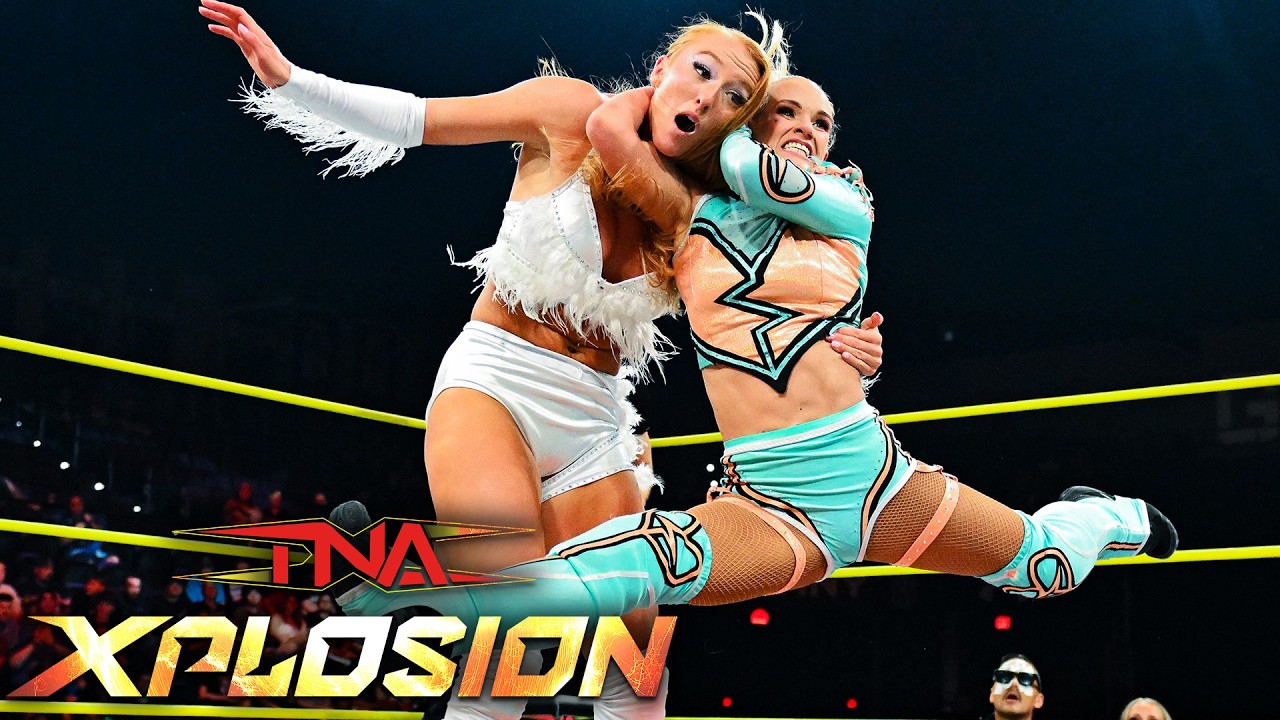
Nic Nemeth vs. KC Navarro: How TNA Built a Main-Eventer in Defeat
Nic Nemeth defeated KC Navarro with the Danger Zone to retain the TNA World Championship in the main event of the July 23, 2026 edition of Thursday Night iMPACT!. The title did not change hands. Yet the central story was not simply that an established world champion survived an underdog challenger. It was that Navarro, in the most important singles match of his TNA career, forced the audience to reconsider where he belonged on the card.
Sponsored • Adults 18+ Only
New Sexy Connections at Your Own Pace
Browse an adult-focused social platform designed for people who want to explore profiles, start conversations, and decide for themselves where an online connection might lead.
Availability, registration requirements, communication features, and pricing vary by provider and region.
The match aired from material taped earlier in July at the Broadview Center in Albany, New York. TNA presented it as the closing match of an episode that also included the Righteous Deletion cinematic match, the final first-round bouts in the Knockouts Television Championship tournament, and continuing programs involving The System, Order 4, Moose, Elijah, AJ Francis, and Frankie Kazarian. In a show built around several different forms of TNA identity, Nemeth and Navarro delivered the most conventional wrestling main event—and arguably the clearest piece of upward character development.
The result was predictable in the broadest sense. Nemeth had won his second TNA World Championship less than a month earlier at Slammiversary, and TNA had already announced a defense against Jeff Hardy for the live July 30 episode in Philadelphia. Navarro therefore entered Albany with the difficult task shared by many television challengers: create doubt without the benefit of genuine uncertainty. The match succeeded because it did not ask viewers to forget the likely outcome. It asked whether Navarro could make the champion work hard enough that defeat would increase, rather than reduce, his value.
That is exactly what happened. Navarro attacked immediately, survived sustained punishment to his surgically repaired knee, repeatedly countered Nemeth’s control, borrowed recognizable pieces of the champion’s own offense, and came within a fraction of finishing the match after the 305 and a Code Red. Nemeth ultimately won cleanly in the decisive sequence, but the champion’s frustration became the emotional evidence of Navarro’s progress. A wrestler whom Nemeth had dismissed as someone who did not belong had forced him into a genuine fight.
Last updated: July 24, 2026. Research cutoff: July 24, 2026.
Nic Nemeth vs. KC Navarro at a Glance
- Promotion: TNA Wrestling
- Program: Thursday Night iMPACT! on AMC
- Broadcast date: Thursday, July 23, 2026
- Taping location: Broadview Center, Albany, New York
- Match: Nic Nemeth vs. KC Navarro
- Championship: TNA World Championship
- Winner: Nic Nemeth
- Finish: Nemeth countered another Blessing in Disguise attempt and hit the Danger Zone for the pinfall
- Card position: Main event
- Commentators: Tom Hannifan and Matthew Rehwoldt
- U.S. viewing: AMC and AMC+
- Canada: Sportsnet 360
- International viewing: TNA+
- Immediate championship direction: Nemeth was already scheduled to defend against Jeff Hardy on July 30 in Philadelphia
The Result, the Verdict, and the Main Search Answer
Who won Nic Nemeth vs. KC Navarro? Nic Nemeth retained the TNA World Championship by pinning Navarro after the Danger Zone. There was no outside interference in the decisive finish, no disqualification, and no title change. Navarro’s final attempt at Blessing in Disguise was countered, giving Nemeth the opening to land his finish.
As a match, it was a focused television main event built around an understandable difference in status. Nemeth was the bigger, more experienced champion who believed the challenger’s admiration proved inferiority. Navarro was the faster wrestler with a personal reason to attack before Nemeth could establish control. The match used that relationship instead of treating the world-title shot as a random pairing.
The most effective decision was allowing Navarro to threaten Nemeth through multiple kinds of offense. He did not depend on one lucky roll-up or a single spectacular dive. He created danger early with a superkick and rapid covers, in the middle with counters and speed, and late with the Famouser, powerbomb, 305, and Code Red. That variety mattered. A challenger can survive a loss when viewers leave believing he possessed several plausible routes to victory.
The match was not flawless. The rivalry moved from friendship to betrayal to a title match in only a few weeks, and the outcome was heavily telegraphed by Nemeth’s newly begun reign and the announced Jeff Hardy defense. Some of the kick-outs also approached the familiar modern television pattern in which volume substitutes for escalation. But the match retained a strong emotional spine: Nemeth wanted to prove Navarro was beneath him, while Navarro wanted to prove that admiration did not make him lesser.
Independent reviews broadly reflected that reading. POST Wrestling described the bout as a fun main event that showed Navarro deserved more high-profile opportunities. Thomas Hall’s 411Mania review rated the match a B and emphasized that Navarro made the champion work despite the result never being in serious doubt. Those reactions matter less as numerical judgments than as evidence that the intended takeaway survived beyond TNA’s own promotional framing: Navarro lost, but he emerged more credible.
Why This Match Mattered More Than an Ordinary Television Defense
World-title television matches often serve one of three functions. They can change the championship, establish a new challenger for a longer program, or strengthen the champion before a larger defense. Nic Nemeth vs. KC Navarro did pieces of the second and third functions while adding a fourth: it accelerated Navarro’s conversion from useful supporting wrestler into someone who could plausibly occupy a main-event segment.
TNA did not need Navarro to win. In fact, a sudden title change would have interrupted several stories already in motion. Nemeth’s second reign had only begun on June 28. His developing arrogance was becoming the basis of his championship character. Jeff Hardy had a heavily promoted title match waiting in Philadelphia. Mike Santana still had a legitimate grievance after losing the championship under circumstances that included Ryan Nemeth’s distraction and the Call Your Shot trophy. The top of the card contained more established routes than an immediate Navarro reign could comfortably absorb.
What TNA did need was evidence that its younger and less-established wrestlers could interact meaningfully with a champion who carries two decades of national television history. Navarro provided that evidence. His role was not simply to make Nemeth look strong. He had to look strong enough that Nemeth’s victory carried value.
This distinction separates productive enhancement from disposable enhancement. A disposable challenger gives the champion a defense and returns to the same position. A productive challenger forces the champion to reveal something, earns sympathy, and creates future matchmaking options. After July 23, TNA could place Navarro against former champions, title contenders, X-Division standouts, or International Championship opponents without needing to explain why he belonged. The world-title match had done the explaining.
The match also mattered because it brought together several of Navarro’s 2026 themes: recovery, betrayal, ambition, and the tension between being grateful for an opportunity and demanding to be treated as an equal. His return from an ACL tear had already supplied a real-life foundation for perseverance. His program with AJ Francis had restored his independence after FIR$T CLA$$ discarded him. His association with Nemeth positioned him near the world-title picture. The betrayal then transformed that association from borrowed credibility into a personal test.
There is a booking lesson in that progression. A younger wrestler does not always need a tournament win or a long undefeated streak before entering a title match. Sometimes the relationship with the champion can supply the stakes. The danger is that the challenger may look unqualified. TNA avoided most of that problem by giving Navarro recent championship challenges, a high-profile return, a victory over Ryan Nemeth, and a story in which the champion himself granted the match.
Sponsored • Adults 18+ Only
Create a Virtual AI Companion Around Your Preferences
Choose personality traits, conversation style, and visual details to build a private AI-powered character designed for customized virtual interaction.
AI companions are virtual characters and are not real people. Features, subscriptions, and pricing may vary by provider.
The Episode Around the Main Event
The July 23 episode was not built solely around the world championship. TNA promoted the Righteous Deletion between The Hardys and The Righteous as a major attraction, continued the Knockouts Television Championship tournament, advanced the Order 4 story through the vote for Mustafa Ali’s next challenger, and positioned Leon Slater and Ricky Sosa against The System. That mixture created an unusually broad tonal range.
The Righteous Deletion represented TNA’s cinematic and supernatural tradition. The Nemeth-Navarro main event represented a more conventional championship structure. Placing the title match last was therefore important. It allowed the episode to end with the world championship treated as a sporting prize rather than letting the Hardy Compound spectacle become the final image.
The episode was taped earlier in July at the Broadview Center, not performed live on July 23. That distinction matters because TNA’s official results page, independent show reports, and the television presentation refer to the broadcast date, while the arena footage came from the Albany tapings. Wrestling coverage can easily blur taping date, air date, and upload date. For search purposes, the match belongs to the July 23, 2026 edition of iMPACT!, even though it was recorded before that night.
The broader card also helped the main event by contrast. Several earlier segments depended on interference, faction politics, cinematic editing, or tournament mechanics. Nemeth and Navarro closed with one champion, one challenger, one referee, and a direct pinfall. That simplicity made the personal hostility easier to read.
At the same time, the episode’s structure exposed one limitation: the title program had only a short amount of television time to mature. On July 2, Nemeth betrayed Navarro. On July 9, Navarro demanded an explanation and was attacked again. On July 16, Navarro asked for the title match. One week later, the match happened. The compressed build kept the story moving, but it limited the opportunity to explore Navarro’s relationship with Nemeth before the betrayal or to show him earning the shot through a formal contender process.
TNA compensated by making the match itself carry the character work. Nemeth’s contempt, Navarro’s urgency, and commentary’s focus on hero worship communicated the missing history. This is a useful television technique, but it puts pressure on the performers. A less coherent match would have exposed the thinness of the build. Their in-ring choices instead made the rivalry feel more developed than its calendar length suggested.
How Nic Nemeth Became a Two-Time TNA World Champion
Nemeth entered the July 23 defense as a champion in the opening month of his second reign. He won the title from Mike Santana in the main event of Slammiversary on June 28, 2026, at Agganis Arena in Boston. The official TNA result records that Ryan Nemeth distracted Santana, allowing Nic to strike him with the Call Your Shot trophy. Santana continued, survived multiple major moves, and even kicked out at one after a late superkick, but Nemeth ultimately hit the Danger Zone and secured the championship.
The victory completed a long Call Your Shot story. Nemeth had co-won the 2025 Call Your Shot Gauntlet and spent the first half of 2026 teasing when he would use the opportunity. On the January 15 AMC premiere, he attempted to call his shot after Santana defeated Frankie Kazarian, but the situation did not produce an immediate match. Nemeth later announced that he would make his challenge openly at Slammiversary rather than ambush Santana after a defense.
That gesture initially presented him as a proud competitor. The weeks before Slammiversary complicated the image. Nemeth repeatedly struck Santana, Ryan created interference and disorder, and the champion-versus-challenger relationship became increasingly hostile. By the pay-per-view, Nemeth’s willingness to use the trophy as a weapon made the moral direction clear.
The July 2 celebration completed the transformation. Ryan introduced his brother as the new two-time champion, and Nic recited a theatrical list of major names he had defeated across his career. The segment was designed to communicate both legitimacy and insecurity. A genuinely secure champion does not need a scroll of past victims; Nemeth’s character needed the list because his current authority depended on everyone acknowledging it.
Navarro interrupted that celebration not as a stranger but as someone who had recently stood beside Nemeth. That made his objection more dangerous. A top babyface could accuse Nemeth of arrogance and be dismissed as a rival. Navarro’s criticism came from within the champion’s circle. He had seen the supportive version of Nemeth and now confronted the self-serving version.
Nemeth’s championship character therefore rests on a productive contradiction. He is accomplished enough that his boasts are not invented, yet insecure enough that he reacts violently when someone close refuses to validate them. Against Navarro, he did not merely defend a belt. He attempted to restore a hierarchy: champion above protégé, veteran above prospect, idol above admirer.
Why the Jeff Hardy Match Influenced the Navarro Defense
TNA announced before July 23 that Nemeth would defend against Jeff Hardy on July 30 at the Liacouras Center in Philadelphia. The promotion described it as their first singles match for a world championship and emphasized Hardy’s history as a three-time former TNA World Champion. That announcement inevitably reduced suspense around Navarro’s challenge.
It also clarified the purpose of the Albany match. Navarro was not positioned as the endpoint of Nemeth’s reign. He was positioned as the first serious test in a sequence of defenses. TNA needed Nemeth to leave with the championship while avoiding the impression that Navarro was a warm-up opponent. The match’s near falls and extended final stretch were the solution.
The announced Hardy defense additionally created a useful comparison between challengers. Hardy represents established world-title history and star recognition. Navarro represents the future-facing side of TNA’s roster. By defending against both in consecutive weeks, Nemeth’s reign could claim breadth: one opponent trying to prove he belongs, another trying to add a fourth TNA world-title reign.
KC Navarro’s Road Back from an ACL Tear
Navarro’s performance carried weight beyond the immediate storyline because his 2025 injury had removed him from television at a moment when he was becoming a regular TNA character. At Slammiversary 2025, while competing in the four-way ladder match for the TNA World Tag Team Championship, he suffered an ACL tear. TNA’s August 7, 2025 episode included a FIR$T CLA$$ Penthouse segment in which Navarro announced the injury and the need for surgery. AJ Francis responded by replacing him with Rich Swann and having Navarro’s crutches kicked away, turning a real absence into storyline betrayal.
Navarro later credited Hospital for Special Surgery with helping him return rapidly. In a July 2026 account carried by HSS, he said he was cleared in roughly seven months and returned to television in eight. The exact medical timetable is Navarro’s public account, not an independent medical evaluation, but it provides important context for why TNA emphasized perseverance during the Nemeth match.
He returned at Rebellion in April 2026 during Nemeth’s match with AJ Francis. The location—Cleveland, Nemeth’s hometown—made the return part of Nemeth’s babyface presentation. Navarro’s involvement helped Nemeth defeat Francis, connecting them through a shared enemy. The alliance continued into May when Nemeth and Navarro challenged The System for the TNA World Tag Team Championship.
Navarro then defeated Francis in the Sactown Street Fight on the May 14 episode, a match that served as the direct payoff to the FIR$T CLA$$ betrayal. The victory established that his comeback was not a ceremonial return. He could absorb a physically demanding stipulation, settle a personal issue, and move into new stories.
That progression is essential to understanding the July 23 main event. Without it, Nemeth targeting the repaired knee would be generic limb work. With it, every attack became a challenge to the identity Navarro had built around coming back early and refusing to quit. Nemeth’s strategy said that resilience had limits. Navarro’s kick-outs and counters argued that the limits had not yet been reached.
There is also an important line between wrestling presentation and medical fact. Commentary and TNA’s match coverage identified the surgically repaired knee as a target. The article should not assume that every moment of selling reflected a new legitimate injury. The match used Navarro’s documented surgical history as psychology; it did not produce a confirmed post-match injury report.
From FIR$T CLA$$ to “Truly Blessed”
Navarro’s TNA character became stronger when he stopped functioning primarily as AJ Francis’s smaller associate. FIR$T CLA$$ gave him television visibility, contrast, and a clear role, but the group also framed him as a secondary piece. The injury angle made that hierarchy explicit: when Navarro could no longer help Francis, he was discarded.
His return story reversed that dynamic. He assisted Nemeth against Francis, then fought Francis himself. The “Truly Blessed” identity became less of a slogan and more of a response to adversity. In the world-title match, Navarro’s presentation connected belief with labor. He was not blessed because opportunities appeared without cost; he was blessed because he had survived enough to recognize the opportunity when it came.
TNA’s Philadelphia promotion around Navarro reinforced the company’s investment. The official announcement highlighted that he began wrestling at 15, had worked internationally, was bullied for being a wrestling fan, and saw wrestling as a connection to his father during his father’s United States Army service. The promotion also arranged a July 23 watch party in South Philadelphia where Navarro appeared with fans while the title match aired.
That local promotional effort is not proof that TNA had decided to make Navarro a permanent main-eventer. It is evidence that the company saw him as a useful public-facing personality during the Philadelphia market push. The world-title match and the media tour supported each other: the match gave the appearances significance, while the appearances made the challenger feel more important than a one-week television opponent.
Sponsored • Adults 18+ Only
Looking for a Different Kind of Evening Conversation?
Explore an adults-only chat and social service where you can browse the available features and decide whether the platform suits your preferred style of online conversation.
Services, eligibility, registration requirements, and pricing vary. Review the provider’s terms before joining.
From Allies to Opponents: The Complete Television Build
April 11: Navarro Returns to Help Nemeth
At Rebellion, Navarro returned during Nemeth’s match with AJ Francis. The comeback connected Navarro’s unresolved issue with Francis to Nemeth’s hometown fight. It was an efficient way to reintroduce him because viewers immediately understood both motives: revenge against the man who discarded him and support for a respected veteran.
Nemeth benefited from the help, and Navarro benefited from Nemeth’s star position. At this stage, the relationship did not feel transactional. Nemeth spoke publicly about Navarro’s work ethic during the recovery period, and Navarro’s admiration appeared sincere. That sincerity became the foundation of the later betrayal.
May 7: A Tag-Team Championship Opportunity
Nemeth and Navarro challenged The System for the TNA World Tag Team Championship on the May 7 episode. They did not win, but the match normalized them as a team. More importantly, it showed that Nemeth trusted Navarro enough to share a title challenge.
This matters because wrestling betrayals are only as effective as the relationship they destroy. TNA did not spend months building the pair, but the tag-title match supplied visible proof that they had operated as partners rather than merely exchanged supportive backstage dialogue.
June 11: Nemeth Supports Navarro Before the International Title Match
Before Navarro challenged Mustafa Ali for the TNA International Championship, Nemeth appeared backstage to support him. Navarro, in turn, expressed respect for the way Nemeth had announced his Slammiversary challenge to Mike Santana face-to-face. Ryan Nemeth interrupted, foreshadowing the tension that would eventually split the group.
Navarro lost to Ali, but the segment placed him close to two championship stories at once. He was challenging for the International title while emotionally invested in the World title rivalry. That positioning made his later move into Nemeth’s orbit feel less abrupt.
June 18: Navarro Tries to Keep the Peace
Navarro teamed with world champion Mike Santana and challenger Nic Nemeth against Mustafa Ali and The Great Hands. The match included rules intended to keep Santana and Nemeth from attacking each other. Afterward, Ryan attacked Santana, Navarro argued with Ryan, Santana accidentally struck Navarro, and Nic superkicked Santana.
Backstage, Navarro demanded that Santana focus while Ryan again escalated the conflict. Navarro’s function was clear: he was the younger wrestler trying to hold together a partnership of volatile stars. That role also exposed him. He was useful to Nemeth as a mediator and ally, but the arrangement depended on Navarro accepting the champion’s version of events.
June 28: Slammiversary Changes the Relationship
Nemeth won the TNA World Championship from Santana after Ryan’s distraction and the trophy shot. Navarro also competed in the Ultimate X match for the X-Division Championship, sharing the field with Cedric Alexander, Leon Slater, Frankie Kazarian, Fabian Aichner, Mr. Elegance, and Amazing Red.
Slammiversary therefore pushed both wrestlers upward, but in different ways. Nemeth left with the company’s top championship. Navarro left without a title yet with another high-profile performance and a personal connection to Amazing Red, whose presence deepened the historical meaning of Navarro’s Code Red offense later in the world-title match.
July 2: Nemeth Betrays Navarro
On the first iMPACT! after Slammiversary, Nemeth celebrated and listed major wrestlers he had beaten. Navarro interrupted, objecting to the champion’s behavior. The disagreement led to a match between Navarro and Ryan Nemeth, with Nic on commentary.
Navarro defeated Ryan with the 305 and Blessing in Disguise. Nic then forced the two to shake hands and attacked Navarro from behind with the Danger Zone. This was the decisive turn. The champion did not strike Navarro because Navarro had failed. He struck him after Navarro had won, making the attack an attempt to punish independence.
July 9: “You Never Even Deserved to Be in My Shadow”
Navarro demanded an explanation. Nemeth told him he did not have what it took and dismissed his place in the champion’s orbit. Ryan attacked from behind, and Nic joined him. The official TNA clip highlighted Nemeth’s line that Navarro had never deserved to be in his shadow.
The “shadow” became the rivalry’s central metaphor. Navarro’s admiration had once put him close to Nemeth; Nemeth now used the same admiration to define Navarro as permanently secondary. The title match would become Navarro’s attempt to step out of that shadow by competing with the champion as a peer.
July 16: Navarro Demands the Championship Match
Nemeth opened the segment by presenting himself as greatness that should be acknowledged. Navarro interrupted and eventually asked for a TNA World Championship match. Nemeth agreed on the condition that Navarro leave him alone afterward and said he would speak with Director of Operations Daria Rae.
The condition served two purposes. It preserved Nemeth’s arrogance—he was granting the match to dispose of an annoyance—and it framed the bout as Navarro’s singular opportunity. The challenger could not rely on a long series. He had one night to prove the champion’s judgment wrong.
July 23: The Match Becomes the Argument
By bell time, the story had become unusually clean. Nemeth argued that achievement and greatness separated him from Navarro. Navarro argued that opportunity, perseverance, and performance could close that distance. The match did not need interference or a complicated stipulation. The world championship gave the argument a measurable result.
Entrances and Character Presentation
Navarro’s pre-match presentation emphasized defiance. His entrance included visual needling directed toward Nemeth, and he mocked elements of the champion’s mannerisms. This was not comedy for its own sake. It showed that Navarro had stopped treating Nemeth’s presentation as untouchable.
Nemeth entered as the established star and two-time champion, carrying himself as though the result should be understood before the bell. The contrast was immediately legible: Navarro needed to seize the moment; Nemeth expected the moment to confirm what he already believed.
The ring introductions reinforced the physical difference. Navarro was announced at 175 pounds and Nemeth at 214. TNA did not need to exaggerate a giant-versus-cruiser dynamic, but the 39-pound gap supported the champion’s strategy. Nemeth could absorb the early speed, use heavier strikes, and slow the match through body control and the knee attack.
The babyface-versus-heel alignment was equally clear. Navarro represented emotional investment and aspiration. Nemeth represented earned status corrupted by contempt. This was important because both wrestlers had recently been allies and both could credibly claim professional respect. The match needed behavior—not costume color or generic commentary labels—to establish the moral positions.
Detailed Match Analysis
The Opening Slap and Navarro’s Immediate Superkick
Nemeth began by slapping Navarro. The gesture compressed the entire rivalry into one action. It was not intended to gain a tactical advantage; it was intended to reassert hierarchy. Navarro’s immediate superkick rejected that hierarchy and nearly ended the match before the champion could settle.
The rapid covers that followed were strategically sound and narratively useful. Navarro understood that a prolonged match favored the larger, more experienced champion. By forcing Nemeth to kick out repeatedly in the opening seconds, he created panic and made the champion spend energy before establishing control.
It also established that Navarro was not overwhelmed by the stage. Underdog challengers are often presented as tentative at the bell, allowing the champion to punish their nerves. Navarro did the opposite. His danger came from preparation and emotional clarity.
Nemeth’s heavy back elbow ended the first rush. The counter mattered because it demonstrated the physical cost of one mistake. Navarro could create more openings, but Nemeth needed only one clean collision to change the pace.
Why Early Near Falls Worked Here
Multiple early near falls can cheapen a match when they appear unconnected to strategy. In this case, they were part of Navarro’s plan. He was not hitting several finishers and expecting the match to end. He was forcing the champion to react to surprise covers while maintaining speed.
The danger was that the pattern could become repetitive. TNA’s commentary even acknowledged the volume of two-counts. The match avoided complete dilution by changing the kind of threat. Early covers came from shock and positioning. Later covers came from major offense. The audience was therefore asked to recognize escalation rather than count every kick-out as equal.
Nemeth Targets the Surgically Repaired Knee
Once Nemeth stopped the initial assault, he attacked the repaired knee. This was the match’s most important piece of physical psychology because it connected three stories at once: Navarro’s injury history, the size difference, and the champion’s veteran intelligence.
Nemeth did not need an elaborate submission sequence. Kicks, stomps, and attacks around the apron were enough to alter Navarro’s movement and create doubt around his explosive offense. Every later attempt at a jumping attack carried the question of whether the leg would support him.
The champion’s approach also deepened his heel character. Targeting a known weakness is not inherently villainous in professional wrestling; champions are supposed to exploit weaknesses. Nemeth made it villainous through his contempt. He treated the knee not as a competitive target but as proof that Navarro had returned to a level he could not survive.
Navarro’s selling was most effective when it changed execution rather than simply adding grimaces. On a later powerbomb counter, he could not stack Nemeth as high or hold the position as securely as he might with full strength. That limitation made the kick-out more believable and preserved the injury thread through the closing stretch.
The Dive and Frog Splash Establish Navarro’s Best Route
Navarro’s tope and frog splash were important because they showed how he could overcome the champion’s size. He needed acceleration, elevation, and consecutive attacks. When Nemeth rolled outside to break rhythm, Navarro refused to grant the reset.
The frog splash near fall also told the audience that Navarro’s aerial offense was not decorative. It could produce a championship-level threat. Nemeth’s kick-out was expected, but the sequence forced him to respond to the challenger’s preferred pace.
This was one of the match’s strongest structural choices. Navarro did not spend the entire first half trapped in a control segment. He earned enough offense early that the later comeback felt like a return to an established possibility rather than a sudden burst from someone who had been dominated.
Sponsored • Adults 18+ Only
Explore the Adult Social or AI Experience Available to You
The destination may offer social discovery, chat, dating, or an AI-powered companion experience depending on your location, device, and the participating provider.
The destination and available service may vary by device, region, and provider. Registration, subscriptions, or charges may apply.
The Draping Neckbreaker Shuts the Door on the 305
Navarro’s 305 is built around using the ropes and speed. Nemeth’s counter into a draping neckbreaker was therefore more than a move reversal. It took Navarro’s spatial advantage—the ropes—and turned it into a weapon for the champion.
That counter established that Nemeth had studied the challenger. Commentary made the scouting point directly, and the visual supported it. Navarro could not rely on familiar signature sequences landing automatically simply because he had surprised Nemeth at the start.
The neckbreaker also transitioned cleanly into the champion’s control period. Rather than stopping the match for a generic rest hold immediately after Navarro’s dive, Nemeth used a counter tied to the challenger’s identity. That made the shift feel earned.
Ringside Control and the Champion’s Advantage
Nemeth repeatedly used the count and the boundary between ring and floor. He could have accepted a count-out victory and retained the championship because titles generally do not change hands on count-outs or disqualifications. Commentary stressed that advantage.
The champion’s willingness to reset the count and continue attacking revealed another aspect of his character. He wanted the safest possible result, but he also wanted to teach Navarro a lesson. Those motives are slightly contradictory, which made the control segment more interesting. Nemeth could have stayed inside and won by count-out; instead, he returned to the floor because humiliation mattered almost as much as retention.
Navarro’s ability to beat the count reinforced his recovery narrative without requiring melodrama. The audience had already been told about the knee and the accelerated return. Simply getting back into the ring became a small act of resistance.
Shot to the Heart and the Choke: Nemeth Changes the Match
After the ringside sequence, Nemeth moved from attacking the leg to attacking the torso, head, and neck. The Shot to the Heart and rear choke slowed Navarro’s breathing and reduced the space available for explosive counters.
This was the champion’s most methodical stretch. Nemeth’s style works best when the transitions feel like experienced opportunism rather than prolonged domination. He used the elbow, neckbreaker, ringside attack, knee work, and choke as connected attempts to reduce Navarro’s options.
Navarro continued finding small escapes, including surprise covers and bridges. Those counters were crucial. A challenger who survives only by absorbing punishment can look brave but outclassed. Navarro survived by thinking, which supported the claim that he belonged at the level even before the major comeback began.
The Missed Corner Attack Opens the Comeback
Nemeth’s missed charge in the corner created the first major late-match opening. Navarro followed with a fast sequence that restored the match’s initial pace. The comeback worked because it was not presented as a complete physical recovery. He remained affected by the knee but could still exploit a mistake.
That distinction preserved Nemeth’s earlier work. Weak selling would have made the leg attacks irrelevant. Excessive selling would have prevented Navarro from producing a credible closing stretch. The match found a workable middle: Navarro could accelerate in bursts, but the damage reduced the effectiveness and stability of certain moves.
The Satellite DDT and Blessing in Disguise Attempts
Navarro’s spinning offense created the visual sense that Nemeth had lost positional control. The satellite DDT produced a near fall and led into repeated attempts at Blessing in Disguise. Each attempt became a question of timing rather than raw force.
Nemeth’s ability to avoid the move reinforced his scouting. Navarro’s persistence reinforced his confidence in the finish. The repetition was justified because the move represented the challenger’s clearest route to victory; he was not randomly cycling through a move list.
The risk with repeated finish attempts is that the audience begins waiting for the counter rather than investing in the attempt. TNA managed that risk by placing different counters and near falls between them. The final attempt therefore still carried consequence.
The Ring-Post Collision and Powerbomb Counter
Nemeth sent Navarro shoulder-first into the post, adding upper-body damage to the established knee problem. Navarro then countered into a powerbomb. The moment was one of the match’s clearest demonstrations of resourcefulness.
Navarro did not overpower Nemeth through sustained strength. He used the champion’s momentum and position. Because the damaged leg prevented a higher stack, Nemeth had space to kick out. The sequence protected both wrestlers: Navarro looked intelligent and powerful enough to create the opening, while Nemeth survived because the earlier strategy had reduced the quality of the cover.
The Famouser as Psychological Theft
Navarro’s use of the Famouser was one of the most effective character moments in the match. The move is strongly associated with Nemeth’s long career. By hitting it, Navarro showed that the relationship had included learning as well as admiration.
Borrowing an opponent’s move can be shallow fan service, but here it carried a clear message: Navarro knew Nemeth well enough to use his own history against him. It also challenged the champion’s claim that the younger wrestler belonged only in his shadow. A shadow imitates without substance; Navarro’s version nearly produced a title change.
Nemeth’s kick-out preserved the hierarchy without erasing the insult. Navarro could reproduce a famous weapon, but he could not finish Nemeth with it. The sequence therefore advanced the rivalry’s theme rather than simply generating another near fall.
Nemeth’s Superkick and Navarro’s Defining Kick-Out
Nemeth’s late superkick appeared to be the end. The champion landed it cleanly after Navarro charged, and the commentary response treated the cover as nearly academic. Navarro kicked out.
This was the match’s most important survival moment because it changed Nemeth’s emotional state. Until then, the champion could interpret every Navarro success as temporary resistance. The kick-out made that interpretation harder to maintain. Nemeth’s frustration became visible and verbal.
The line “Why won’t you die?” was character language, not a literal threat, and it captured the champion’s inability to understand the challenger. Nemeth believed experience should make resistance finite. Navarro’s identity was built around refusing the timetable others assigned to him—whether a rehabilitation timetable or a career hierarchy.
The 305 and Code Red: The Closest Navarro Came
Navarro’s final major run began with a dropkick that placed Nemeth against the ropes, followed by the 305 and a Code Red. The combination brought together Navarro’s own signature offense and a move associated with Amazing Red, the veteran who had participated in the Slammiversary Ultimate X match and was announced for TNA’s 2026 Hall of Fame class.
The Code Red near fall was the match’s strongest false finish. It came late, followed a complete combination, and arrived after Nemeth’s frustration had made the champion look vulnerable. Even viewers who expected Nemeth to retain could briefly imagine a surprise.
The sequence also widened Navarro’s identity. He was not only the resilient underdog or Nemeth’s former admirer. He was part of a lineage of smaller, innovative wrestlers whose speed and technique could threaten larger champions. TNA did not over-explain that lineage during the match, but knowledgeable viewers could recognize it.
The Final Counter and Danger Zone
Navarro attempted Blessing in Disguise again. Nemeth countered and hit the Danger Zone for the pinfall. The finish was clean, sudden, and consistent with the match’s structure.
Nemeth won because he remained able to recognize Navarro’s preferred finish under pressure. Navarro lost because he returned to the move that represented his best chance. Neither wrestler behaved irrationally. The champion’s experience beat the challenger’s persistence.
Crucially, TNA did not add Ryan Nemeth, a distraction, a referee bump, or a weapon. Those devices could have protected Navarro more obviously, but they would have weakened the achievement of taking the champion to the limit. A clean loss allowed the match itself to be the proof.
The Five Turning Points That Defined the Match
1. Navarro’s Superkick at the Bell
The opening superkick established that Navarro would not wrestle as a grateful subordinate. It forced Nemeth to defend immediately and gave the audience permission to believe the challenger had prepared for an upset.
2. Nemeth Attacks the Repaired Knee
The knee attack turned a fast match into a story about whether Navarro’s body could support his ambition. It also gave every later burst a cost.
3. The Powerbomb Counter with an Incomplete Stack
This sequence showed how earlier damage could affect a late opportunity. Navarro created the right counter but could not maximize it. The match therefore rewarded viewers who followed the limb work.
4. Navarro Kicks Out of the Superkick
The kick-out broke Nemeth’s certainty. From this point, the champion no longer appeared to be teaching a lesson at his own pace. He was trying to survive a challenger he had underestimated.
5. The 305 and Code Red Near Fall
This was Navarro’s closest believable path to victory. It combined speed, positioning, and inherited technique before the final Blessing in Disguise attempt created the opening for Danger Zone.
Sponsored • Adults 18+ Only
Adult Social Platform That Matches Your Style
Explore an adult social-discovery service with profile browsing and communication options, then choose whether its features fit the kind of online connection you want.
Profiles and features vary. Registration, verification, subscriptions, or other provider conditions may apply.
Match Psychology: Idol, Peer, and Champion
The deepest idea in the match was the difference between looking up to someone and competing with them. Commentary repeatedly returned to Navarro’s history of admiring Nemeth. The champion treated that admiration as evidence that Navarro could never see him as an equal.
Professional wrestling has used mentor-versus-student stories for generations because the emotional conflict is immediate. The student possesses knowledge gained from the mentor but risks psychological dependence. The mentor possesses authority but risks being surpassed. Nemeth and Navarro adapted that structure without presenting a formal training relationship.
Navarro’s task was to stop wrestling the image of Nemeth he had watched and start wrestling the man in front of him. His mockery during the entrance, opening superkick, Famouser, and repeated refusal to stay down all served that transition. He did not erase admiration; he converted it into competitive knowledge.
Nemeth’s task was to maintain separation. He used weight, experience, scouting, and the knee. He also talked throughout the match, trying to define Navarro as a child who had wandered into an adult position. The champion’s words were attempts to control the story even when the physical action stopped cooperating.
The match became compelling when Nemeth’s verbal certainty exceeded his physical certainty. He could say Navarro did not belong, but each near fall contradicted him. The audience did not need Navarro to win for the champion’s argument to weaken.
This is why the clean finish helped. Had Ryan interfered, Nemeth could remain verbally dominant while escaping through assistance. By winning alone after being pushed, he retained legitimate superiority while losing the right to call Navarro irrelevant. The final hierarchy was narrower than the one Nemeth claimed at the start.
Pacing and Escalation
The match lasted a little under fourteen minutes in the televised accounting used by 411Mania. That length was sufficient for a complete television main event but short enough that every phase needed to be efficient.
The opening sprint established danger. Nemeth’s control period slowed the pace and attached the match to Navarro’s knee. The comeback restored speed. The closing stretch escalated through recognizable moves and counters. This is a classic structure, but the personal details prevented it from feeling generic.
The commercial break inevitably interrupted the continuous experience for live television viewers. The official YouTube presentation and transcript make the action easier to follow as a complete sequence, but the broadcast structure still shaped the match. Nemeth’s control filled the return from break, allowing Navarro’s comeback to land as the final act.
The main criticism is the density of near falls. Navarro covered Nemeth frequently in the opening and closing portions, while both wrestlers survived several significant moves. The match wanted to communicate that Navarro was always one opening away. At times, the volume threatened to flatten the importance of individual covers.
Still, the strongest near falls were distinguished by context: the frog splash followed sustained speed, the powerbomb reflected a counter, the Famouser carried symbolic meaning, the superkick kick-out changed Nemeth’s emotion, and the Code Red completed Navarro’s best combination. The match had enough narrative variation to prevent the final stretch from becoming only arithmetic.
Commentary’s Role
Tom Hannifan and Matthew Rehwoldt used contrasting positions. Hannifan emphasized Navarro’s resilience, opportunity, and the moral change in Nemeth. Rehwoldt defended the champion’s accomplishments and questioned whether Navarro belonged at the level.
This kind of polarized commentary can become noise when each announcer simply repeats a predetermined opinion. Here, the positions aligned with the match’s argument. Hannifan represented possibility. Rehwoldt represented hierarchy. As Navarro produced more offense, Rehwoldt was forced to concede that the challenger’s counters and performance deserved credit.
That concession was valuable. A heel-leaning commentator who never acknowledges evidence can make a match feel disconnected from what viewers see. Rehwoldt’s growing surprise validated Navarro without abandoning support for Nemeth.
The commentary also supplied the medical and career context needed for new viewers. It referenced the ACL tear, the accelerated return, previous championship challenges, Navarro’s admiration for Nemeth, and the larger meaning of the TNA World Championship.
At its best, the call allowed the action to prove the point. At its weakest, it leaned heavily on repeated statements about heart, potential, and belonging. Those themes were accurate, but the match had enough specific action that commentary did not always need to restate them.
Crowd Response and Presentation
The Albany audience responded to Navarro’s early attack, major near falls, and late combination. It would be inaccurate to claim that every fan treated him as an established headliner. The useful observation is narrower: the crowd reacted in the places the match required, especially when Navarro survived the superkick and hit the 305-Code Red sequence.
The venue presentation kept the match centered on the wrestlers. There was no elaborate stipulation, special set, or external angle. After an episode containing a cinematic match at the Hardy Compound, the ring-based main event benefited from visual normality.
TNA’s production emphasized close reactions during Nemeth’s frustration. That helped convert Navarro’s kick-outs into character development. The champion’s disbelief was as important as the challenger’s survival.
The post-match presentation also avoided excessive consolation. Nemeth was announced as the winner and champion. Replays showed Navarro’s late offense and the counter into Danger Zone. Commentary concluded that Navarro had proved he belonged, but the show did not pretend that moral victory was equivalent to holding the championship.
Why the Finish Protected Both Wrestlers
“Protection” in wrestling is often reduced to interference or a non-finish. That is only one form. A wrestler can be protected in a clean loss through performance, timing, opponent reaction, and future positioning.
Navarro received all four. He had meaningful offense, survived a major superkick, forced Nemeth to display frustration, and lost only after the champion countered his best-known finish. He was not caught by a casual move after being dominated. He was defeated while attempting to win.
Nemeth was protected because he won without help. The match acknowledged that Navarro could threaten him, but it did not make the new champion dependent on Ryan. This was especially important after the Slammiversary finish, where Ryan’s distraction and the trophy shot had contributed to the title change.
The finish therefore strengthened two different claims. Nemeth could still win a championship match through his own skill. Navarro could still belong in a championship match despite losing. A more complicated ending might have preserved a rematch, but it would have reduced the immediate clarity.
The booking appears designed to close this short rivalry for now rather than extend it immediately. Nemeth’s condition was that Navarro leave him alone after receiving the shot, and the champion had Jeff Hardy next. That does not prevent a future rematch. It simply means TNA did not need to force one before Navarro had gained new victories.
Sponsored • Adults 18+ Only
Build a Private AI Girlfriend for Personalized Conversation
Select the traits and interaction style you prefer, then explore conversations with a customizable virtual AI companion in a private digital setting.
This service involves virtual artificial-intelligence characters, not real people. Provider features and costs may differ.
Where the Match Could Have Been Better
The Build Was Effective but Compressed
The four-week arc was clear, but it left material unexplored. TNA could have shown more of the supportive relationship before the July 2 betrayal, given Navarro a contender victory beyond Ryan Nemeth, or allowed the title challenge to develop over multiple confrontations.
A longer build would have made the betrayal feel larger and the match less obviously transitional. The risk, however, is that extending the program might have delayed Jeff Hardy or forced Navarro into repetitive attacks by the Nemeth brothers.
The Announced Jeff Hardy Defense Reduced Suspense
Promoting future matches is necessary, especially for a live event in a major market. But announcing Nemeth vs. Hardy before Nemeth vs. Navarro made the likely result obvious. TNA could not completely solve that problem.
The match responded correctly by shifting the suspense from “Will Navarro win?” to “How close can Navarro get?” That is a valid form of drama, though it cannot fully replace uncertainty around the championship.
The Knee Story Could Have Been Even More Decisive
Nemeth’s knee attack provided strong psychology, but the match did not culminate in a submission or a finish directly caused by the leg. The injury affected the powerbomb stack and some movement, yet the final counter was primarily about scouting.
A more explicit leg-based transition into Danger Zone could have tied the finish tighter to the middle of the match. On the other hand, ending through a counter preserved Navarro’s resilience and avoided presenting the repaired knee as unable to withstand main-event competition.
The Near-Fall Count Was High
Several covers occurred before the final stretch, and the match added more after the comeback. Viewers who prefer fewer kick-outs may find the structure busy. The positive side is that most covers had distinct setups.
Navarro Needed More Post-Match Agency
The show ended soon after Nemeth’s victory. That kept the championship image strong, but Navarro did not receive a visible next step. A backstage comment, respectful crowd moment, or confrontation with another rival could have converted the performance immediately into future direction.
TNA’s official Philadelphia announcements confirmed Navarro for in-ring action on July 30-31, but as of the research cutoff his specific next match had not been announced. That leaves the promotion with an important follow-up task.
What the Match Accomplished for Nic Nemeth
Nemeth’s first defense after winning at Slammiversary needed to do more than add a result to the record. It needed to define what kind of champion he would be.
Against Navarro, Nemeth showed three layers. First, he was arrogant and personally cruel. Second, he was strategically prepared. Third, he was still capable of winning without Ryan’s direct interference. Those layers make him more useful than a champion who is either unbeatable or completely dependent on cheating.
The match also made his future defense against Jeff Hardy more interesting. Nemeth had just struggled with a younger, faster challenger who knew his moves. Hardy presents different problems: greater experience, more size, unconventional risk, and his own history as a TNA world champion.
Nemeth’s late frustration may become a recurring weakness. Navarro pushed him into anger, and anger narrowed his choices. A future challenger can study that. The champion remains dangerous, but the match revealed that disrespect can become tactical blindness.
The result additionally helped separate Nemeth’s current TNA identity from nostalgia for his previous national television career. The Famouser and superkick history were present, but the Danger Zone, Call Your Shot story, Ryan alliance, Santana rivalry, and Navarro betrayal are TNA-specific material. A championship reign gains value when it develops new relationships rather than depending only on the wrestler’s past fame.
What the Match Accomplished for KC Navarro
Navarro entered as a wrestler who had challenged for the International and X-Division championships and participated in a tag-title match. He left with a credible world-title performance. That is a meaningful change in category.
It does not automatically make him a permanent main-eventer. One strong television match must be followed by consistent presentation. He needs victories that reflect the new level, not an immediate return to secondary losses. TNA does not have to protect him from every defeat, but the opponents and circumstances should acknowledge what he accomplished.
The most logical short-term direction is not necessarily another world-title match. Navarro could pursue the International Championship, return to the X-Division with greater credibility, or feud with an established heel who mocks his failed challenge. Any of those routes can build on Albany without repeating it.
His size will continue to shape presentation. TNA should not pretend he wins through power against every opponent. The Nemeth match offered a model: speed, scouting, counters, combinations, and refusal to concede. That is a sustainable main-event language for a smaller wrestler.
Navarro’s promo work also matters. The July 16 challenge succeeded because he communicated personal stakes, not because the match was awarded through a complicated ranking system. To remain at a higher level, he must continue turning “Truly Blessed” from branding into a point of view.
The strongest possible follow-up would show that he learned something. Nemeth beat him by countering Blessing in Disguise after repeatedly scouting it. In a future major match, Navarro should demonstrate a new setup, variation, or secondary finish. Wrestling growth becomes visible when defeat changes behavior.
The TNA World Championship Context
The TNA World Championship is the promotion’s central singles prize. Nemeth’s July 23 defense came during his second reign, which began at Slammiversary 2026. His first TNA World Championship reign began in 2024, giving his “two-time champion” presentation factual weight within the company rather than relying solely on accomplishments elsewhere.
The title picture in 2026 had already moved through Frankie Kazarian, Mike Santana, and Nemeth. Santana defeated Kazarian on the January 15 AMC premiere to begin his second reign, survived the Texas Death Match rematch at Genesis, and carried the championship into Slammiversary. Nemeth’s Call Your Shot opportunity remained a constant threat throughout that period.
By the time Navarro challenged, the belt represented several unresolved tensions. Santana could argue that Nemeth’s Slammiversary victory was compromised by Ryan and the trophy shot. Jeff Hardy had a confirmed match. Other established TNA names remained available for future defenses. Navarro was therefore entering a crowded field rather than a division waiting for a new direction.
This context explains why TNA could afford to use Navarro as a one-night challenger but could not afford to present him as disposable. A healthy title scene needs both destination opponents and credible television challengers. Hardy and Santana provide major-event gravity. Navarro provided freshness.
The defense also supported the idea that the championship should appear regularly on AMC. A world title that is defended only on pay-per-view can feel distant from weekly television. A title defended too casually can lose importance. Nemeth vs. Navarro found a useful middle: the result was expected, but the challenger was developed enough that the match did not feel ceremonial.
Historical Parallels Without Forcing the Comparison
TNA has a long tradition of smaller, fast wrestlers challenging opponents who possess greater size or established world-title status. The company’s X-Division identity has repeatedly allowed wrestlers to move between divisions based on ability rather than weight. Navarro’s challenge belongs to that tradition, but it should not be exaggerated into a direct recreation of a specific classic.
The most relevant lineage is stylistic. Amazing Red helped establish an early TNA vocabulary in which speed, creativity, and combinations could be presented as serious main-event tools. Navarro’s Code Red near fall made that connection visible. Red’s participation in the 2026 Slammiversary Ultimate X match and Hall of Fame announcement gave the reference current relevance.
There is also a familiar mentor-shadow structure. Wrestling history is full of younger performers who must defeat, survive, or reject a veteran they admired. The effective versions do not require the younger wrestler to win immediately. They require the match to alter the relationship.
After July 23, Nemeth could no longer reasonably treat Navarro as someone who did not belong in the ring. He could still claim superiority because he won. That combination—victory without complete ideological validation—is what allows a short program to produce long-term character value.
The match also recalled television title defenses in which an emerging wrestler receives a single main-event opportunity against a champion whose next major challenger is already known. Those matches succeed when the audience discovers something about the challenger. Navarro’s discovery was not that he could perform spectacular offense; TNA viewers already knew that. It was that his offense, selling, timing, and emotional connection could sustain a world-title main event.
Critical Reception
POST Wrestling’s Jack Wannan called the match a fun main event and wrote that Navarro showed he deserved more high-profile spots. The review emphasized the fast pace, the repaired-knee attack, the Famouser, the superkick kick-out, and the final 305-Code Red combination.
Thomas Hall’s 411Mania review gave the match a B. Hall noted that the outcome was never in serious doubt but praised Navarro’s ability to make the audience invest in how close he could come. He also credited the main event with improving an episode he otherwise rated 6.5 overall.
PWTorch had already identified Navarro as a useful first challenger after the July 2 betrayal. Its earlier Hits and Misses column supported placing him in the title scene but warned that the program risked feeling like a short bridge to a larger event. The July 23 performance answered the in-ring half of that concern. The remaining question is follow-up.
These opinions are not objective measurements of match quality. They are independent readings that converge on a common point: the result was expected, but Navarro’s performance justified the booking. That convergence is more informative than a star rating because it identifies what the match accomplished.
Audience response should be interpreted with similar caution. Live reactions and online comments can show enthusiasm but are not representative surveys. The measurable fact is that TNA chose Navarro for a main event, promoted a watch party around him, and circulated match clips highlighting his resilience. The editorial inference is that the company wanted viewers to see the loss as advancement.
Sponsored • Adults 18+ Only
Explore a More Social Way to Unwind Online
Browse an adult-oriented conversation platform with social and chat features, and review the available options before deciding whether to register.
No conversation or response is guaranteed. Availability, eligibility, and pricing depend on the provider.
TNA’s Wider Direction: Veterans, Prospects, and the AMC Era
TNA’s move to Thursday nights on AMC in January 2026 increased the importance of producing television that can serve both established fans and viewers who recognize wrestlers from other promotions. Nemeth is valuable in that environment because his career history supplies immediate recognition. Navarro is valuable because he can become associated specifically with the current TNA product.
The risk in any roster built around recognizable veterans is that emerging wrestlers become accessories. The July 23 main event avoided that outcome. Nemeth’s history attracted attention, but Navarro’s performance became the story.
This balance is central to TNA’s identity. The promotion has often been strongest when experienced names and distinct younger wrestlers interact rather than occupy separate universes. A veteran should not merely defeat a prospect; the match should transfer understanding. Viewers should leave knowing why the prospect matters.
Navarro also fits TNA’s tradition of wrestlers who can move between divisions. He has challenged for tag, International, X-Division, and World championships. That versatility can be an advantage if it communicates range. It can become a weakness if he is moved without a coherent goal.
The world-title match gives TNA an anchor for future movement. If Navarro returns to the X-Division, he does so as someone who nearly upset the world champion. If he pursues the International title, his claim is stronger. If he forms another team, audiences know he is more than a junior partner.
The company’s YouTube strategy adds another layer. Publishing complete or near-complete match material allows a television main event to continue reaching viewers after the AMC broadcast. The supplied TNA upload includes the match presentation, entrances, action, finish, and post-match framing rather than functioning as a brief highlight package. That creates a searchable asset around both wrestlers.
For TNA, the business value is straightforward: a world champion with name recognition draws the search, while a rising wrestler can benefit from the discovery. The editorial value is that the full structure remains visible. Navarro’s performance would lose much of its meaning if reduced to the final Code Red near fall and Danger Zone.
What Happened Immediately Afterward
The episode ended with Nemeth still TNA World Champion. There was no post-match attack, handshake, or immediate rematch announcement. Commentary emphasized that Navarro had proved he belonged at the level, while Nemeth retained the tangible prize.
The next confirmed world-title match was Nemeth vs. Jeff Hardy on July 30 at the Liacouras Center in Philadelphia. TNA promoted it as the first singles match between the two with a world championship at stake. Hardy entered as a three-time former TNA World Champion, giving Nemeth a challenger with a very different résumé from Navarro.
Navarro was also confirmed for in-ring action during TNA’s July 30-31 Philadelphia events, but TNA had not announced his specific opponent at the research cutoff. That uncertainty should not be filled with speculation presented as news.
The most important immediate consequence was reputational. Navarro had now headlined iMPACT! in a TNA World Championship match and received positive independent reviews. That becomes part of how future matches are framed.
What Could Happen Next for Nic Nemeth
Jeff Hardy Is Confirmed, Not Predicted
The July 30 defense is official. Any analysis of Nemeth’s future must begin there rather than skipping directly to hypothetical opponents. Hardy’s challenge offers a test of whether Nemeth can defeat another veteran without the same mentor-protégé dynamic.
Mike Santana Remains an Obvious Unresolved Rival
Santana lost the title after Ryan’s distraction and the trophy shot. TNA had not announced a rematch by the July 24 research cutoff, but the circumstances provide a clear storyline basis. Calling Santana an inevitable next champion would go beyond the evidence. Calling him an unresolved former champion is accurate.
Lockdown Provides a Major-Event Destination
TNA announced Lockdown for August 23, 2026, in Chicago, with every match inside a steel cage and Nemeth confirmed to appear. The specific world-title match had not been announced at the research cutoff. The cage format naturally fits rivalries involving interference, but identifying an opponent before TNA does would be prediction.
Nemeth’s Character Must Continue to Evolve
The champion’s arrogance is established. The next step is variation. If every defense repeats insults, knee work, frustration, and Danger Zone, the act will narrow. Hardy, Santana, and other challengers should force different strategic and emotional responses.
What Could Happen Next for KC Navarro
A Return to the International Championship Picture
Navarro challenged Mustafa Ali in June and lost. Ali’s Order 4 story has since moved toward Jason Hotch. Once that program develops, Navarro could return with a stronger claim. His world-title performance would make another International Championship match feel like progression rather than retreat.
An X-Division Program
Navarro’s speed and history make the X-Division a natural home, but TNA should avoid treating it as a ceiling. A program with Cedric Alexander or another leading X-Division wrestler could be framed as elite competition, especially after Navarro’s Ultimate X appearance at Slammiversary.
A Rivalry with Ryan Nemeth
Navarro already defeated Ryan on July 2. The result and betrayal could justify another confrontation, but repeating the match without new stakes would be backward movement. Ryan is more useful as part of the world-title story unless TNA gives him a distinct reason to target Navarro again.
A Former Champion as a Measuring Stick
One evidence-based booking possibility would be pairing Navarro with an established former champion or title contender. This is editorial analysis, not a report. The purpose would be to test whether the Albany performance can translate into sustained credibility rather than a single underdog night.
A New Finish or Setup
The most interesting character development would be technical. Nemeth beat Navarro because he scouted Blessing in Disguise. Navarro should respond by changing how he reaches the move or adding another decisive option. That would turn defeat into visible learning.
Sponsored • Adults 18+ Only
See Which Private Adult Experience Is Available
Continue to a location-aware offer that may feature adult social discovery, chat, dating, or an AI companion service, depending on provider availability.
The destination may differ by device and region. Review all provider terms, age rules, and payment information before registering.
Related Matches and Segments Worth Watching
KC Navarro vs. Ryan Nemeth — July 2, 2026
This match is the direct prequel. Navarro defeated Ryan with the 305 and Blessing in Disguise before Nic attacked him with Danger Zone. It explains both the personal hostility and Nemeth’s familiarity with Navarro’s finish.
KC Navarro Confronts Nic Nemeth — July 9 and July 16, 2026
The two segments establish the “shadow” theme and Navarro’s demand for a championship match. They are more important to the main event than a long biography of either wrestler.
Mike Santana vs. Nic Nemeth — Slammiversary 2026
This match began Nemeth’s second reign and revealed the champion’s willingness to use Ryan’s distraction and the Call Your Shot trophy. It also explains why a clean defense over Navarro mattered.
Nic Nemeth and KC Navarro vs. The System — May 7, 2026
The tag-title match provides evidence of the former alliance. It shows them cooperating before the relationship became a world-title rivalry.
KC Navarro vs. AJ Francis — Sactown Street Fight, May 14, 2026
This was the major payoff to Navarro’s FIR$T CLA$$ betrayal story after his ACL injury. It demonstrates the physical and emotional range he carried into the Nemeth match.
Slammiversary 2026 Ultimate X
Navarro’s participation alongside Cedric Alexander, Leon Slater, Frankie Kazarian, Fabian Aichner, Mr. Elegance, and Amazing Red connects him to the X-Division’s past and present. It also gives added context to the Code Red near fall against Nemeth.
Frequently Asked Questions
Who won Nic Nemeth vs. KC Navarro?
Nic Nemeth won by pinfall and retained the TNA World Championship after countering Blessing in Disguise and hitting the Danger Zone.
Did KC Navarro win the TNA World Championship?
No. Navarro came close on several occasions, especially after the 305 and Code Red, but Nemeth retained.
When did Nic Nemeth vs. KC Navarro happen?
The match aired on the July 23, 2026 edition of Thursday Night iMPACT!. The episode used footage taped earlier in July at the Broadview Center in Albany, New York.
Where did the match take place?
The arena match was taped at the Broadview Center in Albany, New York.
Was the TNA World Championship on the line?
Yes. Nemeth entered as the two-time TNA World Champion and left with the title.
Why were Nic Nemeth and KC Navarro feuding?
Navarro objected to Nemeth’s arrogant behavior after Slammiversary. After Navarro defeated Ryan Nemeth on July 2, Nic attacked him. Navarro demanded answers, rejected Nemeth’s claim that he belonged in the champion’s shadow, and challenged for the title.
Did Ryan Nemeth interfere in the title match?
No. Ryan was central to the storyline leading into the match, but the decisive title-match finish did not involve his interference.
What move did Nic Nemeth use to win?
Nemeth won with the Danger Zone after countering Navarro’s attempt at Blessing in Disguise.
What was KC Navarro’s closest near fall?
The late sequence of the 305 followed by Code Red produced the strongest near fall and made the upset feel briefly possible.
Why did Nemeth attack Navarro’s knee?
Navarro had returned from an ACL tear suffered at Slammiversary 2025. The repaired knee was presented as a known vulnerability, so Nemeth targeted it as part of his match strategy.
Was Navarro injured again during the match?
No new legitimate injury was officially confirmed in the sources reviewed for this article. The knee damage was part of the match’s wrestling psychology.
Was this a full match or a highlights package?
The TNA YouTube presentation associated with this feature includes the complete televised match sequence, including the entrances, full in-ring story, finish, and post-match replay framing rather than only a brief collection of highlights.
Who was Nic Nemeth’s next confirmed challenger?
Jeff Hardy was officially scheduled to challenge Nemeth for the TNA World Championship on July 30, 2026, live from the Liacouras Center in Philadelphia.
What was announced next for KC Navarro?
TNA confirmed Navarro for in-ring action during the July 30-31 Philadelphia events, but his specific next opponent had not been announced by the July 24 research cutoff.
Final Thoughts
Nic Nemeth vs. KC Navarro worked because it understood the difference between an upset and a breakthrough. Navarro did not need the championship to change how viewers saw him. He needed a performance that made the champion’s contempt look increasingly unreasonable.
The match delivered that progression in a compact television structure. Navarro attacked before Nemeth could dictate pace, survived the repaired-knee strategy, used the champion’s own Famouser, kicked out of the superkick, and assembled a late combination that created the night’s strongest possibility of a title change. Nemeth responded like a champion: he scouted the finish, survived the pressure, and won without outside help.
The weakness was not the result. The weakness was the short runway and the uncertain follow-up. TNA compressed an alliance, betrayal, confrontation, challenge, and title match into four July episodes. That speed created clarity but left less room for depth. The company must now prove that Navarro’s advancement was intentional by booking him at the level his performance earned.
For Nemeth, the defense strengthened a reign that had begun with controversy. He remains arrogant, manipulative, and aligned with Ryan, but he also demonstrated that he can retain through his own experience. His confirmed defense against Jeff Hardy immediately shifts the championship into a different kind of story.
For Navarro, Albany should be remembered as the night the label “potential” became insufficient. Potential describes what might happen later. Navarro had already returned from major injury, rebuilt his identity, challenged across multiple divisions, and forced the TNA World Champion into a desperate final counter. The championship remained with Nemeth. The proof of belonging remained with Navarro.
Sponsored • Adults 18+ Only
Explore a Personalized Virtual Conversation Experience
Discover an AI-powered adult companion service where virtual character traits and conversation preferences can be adjusted to create a more individualized digital experience.
Explore the Available Features
Virtual AI characters are not real people. Services, content, pricing, and access conditions vary by provider and region.
Affiliate Disclosure: This article contains advertising and may include sponsored or affiliate links. We may earn a commission when readers click or register through selected links, at no additional cost to them. Some advertised services are intended only for adults aged 18 or over.