Reina Volcan vs. Skylar Raye: Inside the NXT In-Ring Debut That Put the Women’s Division on Notice
Some debuts are designed to start a conversation. Reina Volcan’s was designed to end one before it began. On the July 21, 2026 episode of WWE NXT on The CW, the former independent standout known for years as Nikki Blackheart stepped between the ropes for her first televised singles match and needed only a few minutes to make her point. Her opponent, WWE LFG Season 2 co-winner Skylar Raye, is no charity case — a genuine athlete with a real amateur pedigree and a reality-competition win on her résumé — and Volcan still ran through her, finishing the night by hoisting Raye across her shoulders and wrenching back on a torture-rack submission WWE has christened the Natural Disaster.
The result was never really in doubt, and that was the point. Reina Volcan defeated Skylar Raye by submission in roughly three minutes to pick up the first televised victory of her WWE career. This was a showcase, a statement, and a piece of long-game booking all at once — and if you only judge it by the length of the match or the final bell, you will badly underrate what NXT was actually doing here.
This feature goes well past the box score. We will lay out exactly what happened and how the finish came together, then widen the lens: who Reina Volcan is and how a wrestler barely two years into her career arrived in NXT with this kind of push, who Skylar Raye is and why losing this match does not damage her the way a casual viewer might assume, how the storyline was built across the weeks leading in, what the finisher choice signals, where this leaves the NXT women’s title picture under new champion Kendal Grey, and what to realistically watch for next. Along the way we will separate what WWE has confirmed from what has merely been reported and what is simply informed analysis — because with a debut this deliberate, the interesting questions are the ones the promotion has not answered yet.
Reina Volcan vs. Skylar Raye at a Glance
- Promotion: WWE (NXT brand)
- Episode: WWE NXT, weekly television
- Date: Tuesday, July 21, 2026
- Broadcaster: The CW (United States)
- Match: Reina Volcan vs. Skylar Raye (singles)
- Stipulation: Standard singles match, non-title
- Championship: None on the line
- Winner: Reina Volcan
- Finish: Submission via the Natural Disaster (a torture-rack/Argentine backbreaker rack)
- Approximate length: Around three minutes
- Significance: Reina Volcan’s televised NXT in-ring debut and first televised WWE win
- How to watch: NXT airs live on The CW in the United States; WWE distributes official highlights through its YouTube channel and international partners carry the show in their own markets. Check your regional listing for the platform available to you.
Spoiler note: this article discusses the full result and finish of the match, plus the surrounding NXT storylines as of the research cutoff below.
Last updated: July 23, 2026.
Sponsored • Adults 18+ Only
Find a Sexy Conversation Beyond the Ring
Want a social space for after the final bell? Explore this adult social-discovery service, review its profile and messaging features, and decide whether you would like to participate.
Adults 18+ only. Profiles, availability, eligibility, features, and pricing vary by provider and region. Review the provider’s terms and privacy information before registering.
What Happened: Reina Volcan’s Debut, Beat by Beat
Volcan’s night began before the bell. WWE ran a short vignette to reintroduce her to the television audience — a piece of housekeeping that mattered, because although this was billed as her in-ring debut, she had already been a disruptive presence on NXT programming for several weeks. The video set the tone: this was to be treated as an arrival, not an audition.
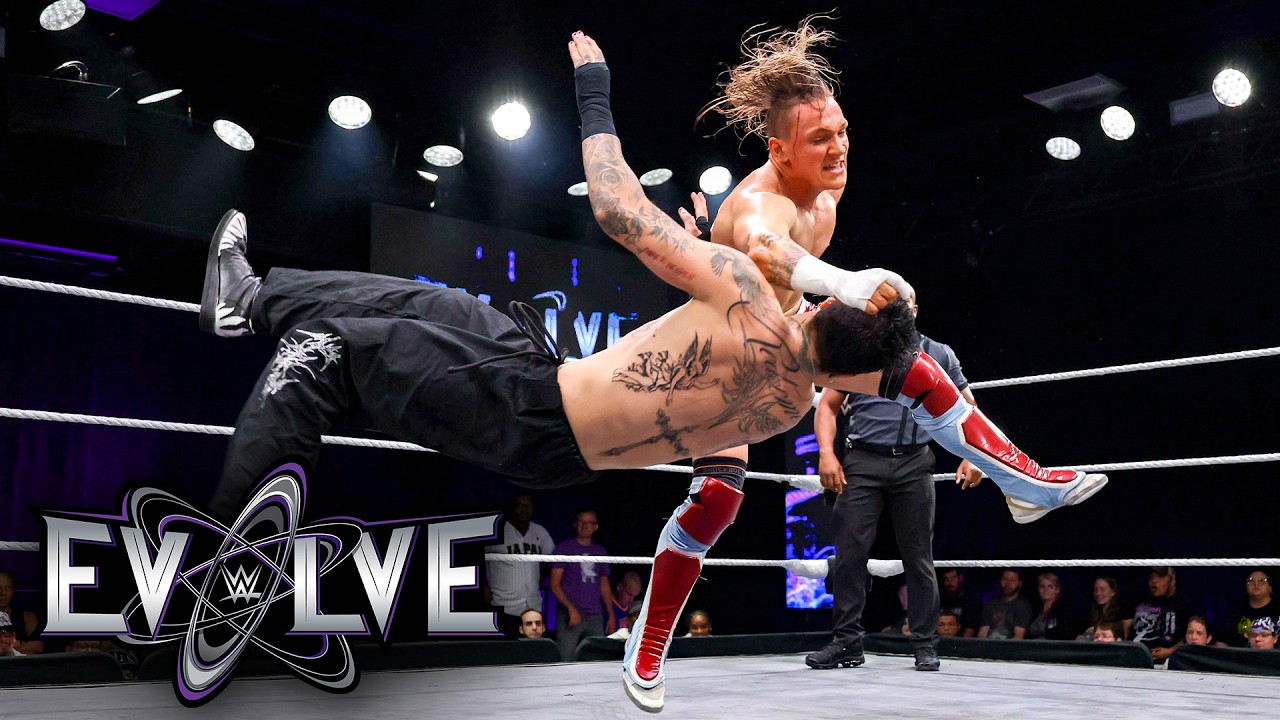
Across the ring stood Skylar Raye, and commentary leaned into the contrast immediately. Booker T, sitting on the call alongside Vic Joseph, framed Raye as a well-schooled prospect who had been trained by respected names but was walking into a very different kind of test under the television lights. It was the classic setup for this style of match: an established, credentialed babyface prospect placed opposite an incoming force whose job is to look unstoppable. The commentary even nodded to Raye’s recent WWE Evolve appearance, positioning her as someone still finding her footing at the WWE level.
The action itself was short and lopsided by design. The two locked up, and Volcan’s power advantage was obvious from the first exchange — she shoved Raye down, then went to work with a scoop slam and a heavy shoulder tackle. When Raye tried to create space, Volcan cut her off, ducking under an attack and dropping her with a scoop powerslam for an early near-fall. Raye kicked out, and commentary made a point of crediting her for it, which is exactly how you protect a wrestler you are feeding to a monster: let the audience see grit even in defeat.
Raye did get her window. She fought free of a surfboard-style submission and connected with a tilt-a-whirl facebuster, the one genuine hope spot of the match and the moment the crowd was invited to wonder, however briefly, whether the newcomer could be caught cold. She could not. Volcan absorbed it, reset, and the comeback evaporated. Moments later she scooped Raye up, folded her into the Argentine backbreaker rack, and cinched in the Natural Disaster. Raye had nowhere to go and submitted.
Here is your winner, Reina Volcan. The bell rang, the ominous entrance theme returned, and the segment closed with the image WWE clearly wanted burned into viewers’ minds: a powerful newcomer standing tall, an opponent wrecked, and a division full of women who had just been shown what is coming for them.
Full match or highlights?
Worth clarifying for anyone searching specifically for this bout: the widely circulated clip is a condensed presentation of the match with commentary, and the encounter itself was brief even in full. There is no hidden epic here that the highlights are cutting around — this was a short, decisive showcase by intent. WWE’s official channels are the place to find the sanctioned upload; we do not link to unofficial re-uploads.
Who Is Reina Volcan? From Nikki Blackheart to NXT Powerhouse
If the name Reina Volcan felt brand new when the graphic hit the screen, the woman under it was not. For most of her independent run she wrestled as Nikki Blackheart, and that is the name a large chunk of the hardcore audience still recognizes. WWE rebranded her as Reina Volcan shortly after bringing her onto NXT television, and the company publicly acknowledged the switch — a small but telling sign that it wanted the new identity locked in cleanly rather than letting two names compete for the same performer.
What makes her rise striking is how compressed it is. By the time she debuted on NXT TV, Volcan was only around two years into her in-ring career, having started wrestling in 2024. She trained under the veteran Gangrel at the Coastal Championship Wrestling school in Florida, and it was Gangrel who steered her toward the Blackheart name, a nod to his own history with the Blackhearts tag team in Japan. From there she built a quick, dense résumé on the independent scene — working promotions across Florida and the American South and picking up regional women’s championships — before WWE moved on her.
She is billed with a powerhouse presentation and a Dominican background, and the character work so far has been simple and effective: an imposing physical presence who does not talk much and lets the beatdowns do the introductions. That is a deliberate contrast to a lot of modern NXT women’s booking, which frequently leans on charisma, promos, and social-media personality. Volcan has been positioned as something more elemental — a problem to be solved rather than a personality to be enjoyed.
Her NXT arrival was an attack, not a match
Volcan did not debut in a wrestling match at all. She first turned up on the June 30, 2026 episode of NXT, inserting herself into the show by attacking Tatum Paxley during Paxley’s match with Kelani Jordan — the kind of unannounced ambush that immediately tells an audience a new predator has entered the ecosystem. The following week, on July 7, she escalated dramatically, laying out newly crowned NXT Women’s Champion Kendal Grey. In the span of eight days she had gone from unknown quantity to someone who had put hands on the division’s top titleholder.
That sequencing is the whole reason the Skylar Raye match works the way it does. By the time Volcan finally wrestled on television, WWE had already established her as a threat through action rather than words. The Raye match was not her introduction — it was the confirmation that the woman who had been jumping people from behind could also dismantle a trained opponent in a sanctioned match. Reported context from wrestling outlets adds a useful footnote: Volcan and Raye had already worked a match together at an NXT live event earlier in July, meaning the two had ring familiarity before the cameras rolled, which helps explain how crisp the televised version looked despite Volcan’s relative inexperience.
Who Is Skylar Raye? The Reality-TV Winner With a Real Athletic Base
It would be easy, watching a three-minute loss, to write Skylar Raye off as a body for Volcan to run over. That reading misses who she is and how WWE has invested in her. Raye is the former Dani Sekelsky, and she reached NXT by winning — specifically, by being named a co-winner of the second season of WWE’s developmental reality competition LFG (Legends & Future Greats), sharing the honor with Shiloh Hill on the season that wrapped in October 2025.
Her athletic background is not the usual wrestling-school origin story. Sekelsky was an accomplished cheerleader — she performed at Penn State and went on to cheer in the NFL for the Tennessee Titans — and she is billed out of Bethel, Connecticut under the nickname “The Shooting Star.” That gymnastic, high-level-cheer base translates directly to the athleticism commentary kept pointing to during the match: the agility, the ability to absorb and take big bumps, the comfort flying. She is not a plodding project; she is a genuine athlete still converting raw ability into wrestling craft.
Her LFG story also spans both seasons. In season one she competed on Mickie James’ team and advanced deep into the competition before falling short; she returned for season two, landed on The Undertaker’s side, and this time broke through. That two-season arc is part of why the commentary framing on July 21 — the idea of a well-trained prospect being tested — carried weight. Raye earned her spot on camera, in front of a viewing audience, over the better part of two seasons of a nationally distributed show.
Why the loss doesn’t bury her
Booking a credentialed prospect to lose can be risky, but the execution here protected Raye more than a casual glance suggests. She got a real near-fall sequence, was explicitly credited by commentary for her resilience, and landed a clean signature spot before the finish. In the grammar of professional wrestling, that is the difference between a competitive loss and a squash. Volcan needed to look dominant; Raye needed to look like she belonged. A finish by submission — rather than, say, a single crushing move out of nowhere — also lets Raye “lose” without being knocked cold, which is a softer landing for a young act the company still has plans for.
Sponsored • Adults 18+ Only
Create an AI Girlfriend Your Way
Choose traits, conversation style, and interests for a virtual AI character, then explore the experience at your own pace. The character is AI-generated and is not a real person.
Adults 18+ only. AI characters are virtual, not real people. Features, content, subscriptions, and pricing vary by provider; review the provider’s terms.
The Storyline: How WWE Built to This in Three Weeks
One of the cleaner things about this program is how economically it was assembled. WWE did not need a long promo feud to make Volcan feel important; it used a compact, escalating sequence of physical statements and let the roster’s reactions do the storytelling.
The timeline, as it played out on NXT television, ran roughly like this:
- June 30, 2026: Volcan makes her surprise NXT appearance, attacking Tatum Paxley during a match and announcing herself through violence rather than a formal introduction.
- July 7, 2026: She raises the stakes immediately, attacking NXT Women’s Champion Kendal Grey and instantly inserting herself into the title conversation.
- July 14, 2026: WWE makes her in-ring debut official, announcing Reina Volcan vs. Skylar Raye for the following week — giving the match a week of anticipation and a clear “can the reality-show winner slow her down?” hook.
- July 21, 2026: Volcan wins her televised in-ring debut decisively, cementing everything the prior three weeks implied.
Notice what that structure accomplishes. By attacking Paxley and then Grey before ever having a match, Volcan was established as dangerous on her own terms, so that when she finally wrestled, the outcome felt preordained and the drama shifted to how rather than whether. The Raye match then served as the exclamation point on a paragraph that had already been written in beatdowns. This is efficient television booking, and it is the kind of thing NXT has generally done well with incoming talent it wants to protect.
The Kendal Grey thread
The most important loose end running through all of this is Kendal Grey. Grey won the NXT Women’s Championship from Lola Vice at NXT Great American Bash 2026, becoming the 23rd recognized champion in the title’s lineage, and her reign was still fresh when Volcan attacked her on July 7. That single act did more for Volcan’s stock than any squash could: it told viewers, in shorthand, that this newcomer is aiming at the very top of the division and is not interested in waiting her turn.
It is worth being precise about what is confirmed versus implied here. WWE has booked Volcan to physically target the champion, which is fact on the screen. WWE has not, as of this writing, announced Reina Volcan vs. Kendal Grey for a championship. The attack plants the seed; whether and when it grows into a title match is exactly the kind of creative decision that has not been made public. Treat any specific match announcement you see floating around as unconfirmed until WWE or a credible outlet with sourcing says otherwise.
Sponsored • Adults 18+ Only
Sexy Conversations Beyond Match Night
Explore an adult social-discovery platform and review its profile and messaging options before deciding whether you want to take part.
Adults 18+ only. Profiles, access, features, and pricing vary by provider and region. Review the provider’s terms, privacy policy, and safety information.
The Finish: Why the “Natural Disaster” Torture Rack Matters
Finishers are branding, and WWE chose this one carefully. The Natural Disaster is, mechanically, a torture rack — an Argentine backbreaker rack in which the wrestler drapes an opponent face-up across the shoulders and pulls down on the head and legs to bend the spine. Longtime fans clocked the resemblance instantly, because that hold has one of the most famous pedigrees in the business.
The torture rack is inseparable from Lex Luger, who used it as his signature submission for years and made it credible against opponents of every size, from cruiserweights to giants. Its most iconic single moment came in August 1997, when Luger made Hulk Hogan submit to the rack to win the WCW World Heavyweight Championship — a rare, genuinely shocking title change built almost entirely on the hold’s believability. When a promotion hands a debuting powerhouse that specific move, the historical echo is doing real work: it frames Volcan as an old-school strength wrestler in a division that often trades in speed and flash, and it borrows decades of “this hold ends people” credibility for a woman two years into her career.
The renaming matters too. By calling it the Natural Disaster rather than acknowledging the Luger lineage on air, WWE gets the best of both worlds — the visual instantly reads as a legitimate, spine-bending finish to knowledgeable fans, while the fresh name keeps it hers. It also fits the “Volcan” branding: a natural disaster, an eruption, an unstoppable force of nature. That is tidy character design, and it is the sort of detail that rewards paying attention.
Submission finish, deliberate message
The choice to end on a submission rather than a knockout blow is its own statement. A pin says “I hit you harder.” A submission says “I bent you until you quit.” For a character being sold as a physically superior force, making an opponent verbally or visibly give up is the stronger flex — it implies dominance rather than a lucky shot, and it protects the loser from looking like they were simply flattened. Every layer of this finish, from the hold to the name to the method, points in the same direction.
Match Analysis: A Squash Done With Purpose
Let’s be clear-eyed about what this match was and was not. It was not a workrate showcase, a competitive back-and-forth, or a match anyone will nominate for year-end lists. It was a squash — a short, one-sided win designed to establish a wrestler. Judged as that, it was well executed; judged as anything else, it would disappoint. The trick to reviewing a match like this fairly is to grade it against its actual purpose.
On that scale, several things worked. The pacing was tight and never dragged. Volcan’s offense looked heavy and believable, which is the single most important requirement for a power act — if the strikes and slams don’t land with weight, the whole gimmick collapses. Her transitions were clean enough to hide her inexperience, helped considerably by the fact that she and Raye had already shared a ring at a live event. And the finish was visually distinct, which is exactly what a new act needs: fans should be able to describe how Reina Volcan beats people after seeing her do it once.
There are fair criticisms available. Squash matches, by nature, ask a lot of the audience’s patience with the losing wrestler — and using a genuine LFG winner as the opponent is a gamble, because a segment of viewers is invested in Raye and may resent seeing her steamrolled. Some will argue the match was too short to tell us much about Volcan’s actual in-ring depth; a squash proves you can win a showcase, not that you can carry a fifteen-minute title match. Both of those are legitimate points, and they are the reason the real test for Volcan is still ahead of her, not behind her. But as a piece of television with a specific job, the segment did that job.
The commentary layer
Booker T’s presence on commentary added a subtle wrinkle worth noting, given his real connection to the LFG project as one of the show’s coaching figures. Having a voice on the call who could speak to Raye’s training and pedigree lent the “credentialed prospect gets tested” framing extra authority, and it kept the segment from feeling like a nameless jobber being fed to a monster. Commentary consistently credited Raye’s athleticism and toughness while building Volcan as the inevitable winner — a balance that is harder to strike than it sounds and that did meaningful work in protecting both women.
Sponsored • Adults 18+ Only
Open a New Adult Conversation
Explore an adult online-chat service and review the conversation features it offers. You decide whether, when, and how you participate.
Adults 18+ only. Availability, eligibility, moderation, features, and pricing vary by provider and region. Review the provider’s terms before joining.
The Bigger Card: Where This Sat on July 21
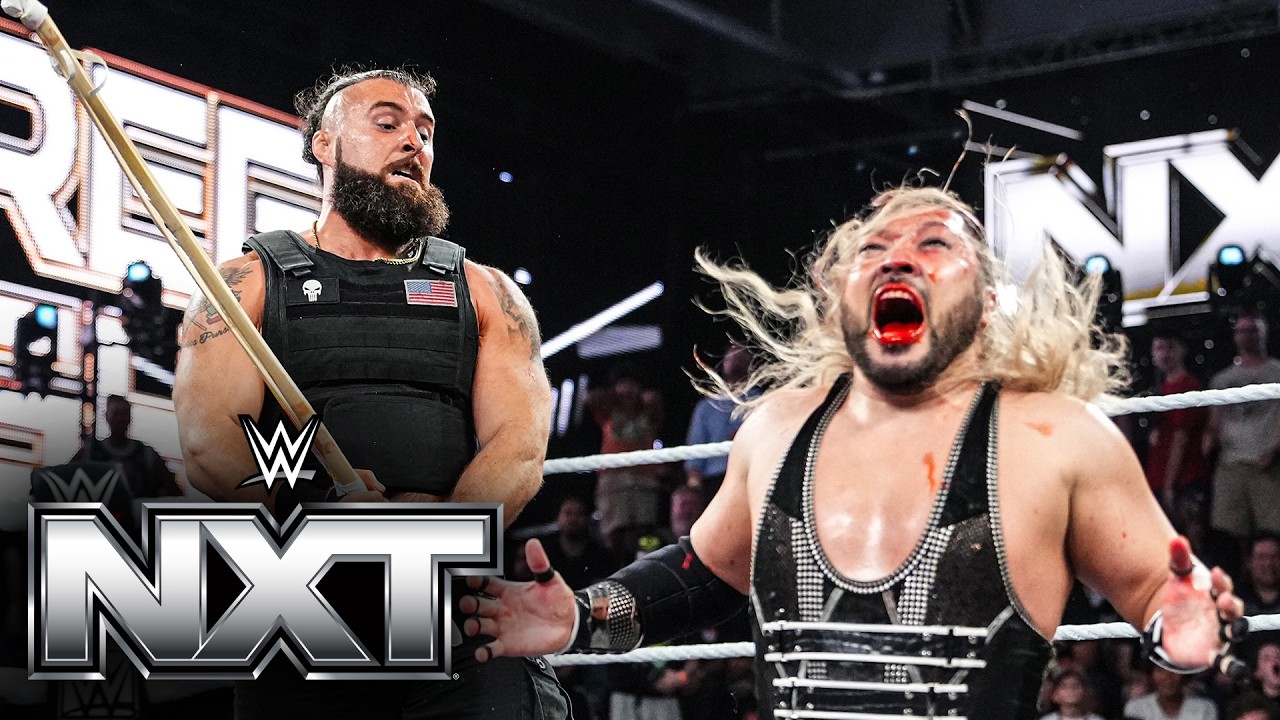
Context helps here, because the Volcan match did not air in a vacuum. The July 21, 2026 NXT was headlined by a genuinely brutal main event: NXT Champion Tony D’Angelo retained his title against Naraku in a Championship Street Fight. That match leaned into everything the stipulation promises — poison mist, chairs, trash cans, kendo sticks, ladders, LED boards, a fight that spilled backstage and through the barricades and announce table — before D’Angelo blocked a second mist attempt, turned it around, and put Naraku through a table to survive. The night ended with a jolt of star power as Mike Santana arrived and stared down the champion, setting up the next chapter at the top of the card.
Elsewhere on the show, Keanu Carver beat Hank Walker in a hard-hitting singles match, capping his comeback with a Pounce and a spinebuster, and the card featured additional women’s-division and roster business including a Nattie (Natalya) appearance. Slotting Volcan’s debut on a show anchored by a violent title Street Fight and a surprise veteran arrival is itself a booking choice: her segment provided a sharp, self-contained beat of “new threat established” amid the chaos, and it gave the women’s division a fresh talking point on an episode dominated by the men’s title scene.
NXT’s broader moment
Zoom out and the timing is favorable for a new act. NXT airs in a national network window on The CW, giving debuting talent a bigger platform than the brand had in its cable and streaming years. A visually distinctive powerhouse with a memorable finish is exactly the kind of act that can catch a channel-surfing viewer’s eye in that environment. WWE has every incentive to build clearly legible new stars for that audience, and Volcan — big, physical, easy to understand at a glance — fits that brief neatly.
The NXT Women’s Division: What Volcan Walks Into
To understand why this debut matters, you have to look at the room she is entering. The NXT women’s division in mid-2026 is in a transitional, wide-open phase. Kendal Grey is a new champion still establishing her reign after dethroning Lola Vice at Great American Bash, and the immediate title picture already has moving parts — Lola Vice, for one, has been positioned for a high-stakes rematch in a hard-hitting Underground-style stipulation. Into that mix drops Volcan, who has skipped the line of formal challengers by simply attacking the champion on sight.
That creates an interesting structural question the promotion now has to answer. Does Volcan get fast-tracked toward Grey while the iron is hot, or does WWE build her through the division first — feeding her a run of opponents to lengthen her unbeaten look before pulling the trigger on a title program? Both approaches have precedent, and both have trade-offs. Rushing risks exposing an inexperienced wrestler in a long main-event match before she is ready; slow-building risks cooling off the heat the early attacks generated. There is no obviously correct answer, and how WWE navigates it will tell us a lot about how high they actually are on her.
What is not in doubt is that the division has room. Transitional periods around a new champion are when fresh challengers get made, and a physically distinct newcomer with a protected finish and an early willingness to attack the titleholder is well-placed to be one of them. Whether she becomes a genuine top-of-the-card force or settles in as a reliable monster act depends on things we cannot see yet: her development behind the scenes, how crowds respond over time, and how patient the booking is.
Career Significance: What This Debut Means for Each Woman
For Reina Volcan, this is the moment her WWE run stopped being about potential and started being about results. Attacks establish menace, but a clean televised win over a credentialed opponent is the first real line on the record. It converts her from “intriguing newcomer who jumps people” into “wrestler who beats trained opponents on TV.” For someone only two years into the craft, being trusted with this kind of protected, deliberate introduction is a significant vote of confidence from a company that does not hand those out lightly.
For Skylar Raye, the meaning is subtler but not negative. Losing a competitive-flavored squash to a pushed newcomer is a normal, survivable step in a young career — especially when the booking goes out of its way to credit your athleticism and let you land your signature spot. The bigger story for Raye remains her broader trajectory: a two-season LFG journey, a genuine athletic base, and a nickname and presentation WWE has invested in. This match is a data point, not a verdict. The verdict comes from what she is booked to do over the next several months, not from three minutes opposite a wrestler the company was determined to make look unstoppable.
Sponsored • Adults 18+ Only
Explore an Adult Offer for Your Device
This smartlink directs to an adult social, chat, or virtual AI experience selected by the provider according to factors such as device and general availability.
Adults 18+ only. The destination may vary by device, region, and provider. Registration, subscriptions, or charges may apply; review all terms before proceeding.
Nikki Blackheart’s Independent Road: The Two-Year Sprint to WWE
The most underappreciated fact about Reina Volcan is the speed of her ascent, and it is worth slowing down to sit with it. Wrestlers who reach WWE television typically have five, eight, sometimes a dozen years of grinding behind them — hundreds of matches in armories, bingo halls, and converted warehouses; long stretches of driving overnight for a payout that barely covers gas. Volcan compressed a version of that journey into roughly two years, and that compression is both the source of her upside and the honest basis for caution about how far along she really is.
She began training in 2024 at the Coastal Championship Wrestling facility in Pompano Beach, Florida, under Gangrel — the vampiric former WWE act (real name David Heath) whose late-1990s run and cult “Brood” faction gave him a lasting place in wrestling memory. Gangrel is also a respected trainer, and he had a direct hand in shaping the Blackheart identity: the name was a nod to the Blackhearts, the masked tag team he worked as in Japan earlier in his career. That lineage detail is a small thing, but it captures how the independent scene actually transmits its craft — names, moves, and psychology handed down from one generation to the next through the schools veterans run.
From CCW she branched out across the Southern and Florida independents, working promotions such as Coastal Championship Wrestling, Metroplex Wrestling, and Mucha Lucha Atlanta, and appearing on cards connected to the broader lucha ecosystem. Along the way she captured regional women’s titles, including the CCW Women’s Championship and the MPX Women’s Championship — the kind of local hardware that does not make national headlines but does prove a young wrestler can be trusted to carry a division and draw a crowd back. That track record, plus an obviously marketable physical presence, is what put her on WWE’s radar.
Her rise even drew notice from inside WWE’s own ecosystem before she signed; reporting around her signing period noted established WWE names publicly highlighting her as a prospect worth watching. She joined WWE’s developmental system in 2026, and rather than seasoning her for a long stretch in obscurity, the company moved her onto NXT television quickly and rebranded her. The decision to fast-track a two-year wrestler onto TV, hand her a distinctive finisher, and immediately book her attacking the champion is a clear read on how WWE values her ceiling. It is also, fairly, a gamble: talent this early in development can look sensational in a controlled three-minute showcase and still have a great deal to learn about longer matches, in-ring storytelling, and the promo work a top-of-the-card run eventually demands. Both things are true at once, and good coverage should hold them together rather than pick the flattering half.
Understanding WWE LFG: The Show That Made Skylar Raye
To grasp why Skylar Raye is more than a debut opponent, you have to understand the platform that produced her. LFG — short for “Legends & Future Greats” — is WWE’s talent-competition reality series, in which aspiring wrestlers are grouped onto teams mentored by established names and put through training, promos, and matches, competing across a season for a shot at a WWE contract and a place in the developmental system. It is part talent search, part documentary, and part televised tryout, and it has become a genuine pipeline rather than a novelty.
The coaching roster is a large part of the show’s appeal. Across its seasons, LFG has featured mentors including The Undertaker, Booker T, Bubba Ray Dudley (Bully Ray), and Mickie James, among others — legends who bring credibility and whose coaching styles become storylines in their own right. That coaching connection is why the commentary framing on July 21 landed the way it did: with Booker T on the call, the “well-trained prospect steps into a real test” angle was not generic hype but a nod to a training system the announcer had personally been part of.
Raye’s LFG journey is unusually complete. She competed in the first season as a member of Mickie James’ group and advanced deep before falling short of the win. Rather than disappear, she returned for the second season, this time under The Undertaker’s banner, and broke through — but the manner of her win is a story in itself. Season two produced a wrinkle: alongside Shiloh Hill, who won the season by defeating Harlem Lewis in the finals, WWE’s Paul “Triple H” Levesque and talent-development leadership recognized Raye (then competing as Dani Sekelsky) as a co-winner, with Shawn Michaels highlighting the impression she had made. Two winners emerging from one season is not the norm, and it signaled that WWE saw enough in Raye to sign her regardless of the bracket’s official result.
Her pre-wrestling background rounds out the picture. Sekelsky was a decorated cheerleader — performing at Penn State and cheering professionally in the NFL for the Tennessee Titans — before trading, as WWE’s own framing put it, her pom-poms for wrestling boots. That is the athletic base “The Shooting Star” nickname is built on, and it is why her losses in showcase matches should be read as steps in a developmental arc rather than indictments. WWE does not invest two seasons of television and a signing in someone to make them a permanent enhancement talent.
Sponsored • Adults 18+ Only
Naughty Social Chat Space
See an adult online-chat service designed for voluntary conversation, then decide whether its format and features suit you. Participation is always your choice.
Adults 18+ only. Access, eligibility, moderation, features, and pricing vary by provider and location. Review the provider’s terms and community rules first.
WWE Evolve and the Modern Developmental Pipeline
The commentary reference to Skylar Raye’s recent WWE Evolve appearance is easy to skip past, but it points to a structural shift in how WWE develops talent — one that directly shapes the story of both women in this match. Evolve, in its current form, is a WWE developmental brand that launched on March 5, 2025. It sits a rung below NXT: where NXT is advanced developmental, the last stop before the main roster, Evolve is the entry level, a place where the newest signees, WWE ID independent prospects, and converted collegiate athletes get their earliest televised reps.
The show airs Wednesdays on Tubi in the United States and on YouTube internationally, and it is overseen by Gabe Sapolsky, who ran the original, influential Evolve promotion that operated from 2010 to 2020 before WWE acquired it. That heritage matters: the original Evolve was a critically respected indie known for taking developmental wrestling seriously, and WWE’s revived version inherits that “proving ground” identity. For a wrestler like Raye, an Evolve appearance is the natural early step — a lower-pressure environment to build matches before stepping up to NXT’s brighter lights.
This pipeline also connects, quietly, to the champion at the center of the surrounding storyline. Kendal Grey’s rise ran through Evolve — she is remembered as the longest-reigning WWE Evolve Women’s Champion before moving up — and the through-line from Evolve dominance to an NXT title reign is exactly the kind of ladder-climb narrative WWE’s system is now built to produce. When you watch Reina Volcan, Skylar Raye, and Kendal Grey share a storyline in the summer of 2026, you are watching three different points on the same developmental conveyor belt: a fast-tracked indie signee, a reality-show graduate, and an Evolve champion turned NXT titleholder. Understanding the pipeline turns a simple squash match into a snapshot of how the entire modern WWE developmental machine works.
Kendal Grey: The Champion in Volcan’s Crosshairs
Any serious discussion of where Volcan goes next has to reckon with the woman she attacked to announce her ambitions. Kendal Grey is not a placeholder champion, and the specifics of her background sharpen the stakes of a potential collision. Grey reached WWE as one of the most decorated amateur wrestlers the company has recruited in recent years. Before turning professional she was a standout on the mats: reportedly the first female to qualify for the boys’ 4A state tournament in Nevada, then a multiple-time NAIA collegiate champion at Life University and a finalist for USA Wrestling’s Women’s Wrestler of the Year in 2023. That is a legitimate combat-sports résumé, not a marketing line.
Her professional trajectory has been steep. After building through the developmental system and reigning as the longest-tenured WWE Evolve Women’s Champion, Grey broke out with an Iron Survivor Challenge victory and carried that momentum into 2026, when she captured the NXT Women’s Championship by defeating Lola Vice at Great American Bash — entering the record books as the 23rd woman to hold the title. She has been positioned, in WWE’s own promotional language, as both the future and the present of the division.
The contrast with Volcan is what makes the prospective feud interesting. Grey’s foundation is technical and grappling-based — a mat wrestler who wins through positioning, scrambles, and legitimate wrestling credibility. Volcan’s presentation is raw power and intimidation, a striker and a slammer who ends matches by bending spines. A program between them would be a clean stylistic clash: the amateur-wrestling champion against the overpowering force of nature. That is the sort of contrast that can carry a title feud even when one participant is still early in her development, because the story writes itself — can Grey’s technique neutralize Volcan’s power before the Natural Disaster ends the night? None of that is booked, to be clear. But it explains why the July 7 attack was such a shrewd move: it pointed Volcan at the one opponent whose skill set most flatters her own.
The Torture Rack: A Short History of Wrestling’s Great Backbreaker
Because so much of the coverage of this debut fixated on the finisher, it is worth giving the move its due. The torture rack — the Argentine backbreaker rack, in more technical language — is one of professional wrestling’s classic power-based finishers, and its appeal is simple: it looks like it genuinely hurts, it can be applied to opponents of any size, and it visually communicates raw strength in a way few holds match. The wrestler lifts the opponent up and across the shoulders, face-up, then pulls down on the chin and the thigh, folding the spine backward over the trapezius. It is a submission and a display of dominance in the same motion.
The move’s fame in North America is bound up with Lex Luger, whose entire late-career identity was built around it. Luger, a genuine physical specimen, made the rack believable against everyone, which is precisely why it worked as a finish: audiences accepted that once he got you up, it was over, whether you were a cruiserweight or a giant. The defining moment came in August 1997, when Luger racked Hulk Hogan and forced a submission to win the WCW World Heavyweight Championship — a title change made shocking and credible almost entirely by the hold’s reputation. For a generation of fans, “the rack” and “Luger” are effectively the same memory.
That history is the reason WWE giving the hold to a debuting powerhouse reads as such a deliberate choice. In the women’s division specifically, power finishers of this type are relatively rare — the division’s signature moves skew toward strikes, suplexes, and high-flying — which makes a torture-rack finish stand out even more. It instantly differentiates Volcan from her peers and codes her as an old-school strength wrestler. Renaming it the Natural Disaster lets WWE keep the visual credibility while avoiding an on-air comparison that would tie a new act too tightly to a legend’s shadow. It is a small masterclass in how promotions use the vocabulary of the past to make the present feel important — borrow the credibility, file off the serial number, and let the knowing fans do the rest.
NXT on The CW: Why the Platform Raises the Stakes
A debut like this hits differently in 2026 than it would have a few years earlier, and the reason is distribution. NXT now airs in a national broadcast-network window on The CW, a significant change from the brand’s earlier life on cable and streaming. Broadcast network placement means a larger, more casual, more channel-surfing audience — viewers who may not follow every storyline thread but who can be caught by a striking image or an easy-to-understand character.
That environment rewards exactly the kind of act Volcan is being built as. A large, physically imposing wrestler with a simple, legible gimmick and a distinctive finishing hold is instantly readable to a new viewer in a way a complex, promo-driven character might not be. You do not need three weeks of context to understand “this woman is bigger, stronger, and scarier than everyone she faces.” WWE has clear commercial incentive to manufacture that kind of immediately graspable star for a network audience, and the deliberate, protected way Volcan has been introduced fits that incentive precisely. The platform does not just carry the show; it shapes what kind of characters get pushed and why.
It also raises the stakes of the eventual test. A squash on a smaller platform is a footnote; a squash in a national network window is a first impression made in front of a much wider audience. That cuts both ways — the upside of a strong debut is larger, but so is the exposure if the follow-through falters. The bigger the window, the more it matters that the next steps are handled well.
Sponsored • Adults 18+ Only
Try a Conversation With a Virtual AI Girlfriend
Adjust the tone, interests, and conversational style of a virtual AI character, then decide how you want to use the experience. The character is software, not a real person.
Adults 18+ only. AI characters are virtual, not real people. Features, content, subscriptions, and pricing vary by provider; review the provider’s terms.
Match Psychology: The Anatomy of a Well-Built Squash
There is a craft to the one-sided match that casual viewers rarely notice and that this segment executed cleanly. A squash is not simply “one wrestler beats up another.” Done well, it is a piece of storytelling with its own internal grammar, and the choices inside it determine whether a debut feels like a coronation or an afterthought.
The first principle is that the dominant wrestler’s offense has to look like it hurts. Volcan’s slams, tackles, and the rack itself were delivered and sold with weight, which is what sells the character — a power act whose power does not look powerful is dead on arrival. The second principle is the controlled hope spot: the loser must get a believable window, or the audience stops caring and the “victory” means nothing. Raye’s escape and tilt-a-whirl facebuster served that function precisely, buying a half-second of doubt that made Volcan’s recovery feel earned rather than automatic. The third principle is protection of the loser, and the segment handled it with the near-fall Raye kicked out of and the commentary’s repeated credit for her toughness. A wrestler who kicks out and lands offense before losing to a submission has been beaten, not buried.
The babyface-heel dynamic is the frame around all of it. Raye, the credentialed prospect the audience is meant to pull for, plays the sympathetic underdog; Volcan, the menacing newcomer, plays the overwhelming threat. That alignment is what gives the match emotional stakes despite its length — without a rooting interest, a squash is just exercise. Even the finish choice serves the psychology: a submission lets Raye lose by being outmatched and forced to quit rather than by being knocked unconscious, a subtle distinction that preserves more of her credibility. None of this is accidental. The reason a good squash looks effortless is that a lot of deliberate craft went into making it look that way, and this one showed the seams of that craft in the best possible sense.
Historical Comparisons: The Debuting Monster, NXT Edition
The “unstoppable newcomer runs through a name opponent” debut is one of wrestling’s oldest and most reliable templates, and NXT in particular has leaned on it to launch power acts. The developmental brand has a long track record of introducing imposing figures with a squash or a beatdown and letting the roster’s fear do the character work. The specific version WWE ran with Volcan — ambush first, sanctioned dominance second — is a refinement of that playbook, front-loading the menace so the eventual match feels like confirmation.
The Luger torture-rack lineage invites its own comparison. Giving a debuting strength wrestler a hold with that much history is a way of importing instant credibility, and it is a move WWE has made before with signature spots and callbacks. The bet is that a portion of the audience recognizes the visual language of “this hold has beaten legends” even without the name being spoken. It is a low-cost, high-reward piece of shorthand — the sort of thing that makes a new act feel connected to the sport’s history rather than dropped in from nowhere.
Where the comparison should stay honest: plenty of monster debuts fizzle. For every newcomer whose early dominance blossoms into a real run, there is one whose push stalls once they have to work longer matches or cut promos. The template creates a strong first impression; it does not guarantee what comes after. Volcan has cleared the first bar impressively. The bars that actually determine careers — sustained crowd investment, in-ring range, the ability to be a compelling loser when the time comes — are still in front of her.
Critical and Audience Response
Reaction across wrestling media treated the debut as a success on its own terms rather than as a match to be star-rated. Outlets covering the show framed it as a dominant, statement-making arrival — the Fightful recap flatly described Volcan as demolishing Raye, and the finish drew a wave of coverage specifically because of the Lex Luger torture-rack comparison, with multiple sites building entire posts around the callback. That the move generated as much discussion as the result is itself a marker of a debut that landed: fans left talking about something concrete.
It is important to distinguish measurable response from anecdotal impressions. WWE’s official channels promoted the win heavily, which is promotional framing rather than neutral analysis. Beyond that, the honest picture is that reception to a three-minute squash tends to be muted in the moment — this was not a match built to draw a huge live reaction, and treating scattered social-media posts as a referendum would be a mistake. The fairer read is that the segment did its job cleanly and the aftermath — the finisher chatter, the “who is she really” curiosity — suggests the character caught attention. Whether that curdles into apathy or grows into genuine investment is something only the coming weeks will show.
What Happens Next: Grounded Possibilities, Not Fantasy Booking
Here is where discipline matters, because this is the section where speculation tends to masquerade as news. As of the July 23, 2026 research cutoff, WWE has not announced Reina Volcan’s next televised match or any championship program involving her. What follows is analysis clearly labeled as such, built on what has actually been booked.
The most obvious thread is the champion. Volcan attacked Kendal Grey on July 7, and that attack is the loudest storyline signal in play. One plausible direction is a slow tightening of that screw — more interactions, perhaps more attacks, building toward an eventual title match once Volcan has a longer unbeaten run to justify it. A competing possibility is that WWE keeps Volcan in showcase mode against a series of opponents first, protecting her inexperience while the crowd learns to fear her, and circles back to Grey later. The active Grey program with Lola Vice also matters: the title picture already has a challenger in motion, which may buy time before Volcan is inserted.
For Skylar Raye, the grounded expectation is a return to building her own act — more matches, more television reps, and continued development of “The Shooting Star” character. A wrestler with her athletic base and reality-show profile is not brought in to be a permanent stepping stone.
What we should not do is present any specific future match as a done deal. If you see a confident claim that Volcan vs. Grey is signed for a particular date, treat it as unconfirmed unless WWE or a credibly sourced report says so. The gap between “the storyline is clearly pointing here” and “this match is booked” is exactly the gap responsible coverage has to respect.
Sponsored • Adults 18+ Only
Browse an Adult Social-Discovery Service
Review the profile and discovery features offered by an adult social platform, then decide whether you want to start a conversation. There is no obligation to register or respond.
Adults 18+ only. Profiles, access, features, and pricing vary by provider and region. Review the provider’s terms, privacy policy, and safety guidance.
From Nikki Blackheart to Reina Volcan: WWE’s Naming Machine
The name change deserves its own moment, because it is a window into how WWE operates and why it matters for a wrestler’s identity. When talent arrives from the independent scene, the company frequently rechristens them — sometimes for trademark reasons, sometimes to reshape a character, sometimes both. WWE can own and protect a name it creates in a way it cannot always own a name a wrestler built elsewhere, and controlling the intellectual property is a core part of the modern model. So Nikki Blackheart became Reina Volcan, and WWE moved to formalize the new identity, publicly acknowledging the switch in the weeks around her debut.
For fans, these changes are always a little jarring — a name carries the equity a performer accumulated on the way up, and “Nikki Blackheart” meant something specific to the audience that followed her indie run. But the new name is not arbitrary. “Reina Volcan” — evoking a queen and a volcano — is built to sell exactly the character WWE is presenting: regal, eruptive, an unstoppable force of nature. Paired with the Natural Disaster finisher, the branding is internally consistent in a way that reveals intent. This is not a name pulled from a hat; it is a character concept expressed through every choice, from the ring name to the move name to the presentation. Whether the audience fully embraces “Reina Volcan” over time is an open question, but no one can accuse the packaging of being careless.
It is also a reminder to be precise in coverage. The wrestler is Reina Volcan now; Nikki Blackheart is her past identity, useful for helping fans place her but no longer her WWE name. Getting that right is not pedantry — it is the difference between coverage that reflects how the promotion presents its talent and coverage that lags a step behind.
Sponsored • Adults 18+ Only
Find an Adult Chat Format That Suits You
Review an adult online-chat service, its available conversation features, and any access requirements before choosing whether to take part.
Adults 18+ only. Availability, eligibility, moderation, features, and costs vary by provider and region. Review the provider’s terms before participating.
The Indie-to-WWE Bridge: What Volcan’s Following Brings
One quiet advantage Volcan carries into NXT is something WWE cannot manufacture from scratch: a pre-existing audience. Wrestlers who come up through the independent scene arrive with a built-in following — fans who watched them in small buildings, bought their merchandise, and feel a sense of ownership over their rise. For a chunk of the NXT audience, Volcan’s debut was not the introduction of an unknown but the next chapter for a wrestler they had already been tracking as Nikki Blackheart. That carryover is real value, and it partly explains why WWE moved her onto television so quickly rather than seasoning her in obscurity: some of the audience-building work was already done.
It also creates a distinctive kind of discourse around a debut like this. When an indie-bred wrestler changes names on the way into WWE, the conversation splits along familiar lines — longtime followers debating whether the new identity honors what made the wrestler special, newer viewers meeting the character fresh with no prior attachment, and everyone comparing notes. That dual-track reception is not a problem to be solved; it is a marker of a signing that mattered enough to generate opinions. Wrestlers no one knew do not spark arguments about their name changes.
There is a balancing act here that WWE has not always navigated smoothly with indie call-ups. Lean too hard into the WWE reinvention and you risk discarding the very qualities that earned the wrestler a following in the first place; cling too closely to the indie act and you fail to build the character into something that works on a national platform. The most successful transitions keep the essence — the physicality, the presence, the thing that made fans care — while upgrading the packaging. On the early evidence, Volcan’s transition has preserved her core identity as an intimidating powerhouse while giving her a cleaner, more television-ready presentation. Whether that balance holds as she is asked to do more is, like so much about this debut, a question the coming months will answer.
The Top of the Card: The Street Fight, Mike Santana, and NXT’s Direction
Volcan’s debut shared a night with a main event that tells you a lot about where NXT’s creative energy sits in mid-2026, and the contrast is instructive. Where the women’s segment was a controlled, three-minute character showcase, the Tony D’Angelo–Naraku Championship Street Fight was an extended exercise in escalation and violence — the two ends of the booking spectrum on a single episode.
The Street Fight itself embraced the stipulation fully. Naraku, the challenger, opened by blinding the champion with poison mist — a nod to a long lineage of mist-using heels in wrestling history — before turning the environment into a weapon, launching D’Angelo through LED boards and reaching for chairs, trash cans, kendo sticks, and ladders. The fight refused to stay in the ring, spilling backstage and then back to ringside through barricades and the announce table, which is exactly what a Street Fight is supposed to do: erase the boundaries of a normal match and make the whole arena the battlefield. The finish looped back to the opening image with satisfying symmetry — Naraku reached for the mist a second time, D’Angelo blocked it and turned it against him, then drove the challenger through a table with his Dead To Rights finisher to retain. Using the challenger’s own signature weapon against him is a clean piece of storytelling that rewarded viewers who had watched the whole match.
The bigger story, though, was what happened after the bell. As D’Angelo celebrated, Mike Santana arrived, perching on the barricade for a face-off with the champion. Santana’s appearance is the kind of star-power injection that reframes an entire division — a proven, credible name stepping into the title picture and instantly giving the champion a marquee potential challenger. For NXT, dropping a Santana arrival on the same night as a Volcan debut is a statement of ambition: the brand is simultaneously building new stars from scratch and importing established ones to raise the ceiling of its main events.
The rest of the card reinforced the sense of a brand with a deep bench. Keanu Carver’s win over Hank Walker continued a power-versus-power story in the men’s division, with Carver flattening Walker with a Pounce and a spinebuster after Walker’s comeback fell short. The show also featured women’s-division business beyond Volcan, including a Nattie (Natalya) appearance opposite Jaida Parker — a reminder that NXT continues to blend veteran main-roster names with its developing talent, giving prospects credible, experienced opponents to work with and learn from. Taken together, the July 21 episode reads as a brand comfortable operating on multiple levels at once, and Volcan’s segment was one deliberate piece of a larger, well-organized whole.
Reading Reina Volcan’s Character: Presentation as Storytelling
It is worth pausing on the character itself, because the presentation is doing a lot of quiet work. Volcan has been introduced as a wrestler of few words — the vignette and the entrance carry the intimidation, and the matches finish the sentence. In an era where so many acts are built on microphone skills and social-media personality, a silent, physically dominant character is almost a throwback, and it is a smart choice for a wrestler still early enough in her career that leaning heavily on promos might expose a rough edge.
The elemental branding — the volcanic imagery, the “natural disaster” finish, the sense of an unstoppable force — also does something subtle for the audience: it lowers the burden of explanation. You do not need backstory to fear a volcano. That legibility is a feature, not a limitation, especially on a broadcast-network platform where new viewers are constantly cycling through. The risk, of course, is that a character built entirely on menace can hit a ceiling if it never adds dimension — wrestling history is full of monster acts that got over on presentation and then plateaued when the novelty wore off and no deeper character emerged. The most successful versions of this archetype eventually reveal something more: a personality, a vulnerability, a reason to care beyond fear. Whether WWE develops that additional layer for Volcan, and when, is one of the more interesting long-term questions her debut raises.
For now, though, the presentation is achieving its immediate goal. Reina Volcan looks like someone to be worried about, and every element of her character — name, finisher, demeanor, booking — reinforces the same idea without contradiction. Coherence like that is harder to achieve than it sounds, and it is a large part of why the debut worked.
The Bigger Strategy: WWE’s Women’s Division in 2026
Step back from the single match and Volcan’s arrival fits a broader pattern in how WWE is building its women’s wrestling in 2026. The company has been visibly investing in variety — recruiting from amateur wrestling (Kendal Grey), from reality television (Skylar Raye and the LFG pipeline), and from the independent scene (Volcan herself) — and stocking its developmental brands with a wider range of body types, styles, and backgrounds than the division carried in previous eras. A powerhouse who finishes with a torture rack, a decorated amateur grappler holding the title, and a former NFL cheerleader turned high-flyer are three genuinely different kinds of wrestler, and having all three in the same division at the same time is by design.
That diversity of style is strategically valuable because it creates natural contrasts, and contrast is the engine of compelling matches. A division where everyone wrestles the same way runs out of fresh matchups quickly; a division with power wrestlers, technicians, and flyers can keep generating first-time encounters that feel distinct. Volcan’s specific role in that ecosystem is clear: she is the immovable object the rest of the division has to solve, the physical threat that makes the technicians and flyers look clever when they find a way around her and heroic when they overcome her. Every division benefits from having a credible monster, and WWE appears to be building Volcan to be that piece.
There is a fair critique to register alongside the praise. Building a division around clearly delineated archetypes can tip into formula if the booking is not careful, and monster acts in particular are easy to protect and hard to pivot — the first loss is always a delicate moment, and mishandling it can undo months of investment. WWE’s developmental system has generally been thoughtful about these transitions in recent years, but “generally” is not “always,” and the proof will be in how Volcan is handled over a longer horizon than a single squash. The debut earns optimism. It does not, by itself, earn certainty — and honest coverage should say so.
Sponsored • Adults 18+ Only
Sexy Social Dating at Your Pace
Look through the options offered by an adult social-discovery service and decide whether its approach to profiles and messaging is right for you.
Adults 18+ only. Profiles, registration, availability, features, and pricing vary by provider and region. Review the provider’s terms and privacy policy.
Reina Volcan’s In-Ring Style: What Three Minutes Revealed
A short match limits how much you can conclude about a wrestler, but it does not tell you nothing, and the July 21 showcase offered a few honest data points about Volcan’s ring work. Her power offense is the headline: the scoop slam, the shoulder tackle, and the scoop powerslam were all delivered with visible force and clean mechanics, and the powerslam into a near-fall in particular showed a wrestler who understands how to make a big move look like a potential finish. For a power act, that believability is the whole game, and she has it.
Her transitions were smoother than a two-year wrestler’s often are, though it is fair to credit some of that to the prior live-event match with Raye, which gave the pair a rehearsed familiarity. The lift into the Argentine backbreaker rack — a move that requires genuine strength and balance to execute safely and convincingly — was handled without any visible struggle, which sells the strength gimmick as real rather than performed. That is not a small thing; a botched or labored finisher on a debut can define a wrestler negatively for a long time, and Volcan avoided that entirely.
What the match could not reveal is equally important to name. Three minutes tells you nothing about how Volcan paces a fifteen-minute match, how she works from underneath when she is the one taking a beating, how she structures a comeback, or how she handles the improvisational give-and-take of a long, competitive contest. Those are the skills that separate a compelling showcase act from a genuine main-event wrestler, and they can only be assessed in the kind of match she has not yet had on television. The debut showed a strong, credible foundation. The building on top of it is still to be seen — and pretending otherwise, in either direction, would be dishonest.
Confirmed, Reported, and Speculated: A Reader’s Guide to This Story
Because wrestling coverage so often blurs these lines, it is worth laying them out plainly for this specific story, so readers can weigh what they encounter elsewhere. This is the difference between journalism and hype, and it matters most precisely when a story is exciting.
What is confirmed — observable on television or stated officially — is straightforward: Reina Volcan defeated Skylar Raye by submission on the July 21, 2026 NXT; the finish was her Natural Disaster torture-rack hold; Volcan previously appeared on NXT attacking Tatum Paxley (June 30) and Kendal Grey (July 7); the match was announced the prior week; and the episode’s main event saw Tony D’Angelo retain the NXT Championship over Naraku in a Street Fight, followed by Mike Santana’s arrival. Kendal Grey being the reigning NXT Women’s Champion, having beaten Lola Vice at Great American Bash, is likewise a matter of record.
What is reported — sourced by wrestling media rather than announced by WWE — includes context such as Volcan and Raye having worked a match at an NXT live event earlier in July, and the various biographical details of both wrestlers’ pre-WWE careers. Reporting of this kind is generally reliable when it comes from established outlets, but it is a different category from an official announcement, and it should be attributed rather than stated as if it came from WWE itself.
What is speculation — including this article’s own forward-looking analysis — is everything about what comes next: a possible Volcan–Grey title program, the pace of Volcan’s push, and how Raye rebounds. These are informed reads on where the storyline points, not reports of decisions that have been made. Any coverage that presents them as done deals has crossed a line worth noticing. Keeping these three buckets separate is the single most useful habit a wrestling reader can develop, and this story is a clean illustration of why.
Sponsored • Adults 18+ Only
Build a Virtual Conversation Experience
Select preferences for a virtual AI character and explore an AI-powered conversation shaped by the settings you choose. The character is not a real person.
Adults 18+ only. AI characters are virtual, not real people. Features, content, availability, subscriptions, and pricing vary by provider; review the provider’s terms.
Related Matches and Segments Worth Watching
If this debut caught your interest, a few genuinely relevant pieces of context will deepen it — all available through WWE’s official channels:
- Reina Volcan’s June 30, 2026 attack on Tatum Paxley. The actual first appearance, and the moment that established her as a disruptive force before she ever wrestled on TV. It is the true starting point of this story.
- Volcan’s July 7, 2026 attack on Kendal Grey. The single most consequential beat of the build — the newcomer putting hands on the champion — and the seed of whatever title program may follow.
- Kendal Grey’s NXT Women’s Championship win over Lola Vice at Great American Bash 2026. Essential viewing for understanding the champion Volcan has targeted and the division she is trying to climb.
- The July 21, 2026 NXT Championship Street Fight, Tony D’Angelo vs. Naraku. The main event that shared the card with Volcan’s debut, and a strong example of NXT’s harder-edged main-event style.
- Skylar Raye’s LFG Season 2 run. For anyone who wants to understand why Raye is more than a debut opponent, her journey across the reality competition is the backstory.
Frequently Asked Questions
Who won Reina Volcan vs. Skylar Raye?
Reina Volcan won. She defeated Skylar Raye by submission with her finisher, the Natural Disaster (a torture-rack hold), in her televised NXT in-ring debut.
When and where did the match take place?
It aired on the July 21, 2026 episode of WWE NXT on The CW in the United States.
Was a championship on the line?
No. This was a non-title singles match. It served as Reina Volcan’s in-ring debut and her first televised WWE victory.
What is the Natural Disaster?
It is Reina Volcan’s finishing submission, mechanically a torture rack (Argentine backbreaker rack). The wrestler lifts the opponent across the shoulders and bends the spine backward. Fans widely compared it to Lex Luger’s signature Torture Rack.
Who is Reina Volcan?
She is a WWE NXT wrestler who competed on the independent scene as Nikki Blackheart. She began wrestling in 2024, trained under Gangrel, and WWE rebranded her as Reina Volcan after bringing her onto NXT television in 2026.
Who is Skylar Raye?
Skylar Raye is the former Dani Sekelsky, a co-winner of WWE LFG Season 2 (alongside Shiloh Hill) and a former NFL cheerleader for the Tennessee Titans. She is billed as “The Shooting Star.”
Had Volcan and Raye faced each other before?
According to wrestling media reporting, the two worked a match at an NXT live event earlier in July 2026, before their televised meeting. The July 21 bout was their first on WWE television.
Was the widely shared clip the full match or highlights?
The circulated version is a condensed presentation with commentary, but the match itself was short by design — a deliberate showcase rather than a long contest. Look for the official upload on WWE’s channels.
Why did Volcan attack Kendal Grey?
As part of her arrival storyline, Volcan attacked NXT Women’s Champion Kendal Grey on the July 7, 2026 episode, positioning herself as a threat to the title. WWE has not announced a championship match between them as of this writing.
Is Reina Volcan going to challenge for the NXT Women’s Championship?
That is the direction the storyline hints at, but no title match has been officially announced. Any specific claim otherwise should be treated as unconfirmed until WWE or a credible sourced report says so.
What happened in the rest of the July 21 NXT?
The main event saw Tony D’Angelo retain the NXT Championship over Naraku in a Street Fight, after which Mike Santana arrived to confront the champion. Keanu Carver also defeated Hank Walker on the card.
Is Reina Volcan the same wrestler as Nikki Blackheart?
Yes. Reina Volcan is the WWE ring name for the wrestler who competed on the independent circuit as Nikki Blackheart. WWE rebranded her after bringing her onto NXT and publicly acknowledged the name change.
Who trained Reina Volcan?
She trained under the veteran wrestler Gangrel at the Coastal Championship Wrestling school in Florida. Gangrel also inspired the Blackheart ring name she used on the independents.
Who else won WWE LFG Season 2?
Shiloh Hill won the season by defeating Harlem Lewis in the finals. Skylar Raye (then Dani Sekelsky) was recognized as a co-winner and signed alongside him.
What is WWE Evolve?
Evolve is WWE’s entry-level developmental brand, launched in March 2025, that sits below NXT in the pipeline. It airs on Tubi in the United States and on YouTube internationally, and it is where many of WWE’s newest signees get early televised experience.
Where can I watch NXT?
NXT airs live on The CW in the United States, with official highlights on WWE’s YouTube channel and international broadcast partners carrying the show in their own markets. Check your regional listing for the platform available to you.
Final Thoughts
Reina Volcan’s NXT in-ring debut was a small match with a large purpose, and it accomplished that purpose with unusual efficiency. In three minutes, WWE confirmed everything the previous three weeks of ambushes had implied: that this is a wrestler the company sees as a legitimate physical force, that her finish is distinctive enough to be a talking point, and that the women’s division now has a new problem to solve. The Skylar Raye match was never going to be a classic, and grading it as one misses the assignment — it was a statement, and it read loud and clear.
The honest caveats remain. A squash proves you can dominate a showcase, not that you can carry a title program, and Volcan’s real tests — longer matches, sustained crowd investment, the day she has to lose and stay strong — are still to come. Using a genuine LFG winner as the opponent was a calculated risk, and how much of the audience Raye keeps through this stretch will be worth watching. But the foundation here is sound, the character is legible, and the storyline seed with Kendal Grey gives the whole thing somewhere obvious to go.
Keep your eye on two things: whether WWE fast-tracks Volcan toward the title or builds her patiently through the division, and whether Skylar Raye’s booking after this loss reflects the investment WWE has clearly made in her. Those two threads will tell you more about the real plan than any single squash ever could. For a debut that lasted only a few minutes, it left a surprising amount to think about — which, in the end, is exactly what a debut is supposed to do.
For more, see our latest WWE NXT match analysis, the complete WWE NXT results archive, and our guide to the NXT Women’s Championship history.
Sponsored • Adults 18+ Only
Shape a Virtual Character for Conversation
Select personality and conversation preferences for a virtual AI character, then explore the experience on your own schedule. The character is AI-generated and is not a real person.
Adults 18+ only. AI characters are virtual, not real people. Availability, content, subscriptions, and pricing vary by provider; review the provider’s terms.
Affiliate Disclosure: This article contains advertising and may include sponsored or affiliate links. We may earn a commission when readers click or register through selected links, at no additional cost to them. Some advertised services are intended only for adults aged 18 or over.
 Tony D’Angelo Survives Naraku in an NXT Street Fight — Then Mike Santana Walks In