Tony D’Angelo Survives Naraku in an NXT Street Fight — Then Mike Santana Walks In
The July 21, 2026 episode of WWE NXT did not close with a title change. It closed with a warning shot. Tony D’Angelo turned back Naraku in a Championship Street Fight that spat poison mist, splintered a table and drew a standing ovation inside the WWE Performance Center — and then, before the champion could finish celebrating, a familiar entrance theme cut through the building and a two-time TNA World Champion appeared in the crowd, staring a hole through the man holding the belt. If you came here looking for a single sentence, here it is: D’Angelo retained, and Mike Santana arrived.
Spoiler warning: this article discusses the full results and finish of the July 21, 2026 NXT main event and the surprise appearance that closed the show. If you have not watched yet and want to stay clean, bookmark this and come back.
That two-item summary is accurate, but it undersells what actually happened. This was one of the more consequential regular television episodes NXT has produced in months, because it did two jobs at once. It settled a personal, increasingly bloody feud between the champion and the mysterious mist-spitting challenger who spent the spring pretending to be his ally — and it planted the seed for the biggest fresh main-event program the brand has going into the back half of 2026. Underneath the headline, the show also advanced a women’s title feud with a rare stipulation, delivered a genuinely impressive in-ring debut, and moved several undercard stories forward. This feature breaks all of it down: what happened, why it happened, who these people are, how the finish was built, and what the result sets up next.
NXT July 21, 2026 at a Glance
- Promotion: WWE (NXT brand)
- Episode: WWE NXT on The CW
- Date: Tuesday, July 21, 2026
- Venue: WWE Performance Center, Winter Park, Florida
- Commentary: Vic Joseph and Booker T
- Ring announcer: Mike Rome
- Main event: Tony D’Angelo (c) vs. Naraku — NXT Championship Street Fight
- Stipulation: Street Fight (anything goes, no disqualification, no count-out)
- Championship: NXT Championship
- Winner: Tony D’Angelo, by pinfall, to retain
- Show-closing angle: Mike Santana appears in the crowd for a silent staredown with the champion
- How to watch: NXT airs live Tuesday nights on The CW in the United States and streams on the service internationally through WWE’s distribution partners; check your regional listing for availability
Everything below expands on those bullet points, but the short version for anyone skimming on a phone is simple. The belt did not move. The main story of the night was the finish and the man who interrupted it. And NXT walked out of the episode with a cleaner, hotter championship picture than it walked in with.
Sponsored • Adults 18+ Only
Meet New People Beyond the Match Discussion
Explore an adult social-discovery platform where eligible members can review available profiles, interests, and communication tools before deciding whether to connect.
Profile availability, communication features, eligibility, registration requirements, and pricing vary by provider and region. Review the provider’s terms, privacy policy, safety information, and billing details before joining.
What Happened in the Main Event
NXT opened the night by framing the entire show around this collision. As the broadcast came on the air, on-screen General Manager Robert Stone reminded lead official Daryl Sharma that D’Angelo and Naraku were forbidden from touching each other before the bell — Stone wanted a clean, decisive main event and no early ambush. That instruction did exactly what it was designed to do: it hung tension over the entire episode, so that every backstage cutaway and every commercial break carried the low hum of two men waiting to be turned loose on each other.
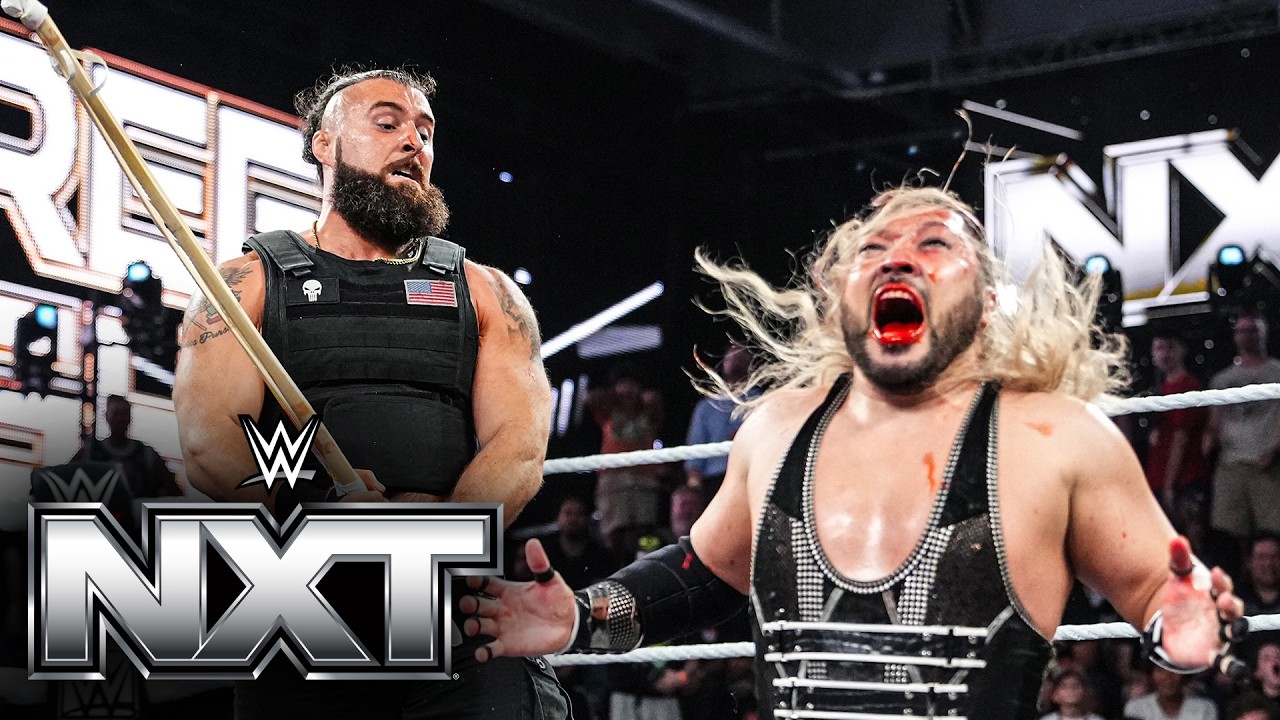
When the Street Fight finally arrived to close the show, the restraint evaporated in about a second. Naraku did not wait for a feeling-out process. He blew his trademark poison mist into D’Angelo’s face right off the bell, blinding the champion and sending him sprawling to the floor. From there the challenger emptied the toolbox — chairs, trash cans, kendo sticks, ladders — and used the environment itself as a weapon, launching D’Angelo into the LED boards at ringside. The fight spilled backstage, then poured back out to the arena floor, where both men went through barricades and the announce table before the finish came into view.
The turn came, fittingly, on the same weapon that started it. Late in the match Naraku loaded up the mist a second time, going back to the well that had defined the whole feud. This time D’Angelo was ready. He blocked it, and in the signature payoff of the night, redirected the mist back into Naraku’s own eyes. Suddenly it was the challenger who could not see, and D’Angelo who had a free hand and a pile of weapons. He beat Naraku down with a kendo stick, dragged the steel ring steps into the picture, and finished the job by planting Naraku through a table with Dead To Rights, his spinning side-slam finisher. The referee counted three at roughly the twelve-minute mark, and the Performance Center gave the champion a standing ovation.
Then the tone flipped. As D’Angelo soaked up the reaction, a new entrance theme hit and the crowd noise changed shape. Mike Santana — recently the TNA World Champion, now a WWE signing — appeared through the crowd, climbed onto the barricade, and simply stared at the champion. No words, no attack, no handshake. Just a look that said the next chapter of the NXT title picture had already been written. The show went off the air on that image.
So the result page reads clean: Tony D’Angelo defeated Naraku by pinfall to retain the NXT Championship. But the story page reads much richer, because the win closed one door and Santana’s arrival kicked open another.
Was the YouTube Upload the Full Match or Highlights?
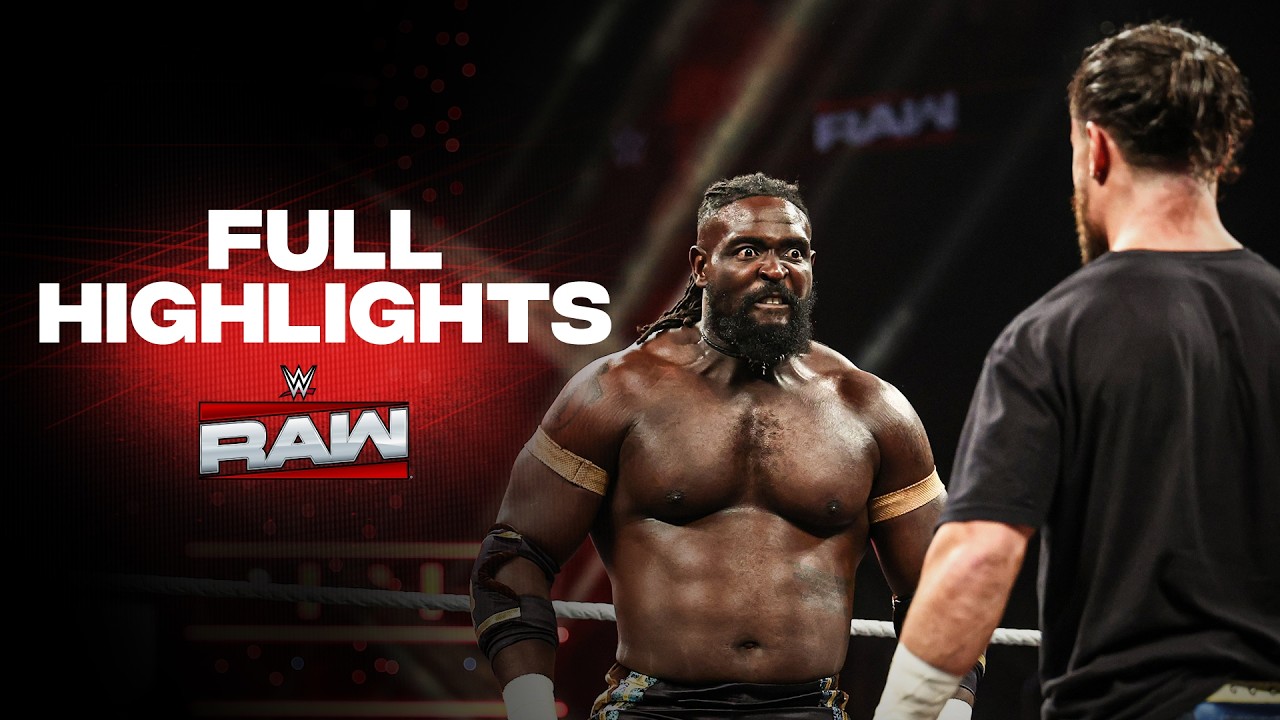
Worth clearing up early, because it drives a lot of search traffic. The widely shared July 21 upload attached to this coverage is a highlights presentation of the episode’s biggest moments, cut together from the broadcast — the Street Fight’s key spots, the finish, and the Santana arrival, along with flashes of the undercard. It is not a start-to-finish, entrances-and-all airing of the full twelve-minute main event, and it compresses the backstage segments that connected the show. If you want the complete match with full entrances and the uninterrupted finishing sequence, that lives on WWE’s official platforms and the full-episode replay rather than in a short highlight clip. Knowing that distinction matters, because the highlight reel makes the match look even more frantic than it played live — the quieter control segments that gave the brawl its shape get trimmed for time.
Who Is Tony D’Angelo, and Why Does This Reign Matter?
Tony D’Angelo has been one of NXT’s most durable long-term projects. He arrived years ago as “The Don of NXT,” a mob-styled character complete with a crew, a Godfather-adjacent presentation and an act that leaned hard into organized-crime theatrics. For a long stretch that gimmick threatened to become a ceiling — broad, cartoonish, easy to enjoy but hard to take seriously as a top guy. What makes his current run notable is how thoroughly he has grown out of that. The mob trappings have been sanded down into something leaner and more credible: a legitimately tough, physical heavyweight who happens to carry a little of that old-school toughness in his presentation without drowning in it.
He captured the NXT Championship on April 4, 2026, at NXT Stand & Deliver, the brand’s WrestleMania-weekend showcase, winning a fatal four-way over Joe Hendry, “All Ego” Ethan Page and Ricky Saints. That is a meaningful sentence for two reasons. First, it was his first NXT Championship, the culmination of years of build. Second, the field he beat tells you how NXT values him: Hendry is a viral crossover act with genuine mainstream reach, Page is a polished veteran heel, and Saints is one of the brand’s marquee free-agent additions. Winning the belt out of that specific group was NXT’s way of saying D’Angelo belonged at the very top of the marquee, not just near it.
By the time the Naraku Street Fight came around, D’Angelo was roughly three and a half months into the reign and had settled into a specific role: the fighting babyface champion who keeps getting dragged into wars. That is exactly the profile you want when a hot free-agent challenger shows up, because a champion who has bled to keep the belt is a far more compelling obstacle than one who has coasted. His retention over Naraku was, in booking terms, the last box he needed to check before the promotion could pivot the entire title scene toward its next chapter.
From Broad Gimmick to Believable Champion
It is worth dwelling on the D’Angelo evolution because it explains why this reign works where an earlier version of the character might not have. When a wrestler debuts with a loud, high-concept gimmick, the act often becomes a trap: the audience enjoys the shtick but files the performer under “comedy” or “midcard color” and never quite accepts them as a threat. The mob-boss presentation carried that risk in spades. It was fun and it got him over, but “fun and over” is not the same as “credible world champion,” and plenty of characters built on a single strong hook have stalled at exactly that ceiling.
What D’Angelo and NXT’s creative team did well was let the character age into the performer rather than the other way around. The theatrical trappings receded, the physical style got heavier and more grounded, and the trash-talk shifted from cartoon menace toward the kind of chip-on-the-shoulder toughness that reads as real. By the time he won the belt at Stand & Deliver, he was not “the mob guy who got hot.” He was a legitimate heavyweight who happened to have come up through a memorable gimmick. That distinction is the whole ballgame when you are about to book him against a former world champion from another company. A challenger like Santana only works if the champion is taken seriously, and years of careful sanding are the reason he is.
There is also a subtler booking benefit. Because D’Angelo spent so long in the NXT ecosystem, his title reign carries a “homegrown champion defends the brand” flavor almost automatically. When an outsider walks in — whether it is Naraku with his New Japan pedigree or Santana with his TNA credentials — D’Angelo becomes the standard-bearer by default. He represents NXT itself against the incomer. That is a valuable, reusable narrative frame, and it is only available because the promotion invested years in making him feel like a fixture rather than a passing act.
Sponsored • Adults 18+ Only
Build a Virtual AI Character for Off-Hour Conversation
Choose from available appearance, personality, and conversation settings to create a virtual AI character for private entertainment and casual conversation.
The character is virtual and AI-generated, not a real person. Responses can be inaccurate, repetitive, or unexpected. Available controls, subscriptions, content settings, and pricing vary; review the provider’s terms and privacy policy.
Who Is Naraku?
Naraku is one of the more distinctive characters NXT has introduced in 2026, and the Street Fight was the violent conclusion of a story that ran most of the spring and summer. He first appeared on the April 28, 2026 episode of NXT, arriving with the backstory of roughly a decade spent in New Japan Pro-Wrestling — the kind of pedigree that immediately reads as “serious” to hardcore viewers. His calling card is the poison mist, the sprayed-mist spot with deep roots in Japanese wrestling and lucha libre, historically associated with characters descended from the Great Muta and Tajiri lineage. That single visual did a lot of characterization work in a short time: it marked him as an outsider, as dangerous, and as someone willing to win ugly.
The clever wrinkle in his introduction was that he did not debut as an obvious enemy. Naraku first inserted himself into D’Angelo’s orbit under the guise of an ally, even delivering a t-shirt to the champion and then positioning himself as a self-appointed protector of D’Angelo’s reign. The catch, of course, was that the “protection” was a job application. Naraku was interjecting himself into title business to force his way into a championship match, and once the mask of loyalty slipped, the relationship curdled into exactly the kind of personal grudge that justifies a no-rules blowoff. That build — false friend, then betrayal, then escalation — is a reliable structure precisely because it makes the eventual violence feel earned rather than arbitrary.
The Poison Mist: A Weapon With Deep Roots
Naraku’s mist is not a random gimmick. It plugs into one of the most recognizable visual traditions in professional wrestling, and understanding that lineage adds a layer to why the character registers so quickly with longtime fans. The sprayed-mist spot traces back through Japanese wrestling to performers like The Great Kabuki, and was popularized worldwide by The Great Muta, whose green mist became an iconic image across decades in New Japan, WCW and beyond. Tajiri carried the same weapon into WWE and ECW, where his mist became a beloved and feared equalizer. In each case, the mist did the same narrative work: it marked its user as exotic, unpredictable and willing to blind an opponent to win.
By giving Naraku a New Japan background and the mist, NXT is speaking a specific language to its most invested viewers. It instantly communicates “this man learned to fight somewhere dangerous and does not play by your rules,” without a single line of dialogue. The mist also comes with built-in dramatic mechanics that a smart booker can exploit: it can be blocked, it can miss and hit the wrong target — as it did when it caught a security guard during the July 14 brawl — and, most usefully, it can be turned against its user. NXT used all three of those beats across the feud, which is why the mist never felt like a one-note prop. It was a Chekhov’s gun, introduced early and fired at exactly the right moment in the Street Fight finish. That is the difference between a gimmick and a storytelling device, and it is the strongest single element of Naraku’s presentation.
The Road to the Street Fight
The path here was a slow burn that tightened quickly at the end. After establishing himself as a hovering presence around the title, Naraku earned a shot the traditional way, beating Mason Rook in a number one contender’s match. He then challenged D’Angelo at the Great American Bash and came up short — a clean-ish first meeting that gave the champion the win but left the challenger’s credibility intact enough to justify a rematch.
That is where the feud got personal. In the weeks after the Bash, Naraku stopped waiting for sanctioned opportunities and simply started attacking D’Angelo, and the champion returned fire in kind. On the July 14 episode, D’Angelo stormed the ring to jump Naraku, and when Naraku tried to answer with the mist, the spray caught a security guard instead of the champion — a small but effective escalation that pushed the hostilities into the crowd and the parking lot. The brawl that followed was chaotic enough that Robert Stone, wanting the issue resolved on his own terms with a definitive winner, sanctioned a Street Fight for the following week. In other words, the stipulation was not decorative. It was the storyline’s natural endpoint: two men who had already been fighting everywhere except a sanctioned ring were finally given permission to do it with the belt on the line.
Inside the Street Fight: Structure, Psychology and the Finish
Television main events live and die on efficiency, and this one had a real constraint working against it. Because the match started close to the top of the hour, D’Angelo and Naraku were not handed the twenty-plus minutes a blood feud like this might get on a premium live event. They had roughly twelve. The interesting thing is how they used that limitation as a design principle rather than fighting it.
The structure was front-loaded and linear on purpose. Rather than build slowly to the weapons, the match opened at a sprint — mist, then a barrage, then environmental spots — because a compressed Street Fight cannot afford a long feeling-out period. The psychology that held it together was the mist itself, which is smart, economical storytelling. In a match with no rules and a hundred possible weapons, the promotion wisely made one specific weapon the throughline. Naraku’s mist opened the match, defined his advantage, and then became the exact tool of his downfall. That is classic wrestling symmetry: the heel’s signature cheat gets turned against him, so the babyface wins not by out-brawling a brawler but by out-thinking him at his own game.
The most important beat was the second mist attempt. Everything before it was spectacle — entertaining, violent, but essentially even. The match turned on a single decision: Naraku reaching for the mist a second time, and D’Angelo blocking and reversing it. That moment did three jobs at once. It shifted momentum decisively for the first time, it paid off the entire feud’s central image, and it protected both men — Naraku lost, but he lost to his own weapon rather than being simply outmuscled, which keeps him viable as a threat going forward.
The finishing sequence flowed directly from that reversal. With Naraku blinded, D’Angelo controlled the pace: the kendo stick to soften him up, the steel steps to escalate, and finally Dead To Rights through a table for the decisive fall. Driving a finisher through furniture is a Street Fight cliché for a reason — it reads as conclusive in a match type where a normal pin can feel arbitrary — and here it capped a clean momentum arc from “champion in trouble” to “champion in control.” The standing ovation that followed was the crowd acknowledging both the violence and the resolution.
Is it fair to critique the match? Yes, and honesty demands it. This was a very good television Street Fight, not an all-time classic, and the ceiling was set by the clock. Reviewers who covered the show live noted the same thing: the two maximized their minutes and delivered an entertaining main event, but the compressed running time kept it from reaching the epic register the feud’s build arguably deserved. A blood feud that ran for months could have justified a longer, more grueling war on a premium live event stage. Getting it as a sub-fifteen-minute TV main event was good business and good pacing, but it is the reason this lands as “excellent television” rather than “match of the year.” That is a compliment with an asterisk, and the asterisk is real.
Three Turning Points That Decided the Match
A Street Fight can look like undifferentiated chaos, but the good ones have a clear skeleton. Strip away the plunder and this match pivoted on three specific beats.
1. The opening mist. Naraku blinding D’Angelo off the bell was not just a fast start — it established the match’s power dynamic and gave the challenger a reason to control the early going. Without it, the champion likely dictates terms from the outset, and the whole shape of the match changes. By handing Naraku the early advantage through a cheat, the booking set up a comeback story and, crucially, planted the weapon that would later betray him. This was the setup half of the match’s central symmetry.
2. The environmental escalation. The stretch where the fight spilled into the LED boards, backstage and through the announce table did the work of convincing the audience that this was personal enough to justify the stipulation. It also served a practical purpose: in a compressed match, big spectacle spots buy emotional investment quickly. This was the segment that made a twelve-minute TV match feel like a war, and it kept both men looking like they were willing to destroy each other to settle the issue.
3. The reversed mist and the finish. The decisive beat was D’Angelo blocking the second mist attempt and turning it back on Naraku. Everything before it was competitive; everything after it was a one-way street to the finish. The genius of the spot is efficiency — it flips momentum, pays off the feud’s defining image, and sets up the closing sequence in a single motion. The kendo stick, the steel steps and the table-shattering Dead To Rights that followed were the exclamation points, but the reversal was the sentence. Take that one beat out and the match has no spine; leave it in and everything else clicks into place.
The State of the NXT Undercard After July 21
It is easy to fixate on the title scene, but the July 21 episode did quiet, useful work on the divisions beneath it, and that matters for the health of the brand heading into a busy August.
The tag-team division got a jolt. EK Prosper aligning with the Belly Bandits against Keanu Carver adds a fresh dynamic at the exact moment NXT is dangling a tag title opportunity in the Myles Borne storyline — the wrinkle that a Borne North American title retention would earn him and Tavion Heights a shot at The Vanity Project. Layer in OTM versus The Birthright for the following week and you have a division with multiple threads pulling toward the same championship, which is how a tag scene stays compelling rather than static. DarkState, meanwhile, remains a dominant unit with a personal thread — the Lennox-Shugars animosity — that can graduate into a singles feud whenever NXT wants to pull that lever.
The women’s division may be in the best shape of any part of the show. The top of it now has a clear, character-driven title program in Grey versus Vice with a distinctive stipulation attached. Beneath that, Reina Volcan enters as a credible new heavyweight-styled threat, Jaida Parker’s momentum continues even through a muddy finish, and the Natalya-Parker-Thea Hail tangle keeps several veterans and rising acts intertwined. A division with a hot title feud, a strong debut and multiple mid-card stories running at once is a division built to feed the main event for months. That depth is not glamorous, but it is exactly what separates a brand that can sustain a premium live event build from one that runs out of story by the second week.
Sponsored • Adults 18+ Only
Discover a Virtual AI Companion Experience
Explore available virtual characters and customization tools designed for adults who want interactive, AI-generated conversation on their own schedule.
AI companions are virtual characters, not real people. Responses may be inaccurate, repetitive, or unexpected. Features, content controls, subscriptions, and pricing vary by provider; review the provider’s terms and privacy policy before use.
The Real Headline: Mike Santana Has Arrived
Retentions are common. A former two-time world champion from another company walking through the crowd to stare down your titleholder is not. The finish protected D’Angelo and closed the Naraku chapter, but the segment everyone was talking about the next morning was the one that had no physical contact at all.
Mike Santana’s appearance was the payoff to a thread NXT had been quietly pulling all night. Throughout the episode, on-screen authority figure Robert Stone had teased that he had been “on the phone all day” with a new signing — a classic mystery-arrival tease. Commentary leaned into it during the closing angle, name-checking Santana’s status as a former TNA World Champion as he emerged. He said nothing, threw no punches, and made no formal challenge. He climbed the barricade, locked eyes with D’Angelo, and let the image do the talking. In wrestling, silence at the right moment is a statement, and this was NXT telling its audience that its next top program had just walked in the door.
Who Is Mike Santana?
For NXT’s core audience, Santana needs no introduction, but for readers who followed the WWE side of the industry more closely, here is why this matters. Santana broke through in TNA in 2017 as one half of LAX, a tag team that became a defining act of that era and won the company’s tag titles. He and his partner Ortiz then moved to AEW in 2019, where they worked as Proud & Powerful and spent time aligned with Chris Jericho’s Inner Circle. After his AEW run, Santana returned to TNA in 2024 and reinvented himself as a singles main-eventer.
That reinvention paid off in a big way. He won the TNA World Championship for the first time at Bound For Glory in October 2025, defeating NXT’s own Trick Williams to do it — a detail that neatly underlines how blurred the line between the two companies has become. He regained the title from Frankie Kazarian on the January 15, 2026 episode of Impact, making him a two-time TNA World Champion, before dropping it to Nic Nemeth at Slammiversary in late June 2026 in a match complicated by outside interference from Ryan Nemeth. His TNA contract then expired in mid-July, and rather than re-sign, he moved to WWE.
Why the TNA-to-NXT Move Is Bigger Than a Debut
Two things make Santana’s arrival more than a standard roster addition. The first is context: WWE and TNA have maintained a working talent partnership that has allowed crossover appearances between the promotions, which is why an NXT title match at Bound For Glory even happened and why Santana’s move can be framed as a natural crossover rather than a defection. That relationship makes his NXT arrival read as an event, not just a signing, because both fan bases have a stake in it. When TNA publicly congratulated Santana on the move, it reinforced that this was a mutually understood transition, not an acrimonious exit.
The second is more strategic. NXT has increasingly used the brand as a landing spot for established, ready-made stars rather than only developing prospects from scratch — a philosophy that has brought in names with existing followings to headline against the homegrown roster. Santana fits that mold perfectly. He is not a project. He is a proven main-eventer with a decade-plus of credibility, a genuine fanbase, and a style that will translate immediately. Dropping him into a program with a hardened, fighting-champion version of D’Angelo gives NXT a marquee feud that requires almost no additional construction: a former world champion who wants to prove he belongs at the top of a new company against a champion who has already proven he will fight anyone. That is a main event you can sell on a marquee, and NXT set it up with a single wordless staredown.
One measured note of caution belongs here. As of this writing, WWE had not officially confirmed a specific match, date or premium live event for D’Angelo versus Santana. The staredown strongly signals a program — the analysis practically writes itself — but the smart read is that the confrontation announces intent, not a booked bout. Treat “Santana challenges for the NXT Championship” as the obvious, heavily implied direction rather than a confirmed match until the promotion says so on television.
A Closer Look at the Santana Journey
The reason Santana’s arrival carries weight is that his career has already had three distinct acts, and each one built the credibility he now brings to NXT. Act one was tag-team stardom. As part of LAX in TNA, he was one half of a unit that defined a period of that company’s tag division, and the chemistry he built there — the timing, the double-team offense, the ability to work a crowd as a duo — is a foundation that never fully leaves a performer. Tag specialists who later succeed as singles wrestlers often keep that instinct for reading a room, and Santana is a clear example.
Act two was AEW. Working as Proud & Powerful alongside Ortiz, and orbiting the Chris Jericho-led Inner Circle, Santana spent his AEW years in front of large audiences on national television, sharpening his character and his in-ring intensity against high-level competition. That run did not end with a world title, but it did something arguably more important for where he is now: it made him a familiar, respected name to the broad modern wrestling audience, not just to TNA loyalists. When he walked through the NXT crowd, a huge chunk of viewers already knew exactly who he was and what he could do.
Act three was the singles reinvention that turned him into a main-eventer. After returning to TNA in 2024, Santana finally broke through as a top singles star, and the payoff was a genuinely emotional first world championship at Bound For Glory in October 2025 — a moment years in the making for a wrestler many had pegged as a perpetual “great hand” rather than a franchise player. He proved it was no fluke by winning the title a second time in January 2026. Losing it to Nic Nemeth at Slammiversary, in a match muddied by outside interference, gave his TNA story a natural and slightly bittersweet closing note — which is exactly the kind of ending that makes a fresh start somewhere new feel earned. He arrives in NXT not as a novelty but as a man with something to prove all over again, and that hunger is the most marketable thing a new challenger can carry.
Sponsored • Adults 18+ Only
Find an Adult Social Space That Suits You
Review an adult social-discovery service, its available profile tools, and its communication options before deciding whether participation is right for you.
Profiles, member availability, communication tools, eligibility, registration requirements, and pricing vary by provider and location. Review the provider’s terms, privacy policy, safety information, and billing details before joining.
Historical Parallels: When an Outsider Stares Down the Champion
The image of a proven star from a rival or partner promotion walking in to confront a sitting champion is one of wrestling’s most dependable hooks, and it works because it collapses the boundary between the “real” industry and the on-screen fiction. Fans know Santana’s résumé is genuine, so the staredown carries a charge that a debuting unknown could never generate. The most productive way to think about it is as a controlled, cooperative version of the invasion trope — the outsider who shows up to test whether the home promotion’s champion measures up.
The specific WWE-TNA dynamic gives this a modern flavor. The two companies’ working relationship has already produced cross-promotional moments that would have been unthinkable in earlier, more territorial eras — the fact that Santana won a TNA World Championship from an NXT-affiliated star, and that NXT talent have appeared on TNA’s biggest stages, shows how porous the line has become. Santana’s move is the logical extension of that partnership: not a shock defection played for invasion heat, but a marquee talent crossing a bridge both companies helped build. That framing actually strengthens the story, because it lets NXT present Santana as a legitimate, big-league challenger who chose to be here, rather than a saboteur to be repelled. Whether the eventual program leans into pride, respect, or genuine friction, the staredown gave NXT a clean canvas — and history suggests the outsider-versus-champion formula is among the surest bets in the business when the outsider is this credible.
The NXT Championship Picture Going Forward
Step back and look at what this episode did to the top of the card. Before July 21, D’Angelo’s defining rivalry was Naraku — a good story, but one that had reached its natural conclusion. A champion needs a challenger who feels like a genuine threat, and once you beat someone decisively in a blowoff Street Fight, the air comes out of the rematch. NXT understood that, which is why it stacked the retention and the arrival on the same night. The moment Naraku was pinned through that table, the promotion needed the next challenger ready, and Santana was standing on the barricade within seconds.
This is efficient booking. Rather than let the title drift for a few weeks while a new contender emerges organically, NXT compressed the transition into a single segment. D’Angelo’s reign now has a clear, high-profile direction with a built-in story: the established WWE-developed champion defending his ground against an outside star who arrived with a chip on his shoulder and something to prove. It also raises D’Angelo’s own stock. Beating a former TNA World Champion, if that is where this goes, would be a bigger feather in his cap than anything else his reign has produced so far, and even losing to Santana in a competitive war would not necessarily damage him given the caliber of the opponent.
The NXT Championship: A Title With Real Prestige
Part of what makes D’Angelo’s reign matter is the belt itself. The NXT Championship has, over the years, become one of the most respected titles in the WWE system precisely because of who has held it. Established in the early 2010s, it has served as the proving ground for a remarkable run of performers who went on to become top stars on the main roster and beyond. The lineage includes names that need no elaboration for any wrestling fan: performers who used the NXT title as the launchpad for world championships on Raw and SmackDown and, in several cases, for genuine industry stardom.
That history gives the championship a specific kind of weight. It is not just “the top prize on the C-brand.” It is a title that functions as a signal — historically, holding it has meant a performer is on the short list of future franchise players. Every champion inherits that association, which is why NXT is careful about who wears it and how their reign is presented. D’Angelo carrying the belt into a program with a former TNA World Champion is, in that context, a meaningful moment for both the man and the title: it is the NXT Championship being treated as a prize worth a proven main-eventer’s attention, which is exactly how the promotion wants it perceived.
It also raises the stakes of the Santana tease in a way that is easy to overlook. If Santana is chasing this specific belt, he is not merely chasing “a title.” He is stepping into a lineage, and the story can lean on that — the outsider who wants to add a storied WWE championship to a résumé already stacked with TNA gold. That framing gives whatever comes next a built-in sense of importance that a lesser title could not provide.
Sponsored • Adults 18+ Only
See a Sponsored Adult Offer Chosen for Your Visit
The advertising provider may select an adult social, chat, dating, or virtual AI destination based on device, region, and current campaign availability.
The destination may vary and is controlled by the advertising provider. Registration, age verification, subscriptions, or charges may apply. Review the destination’s terms, privacy policy, eligibility rules, and billing details before proceeding.
Career Significance: What July 21 Means for Each Player
Big television nights are best measured by what they do to the people in them. Here is the ledger.
Tony D’Angelo comes out the biggest short-term winner. He survived the most violent defense of his reign, did it with an intelligent, character-appropriate finish, and earned a standing ovation for it. More importantly, he graduates from the Naraku feud into a program that can define his championship — and possibly his career — against a former world champion. A reign that beats a decorated outsider looks very different in the history books than one that only turned back homegrown challengers. This was the night his title run got a ceiling raise.
Naraku takes the loss, but the manner of it matters. Being beaten by your own weapon is one of the softest ways to lose a blowoff, because it protects the loser’s toughness — he was not out-fought so much as out-thought. That leaves NXT every option: a rematch down the line, a pivot to a different rival, or a stretch of dominant wins to rebuild him. The New Japan pedigree and the mist mean he never needs a full reintroduction. His stock dipped on July 21, but the door was deliberately left open.
Mike Santana could not have asked for a better arrival. Debuting as the man who caps a chaotic title war, in silence, with the crowd doing the reacting, immediately frames him as a top-of-the-card act rather than a mid-card addition. He skips the line entirely. Whatever he does next, he does it as a legitimate championship threat from the first minute, which is the rarest and most valuable position a newcomer can occupy.
Kendal Grey and Lola Vice both gained from the segment that set their August 4 match. Grey demonstrated a champion’s willingness to fight on hostile terms, which does more for her long-term credibility than another comfortable win would. Vice reasserted her identity as a specialist with a genuine edge, keeping herself a marquee challenger regardless of the title’s current holder. Their feud is now built on a real, character-driven question rather than a generic rematch clause.
Reina Volcan announced herself. A clean, credible debut with an established finisher is the ideal first step, and it plants her as a fresh piece the women’s division can develop toward the title picture over the coming months.
NXT in 2026: The Brand Context Behind the Booking
None of these decisions happen in a vacuum, and the July 21 episode makes more sense when you understand where NXT sits in the wider WWE machine in 2026. The brand has spent the last couple of years transforming from a purely developmental territory into something closer to a third national flagship. It airs in a prime network slot on The CW, which raised the visibility and the stakes of its weekly television considerably compared to its cable and streaming past. A show that lands on a broadcast network is under pressure to deliver marquee moments and recognizable names, and that pressure is visible in the roster strategy.
That strategy increasingly blends homegrown development with the acquisition of established, ready-made stars. NXT still builds prospects from the ground up — that is its historic mission — but it has leaned into using the brand as a landing spot for wrestlers who arrive with an existing following and can headline immediately. Santana is the newest and clearest example, but the pattern is consistent, and it changes the texture of the whole card: the homegrown talent now regularly measures itself against incomers with real-world credibility. That is the exact dynamic the D’Angelo-Santana staredown dramatizes.
The WWE-TNA working relationship is the other structural piece. That partnership has allowed talent to cross between the promotions and has produced cross-promotional championship moments, which is precisely why Santana’s arrival can be framed as a bridge rather than a raid. It also gives NXT storytelling flexibility that did not exist a few years ago, letting the brand reference a shared universe of stars and titles across company lines.
The business calendar reinforces all of it. NXT Heatwave on August 30 is scheduled to be simulcast on both The CW and ESPN in the United States — the first Heatwave to air on both — and is set to share a Texas venue with a Lucha Libre AAA event the same day, another sign of how interconnected WWE’s partner ecosystem has become. When a brand is putting a premium live event on a broadcast network and a major sports-streaming service simultaneously, it needs a main event with genuine drawing power built weeks in advance. Read July 21 through that lens and the booking is transparent: retain the champion cleanly, close the Naraku chapter, and plant the seed for a marquee program with enough runway to blossom by late August. The staredown was not just a cool moment. It was NXT protecting a television investment.
Street Fights in WWE and NXT: A Quick Primer
For readers newer to the terminology, a Street Fight is a no-disqualification, no-count-out match in which weapons and brawling anywhere in the building are legal. It is a cousin of the No Disqualification match and the Falls Count Anywhere match, but the “Street Fight” label carries a specific connotation in WWE history: personal, grudge-driven violence rather than pure sport. The stipulation is most famously associated with the Attitude Era brawls and with matches like the Triple H versus Cactus Jack Street Fight at Royal Rumble 2000, a bout still cited as a benchmark for how the gimmick can tell a story rather than simply pile up weapon spots.
NXT has its own tradition with the format, using it to blow off feuds that have gotten too heated for a conventional match. What the D’Angelo-Naraku version got right is the same thing the best examples of the stipulation get right: the weapons served the story instead of replacing it. The mist throughline meant the chairs, cans, kendo sticks and tables were escalation rather than the entire point. Where lesser Street Fights become a checklist of plunder spots, this one kept a spine — and that is the difference between a match that feels violent and a match that feels meaningful. It is a distinction NXT has generally handled well, and it is worth keeping in mind when the brand reaches for the stipulation again, because the format rewards restraint far more than most fans expect.
Sponsored • Adults 18+ Only
Explore an Adult Chat Service at Your Own Pace
Review the available conversation features, membership requirements, and privacy options before choosing whether to interact with other eligible adults.
Member availability and service features vary. Registration, identity or age checks, subscriptions, and charges may apply. Protect personal information and review the provider’s safety guidance, terms, privacy policy, and billing details.
The Rest of the Card: A Loaded Undercard
The main event and the Santana arrival were the marquee, but this was a full episode with real storyline movement up and down the card. Here is what surrounded the headline, and why several of these segments matter more than a typical mid-show television match.
Kendal Grey and Lola Vice Set an NXT Underground Match
The most consequential non-main-event beat of the night was a talking segment. New NXT Women’s Champion Kendal Grey welcomed former champion Lola Vice to the ring — accompanied by WWE Women’s Speed Champion Wren Sinclair — and the two picked at the exact fault line of their rivalry. Grey’s pitch was straightforward: she beat Vice for the title, and the championship itself is proof she belongs at the top. Vice’s counter was sharper and more personal. She conceded that Grey may have out-wrestled her in a sanctioned match, but insisted Grey could never survive a fight — and then challenged the champion to settle it in an NXT Underground Match on August 4, promising to expose her. Grey accepted on the spot, and did so on Vice’s terms rather than her own, which is a meaningful character choice for a new champion trying to prove she is more than a lucky win.
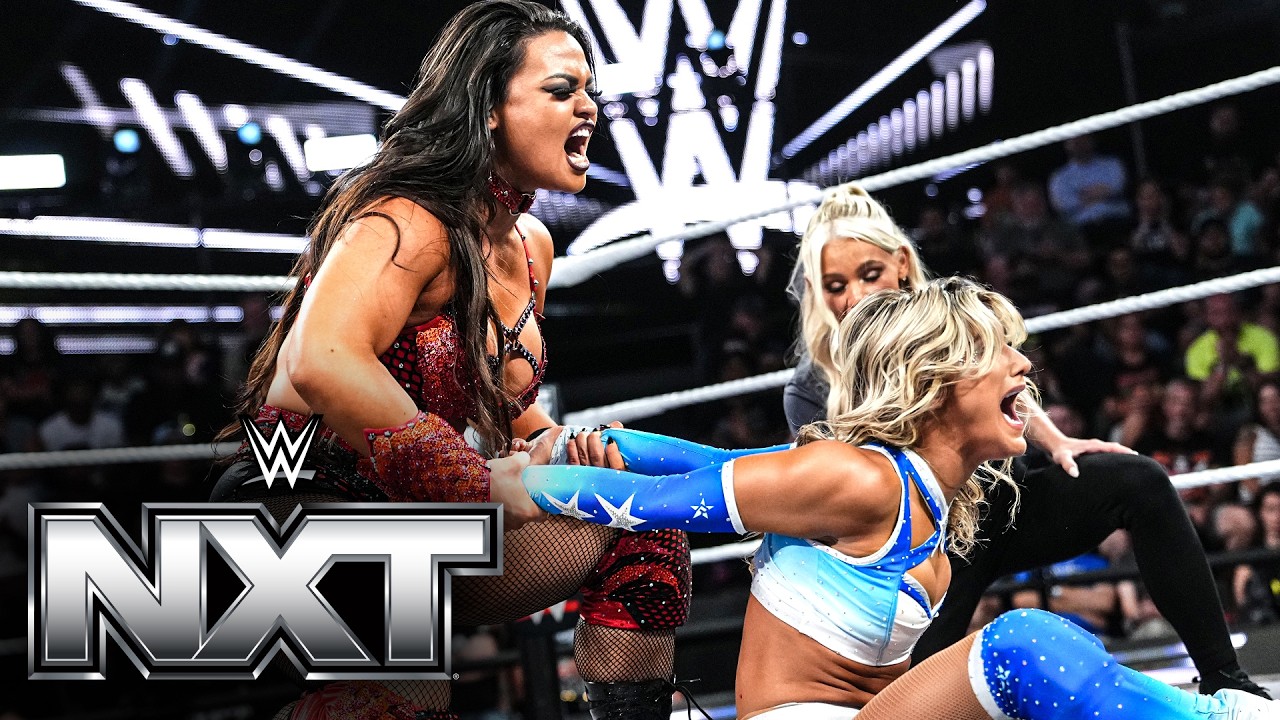
The context makes this a genuinely intriguing stipulation match rather than a routine rematch. Grey took the title from Vice at the Great American Bash, so Vice already has a legitimate rematch claim. But the Underground format — the roped-off, MMA-styled brawling match with no ropes to run and a submission-or-knockout finish flavor — is Vice’s specialty. Vice has built a “Queen of the Underground” reputation and, by the count entering this feud, was undefeated in the stipulation at 4-0. That is the entire hook: the champion is walking into the challenger’s house, agreeing to fight on the exact turf where the challenger is most dangerous. Grey’s amateur combat pedigree makes her a credible answer to the format, but the story writes tension into the booking automatically. It is one of the smartest women’s-division setups NXT has run in a while precisely because the stipulation is character, not spectacle.
The NXT Underground Match itself deserves a word of explanation for newer viewers, because it is not a standard cage or hardcore gimmick. It is an MMA-flavored stipulation staged in a ring with the ropes removed, so there is no running the ropes, no rope breaks and nowhere to hide — combatants win by knockout or submission in a presentation deliberately closer to a shootfight than a pro-wrestling match. NXT has used it sparingly, which keeps it special, and it has become closely identified with Vice, whose background suits the striking-and-grappling emphasis. That is why her challenge is more than a catchphrase. Choosing the Underground is her choosing a battlefield where a champion’s conventional wrestling advantages count for less and raw fighting counts for more. For Grey, accepting is a statement that she will not be defined solely by the win that gave her the belt — she is willing to prove it in Vice’s arena. Win or lose, that is exactly the kind of decision that turns a good champion into a respected one.
Commentary and Presentation
A quick word on the broadcast itself, because it shaped how these moments landed. Vic Joseph and Booker T carried the commentary, a pairing that leans on Joseph’s energetic play-by-play and Booker T’s veteran perspective and enthusiasm. During the Street Fight, the commentary’s job was to sell violence and stakes without overexplaining, and it largely did that — the mist reversal in particular was given room to breathe rather than being talked over. The show’s production also earned its main-event spectacle: sending the fight into the LED boards and backstage areas took advantage of the Performance Center’s layout to make a twelve-minute match feel bigger than its runtime. When the Santana music hit, the restraint on commentary — letting the crowd reaction and the visual do the work before contextualizing who he was — is a small example of a broadcast trusting a moment. Not every segment on the night was presented flawlessly, but the pieces that mattered most were framed with the right touch.
Reina Volcan’s Impressive Debut
NXT invested in Reina Volcan’s arrival, and it paid off. After a video-package introduction, Volcan — billed from Puerto Plata in the Dominican Republic — made her in-ring debut against Skylar Raye and won decisively. Raye showed early speed and athleticism, but Volcan’s power took over quickly, and she finished the match by locking Raye in a torture-rack variation dubbed The Natural Disaster for the submission. As a first impression, it did exactly what a debut is supposed to do: it established a finish, established a physical identity, and put the rest of the women’s division on notice without overexposing the newcomer in a long, competitive match.
Debuts are easy to fumble — too much offense from the established opponent and the new star looks ordinary; too little and the win means nothing. Volcan’s squash-adjacent showcase threaded that needle. Giving Raye a brief flurry before the power game reasserted itself let Volcan look dominant without looking untested. In a division that just crowned a new champion and is heading toward a marquee stipulation match, a credible new heavyweight-styled threat is exactly the kind of fresh piece NXT can build toward the title scene over the coming months.
DarkState Open the Show With a Statement
The episode kicked off hot with a six-man tag that began before the bell. The faction DarkState — Dion Lennox, Cutler James and Osiris Griffin — faced the trio of Saquon Shugars, Noam Dar and Romeo Moreno, and Shugars jumped the gun by ambushing DarkState during their entrance, igniting a ringside brawl. Once the match settled, DarkState leaned on frequent tags and power to isolate Dar, before Shugars fired up a frantic comeback and Moreno chipped in with a string of aerial spots, including the Supernova that commentary singled out. DarkState regrouped and put Moreno away with their assisted double powerbomb, and the animosity between Lennox and Shugars continued spilling around ringside even after the finish.
As an opener, it served its purpose: high pace, clear heat between Lennox and Shugars to carry forward, and a decisive win that keeps DarkState positioned as a dominant unit. The personal thread — commentary framed Shugars as obsessed with dismantling DarkState and Lennox specifically — is the kind of story that can graduate from tag warfare into a singles program down the line.
Jaida Parker Beats Natalya in a Muddy Finish
The Natalya-versus-Jaida Parker match leaned hard into personal animosity, with Natalya targeting Parker’s leg and both sides drawing in a crowd of associates — Nikkita Lyons and Karmen Petrovic in Natalya’s corner, Thea Hail orbiting the story. Parker survived a Sharpshooter and eventually trapped Natalya in the veteran’s own signature hold. The finish came with a twist: as Lyons moved to throw in the towel to save Natalya, Thea Hail grabbed it first and hurled it into the ring, forcing the referee to award the match to Parker.
This is worth flagging as a booking choice with trade-offs. A screwy finish keeps a rivalry alive — Natalya did not submit cleanly, Hail is now entangled in the story, and there is unfinished business among several women at once. But the towel-throw finish also risks muddying Parker’s momentum, since her win came via technicality rather than a decisive submission of a respected veteran. Whether that reads as clever long-term storytelling or a slightly deflating result depends on how quickly NXT pays off the Hail wrinkle. The pieces are interesting; the execution needs a follow-up to justify the shortcut.
Shawn Spears Steals One From Niko Vance
The former allies from The Culling faction turned their brewing tension into a scrap, with Izzi Dame repeatedly interfering to give Niko Vance openings. Just as Vance looked set to win, Shawn Spears pulled an old-school con — an Eddie Guerrero-style bit of trickery involving a steel chair, playing possum to fool the referee into thinking Vance had used the weapon. The official called for a disqualification against Vance, handing Spears a cheap, heat-generating victory and leaving Vance to be restrained afterward. Commentary’s nod to Eddie Guerrero was the tell: this was a heel getting one over through cunning rather than strength, the kind of finish that deepens a grudge and sets up a rematch where the babyface gets his receipt.
Keanu Carver Rolls On, and EK Prosper Enters the Picture
Keanu Carver continued his push through power, beating Hank Walker with The Pounce followed by a Spinebuster. The more important part was the aftermath: Carver kept attacking Walker and his tag partner Tank Ledger — the duo known as the Belly Bandits — until EK Prosper arrived to run him off, aligning himself with Hank and Tank. That injection of a fresh body into the tag scene gives the Belly Bandits a numbers answer to Carver and quietly reshuffles the tag-team division at the exact moment NXT is teasing tag title opportunities elsewhere on the card.
What Else Moved
The episode also seeded a busy few weeks. Robert Stone confirmed that Kam Hendrix — who revealed he had actually been medically cleared and had been playing up his recovery — would challenge Myles Borne for the NXT North American Championship, with a wrinkle: if Borne retains, he and Tavion Heights earn an NXT Tag Team Championship opportunity against The Vanity Project. Stone also set OTM against The Birthright and continued a lighter comedic thread involving Shiloh Hill, who ominously warned that “the fog is coming” while walking off with Stone’s popcorn chicken. Not every thread is a main-event story, but the density is the point: NXT used this episode to line up its next several television chapters at once.
Critical and Audience Response
The consensus among the outlets that cover NXT week to week landed in a similar place: a strong, purposeful episode anchored by a very good television main event and elevated by a genuinely surprising close. Reviewers praised the Street Fight as an entertaining, well-worked TV blowoff while noting — fairly — that its late-in-the-show placement capped how much time D’Angelo and Naraku were given. The recurring critical note was not about quality but about scale: this was excellent television wrestling operating within television constraints, and several writers pointed out that the feud’s months-long build might have earned a bigger stage.
The Santana arrival drew the loudest reaction, both live and in next-day coverage, and for good reason. A silent, contact-free debut that closes a show is a bet on star power, and the bet paid off because Santana’s credibility did the work that a promo or a beatdown usually has to. It is worth being precise about the nature of this reaction, though: measurable evidence like live crowd response and the volume of next-morning coverage is real and points clearly toward excitement, but the flood of individual fan posts celebrating the moment is anecdotal by nature and should be read as enthusiasm rather than a scientific measure of universal approval. The honest summary is that the arrival landed, the coverage was heavy, and the segment did exactly what NXT wanted: it made people talk about the next chapter rather than the one that just ended.
What the Result Means
Zoom out and the booking logic is clean. This episode was a hand-off. D’Angelo needed to definitively close the Naraku feud so the title could move to a fresh, bigger program, and the Street Fight did that with a finish that protected both men — the champion looked resilient and clever, the challenger lost to his own weapon rather than being exposed. In the same breath, NXT introduced the next challenger with maximum impact and zero wasted motion. That is efficient, confident storytelling: resolve one thing and launch the next inside the same segment, so the audience never has to wonder where the title is headed.
For D’Angelo, the retention cements a reign that has quietly become one of NXT’s more solid recent runs, and a program against a former world champion is the kind of feud that can define it. For Naraku, the loss stings but need not be fatal — the mist-reversal finish gives him an obvious excuse and an easy path back into contention if NXT wants it, whether against D’Angelo again or elsewhere on the card. And for Santana, arriving as the man who ended a chaotic title war rather than as one more entrant in a crowded field immediately positions him as a top-of-the-card act on a brand that increasingly trades in exactly that kind of established star.
Sponsored • Adults 18+ Only
Open a Sponsored Adult Entertainment Offer
This link may lead to an adult social, dating, chat, or virtual AI service selected by the advertising provider for the current visit.
The destination is selected by the advertising provider and may vary by device, region, and campaign availability. Registration, subscriptions, or charges may apply. Review the destination’s terms, privacy policy, age requirements, and billing details.
What Happens Next
NXT laid out a clear runway coming out of July 21, and several dates are already worth circling.
July 28: The following week’s episode centers on Myles Borne defending the NXT North American Championship against Kam Hendrix, with the added stakes that a Borne retention earns him and Tavion Heights a tag title shot at The Vanity Project. OTM versus The Birthright is also set. Expect the tag-team picture, freshly complicated by EK Prosper’s alignment with the Belly Bandits, to keep shifting.
August 4: The women’s title takes center stage as Kendal Grey defends against Lola Vice in an NXT Underground Match. Given Vice’s reputation in the stipulation and Grey’s combat background, this is the match to watch on the women’s side over the next month, and its result will shape the division heading into the summer’s big event.
August 30 — NXT Heatwave: NXT’s next premium live event is scheduled for Bert Ogden Arena in Edinburg, Texas, and it is set to be simulcast on The CW and ESPN in the United States. Heatwave is the obvious destination for a marquee D’Angelo program, and the timing lines up cleanly with a slow-burn build from the Santana staredown. As of this writing the card had not been officially announced, so treat any specific Heatwave match as projection rather than confirmation — but if NXT is building toward a D’Angelo-versus-Santana showcase, this is the stage that makes the most sense.
What Could Happen Next: Reading the Tea Leaves
Separating what is confirmed from what is analysis matters here. Confirmed: D’Angelo is champion; the Grey-Vice Underground Match is set for August 4; Heatwave is booked for August 30. Everything about Santana’s trajectory is, at this stage, informed interpretation rather than announced fact.
That said, the most likely read is straightforward. The staredown appears designed to launch a D’Angelo-versus-Santana championship program, and the smart money says NXT builds it patiently toward a premium live event rather than rushing it onto free television. A slower build would let Santana cut the promos and pick the fights that establish his NXT character, while giving D’Angelo time to react. There is also a compelling stylistic contrast to mine: D’Angelo’s bruising, grounded heavyweight game against Santana’s explosive, emotionally charged offense. If the promotion wants a wrinkle, Santana’s history of matches against wrestlers with WWE and TNA crossover ties — he won a world title from Trick Williams, after all — gives commentary and video packages plenty to work with. None of that is booked. All of it is on the table.
What a Great D’Angelo vs. Santana Program Could Look Like
To be clear up front: this section is analysis and projection, not reporting. Nothing here is confirmed. But the staredown invites the question, and the raw materials are unusually promising, so it is worth thinking through what the best version of this feud looks like.
The most obvious asset is contrast. D’Angelo is a grounded, physical heavyweight whose game is built on control, power and grinding an opponent down — a champion who wins by imposing himself. Santana’s style is more explosive and emotional, built on speed, striking and the kind of babyface fire that gets a crowd out of its seats. Two wrestlers who do different things well is the foundation of a compelling match, because each forces the other to adapt. You can already picture the story: the champion trying to slow Santana down and drag him into deep water, and Santana trying to keep the fight fast and frantic where his energy is the deciding factor.
There is also a rich promo dynamic available. Santana is a naturally intense talker with a chip-on-the-shoulder authenticity, and he arrives with a genuine grievance that requires no fabrication — he was a world champion somewhere else, and he wants to prove that means something here. D’Angelo, as the homegrown standard-bearer, has an equally natural counter: this is his brand, his belt, and he does not owe an outsider a thing. That is a feud that can be built on words as much as violence, which is exactly what you want for a program with weeks of runway before a premium live event.
If NXT is patient, the ideal shape is a slow build: Santana establishing his NXT character and picking his spots, a first televised confrontation or two to raise the temperature, and a blowoff on a big stage where the full contrast can breathe with real time attached — the runtime the Naraku Street Fight could not have. Heatwave on August 30 is the obvious candidate, though nothing has been announced, and it is entirely possible NXT stretches the build further or takes a detour first. The risk to avoid is rushing it onto free television before Santana’s NXT persona is fully drawn, which would waste the very thing that made the staredown land: the sense that something significant had just begun. Handled with restraint, this is the kind of program that can headline a premium live event and elevate both men. Handled hastily, it is a good match that leaves value on the table. The staredown bought NXT the option to do it right. Whether the promotion takes that option is the story to watch.
Sponsored • Adults 18+ Only
Try Conversation With a Virtual AI Character
Explore AI-generated conversation with a virtual character whose available style and personality settings can be adjusted for entertainment.
Virtual AI characters are software-generated and are not real people. Outputs may be inaccurate, repetitive, or unsuitable for some users. Features, controls, subscriptions, and pricing vary; review the provider’s terms and privacy policy.
Related Matches and Moments Worth Revisiting
If this episode hooked you, a few connected viewings deepen the story rather than just filling a watchlist:
- Tony D’Angelo’s NXT Championship win at Stand & Deliver 2026 — the fatal four-way over Joe Hendry, Ethan Page and Ricky Saints that started this reign and explains why the belt means as much to him as it does.
- D’Angelo vs. Naraku at the Great American Bash — the first, more conventional meeting between the two, which sets up why the July 21 rematch needed a Street Fight to feel different.
- Mike Santana vs. Trick Williams at TNA Bound For Glory 2025 — Santana’s first TNA World Championship win, and a useful primer on the WWE-TNA crossover that makes his NXT arrival possible.
- Mike Santana vs. Nic Nemeth at TNA Slammiversary 2026 — the title loss that closed his TNA chapter and, in hindsight, set the table for the jump to WWE.
- Lola Vice’s previous NXT Underground Matches — essential viewing before August 4 to understand why Kendal Grey accepting on Vice’s terms is such a gamble.
Frequently Asked Questions
Who won the NXT Championship match on July 21, 2026?
Tony D’Angelo retained the NXT Championship, defeating Naraku by pinfall in the Street Fight main event.
How did Tony D’Angelo win?
After Naraku attempted a second poison-mist attack, D’Angelo blocked and reversed it into Naraku’s eyes, then used a kendo stick and the steel ring steps before finishing Naraku through a table with his Dead To Rights finisher.
Did the NXT Championship change hands?
No. D’Angelo retained. The title did not change hands.
What was the stipulation?
It was a Street Fight — a no-disqualification, no-count-out match where weapons and brawling anywhere in the arena are legal. Robert Stone sanctioned it after a parking-lot brawl the previous week.
Who is Naraku?
Naraku is an NXT wrestler who debuted on the April 28, 2026 episode with a background of roughly a decade in New Japan Pro-Wrestling. His signature weapon is the poison mist, and he first inserted himself into D’Angelo’s story as a false ally before turning on the champion.
Who showed up at the end of the show?
Mike Santana, a two-time former TNA World Champion and recent WWE signing, appeared through the crowd for a silent staredown with D’Angelo as the episode went off the air.
Did Mike Santana officially challenge for the title?
Not formally. His appearance strongly signaled a future championship program, but as of this writing WWE had not announced a specific match, date or event for D’Angelo versus Santana. The staredown announced intent, not a booked bout.
When did Tony D’Angelo win the NXT Championship?
On April 4, 2026, at NXT Stand & Deliver, in a fatal four-way over Joe Hendry, Ethan Page and Ricky Saints. It is his first NXT Championship reign.
What is the Kendal Grey vs. Lola Vice match about?
Grey took the NXT Women’s Championship from Vice at the Great American Bash. On July 21, Vice challenged Grey to an NXT Underground Match — a stipulation Vice specializes in — for August 4, and Grey accepted.
Who won Reina Volcan’s debut match?
Reina Volcan defeated Skylar Raye by submission with her torture-rack finisher, The Natural Disaster, in an impressive in-ring NXT debut.
Where and when can I watch NXT?
NXT airs live on Tuesday nights on The CW in the United States and is distributed internationally through WWE’s streaming partners. Full episodes and match highlights are also made available on WWE’s official platforms. Check your regional listing for exact availability.
Was the July 21 online clip the full match?
The widely shared July 21 upload is a highlights presentation of the episode’s biggest moments, not a full, uncut airing of the complete main event. The full match and full episode are available through WWE’s official channels.
Why did Mike Santana leave TNA?
Santana’s TNA contract expired in mid-July 2026 following his TNA World Championship loss to Nic Nemeth at Slammiversary in late June. Rather than re-signing, he moved to WWE. TNA publicly congratulated him, and the companies’ working relationship framed the move as a crossover rather than an acrimonious departure.
What is NXT Heatwave and when is it?
NXT Heatwave is one of the brand’s premium live events. The 2026 edition is scheduled for August 30 at Bert Ogden Arena in Edinburg, Texas, and is set to be simulcast on The CW and ESPN in the United States. It is the most likely stage for a major D’Angelo championship program to pay off.
What is an NXT Underground Match?
It is an MMA-inspired stipulation staged in a ring with the ropes removed, won by knockout or submission. There is no rope running or rope breaks, giving it a shootfight feel. Lola Vice is closely identified with the format, which is why her August 4 challenge to Kendal Grey is so pointed.
Final Thoughts
Some television episodes are about the match. This one was about the transition. D’Angelo and Naraku delivered a tight, violent, well-structured Street Fight that gave a months-long grudge a satisfying and symmetrical ending — the mist that opened the feud closed it, turned back on its owner. On its own, that would have made for a solid night. What made July 21 genuinely important was the decision to stack the resolution and the launch on the same segment, so that the instant one chapter ended, a former two-time world champion was standing on the barricade to start the next one.
The episode was not flawless. The main event’s late placement kept a marquee feud from getting the runtime it arguably earned, and at least one undercard finish leaned on a technicality that will need a strong follow-up to justify. But the big swings connected. NXT protected its champion, kept its fallen challenger viable, set a genuinely intriguing women’s title stipulation for August 4, gave a new signing an impressive debut, and introduced its next top program with a single wordless image. That is a lot of forward motion for one night of television, and it leaves the brand pointed cleanly at Heatwave on August 30 with its most compelling championship story in months already in motion. The belt did not change. Almost everything around it did.
Last updated: July 23, 2026.
Affiliate Disclosure: This article contains advertising and may include sponsored or affiliate links. We may earn a commission when readers click or register through selected links, at no additional cost to them. Some advertised services are intended only for adults aged 18 or over.
Sponsored • Adults 18+ Only
Continue With an Adult Social-Discovery Experience
Explore a platform where eligible adults can review available profiles and communication features, then decide whether to join or contact anyone.
Profiles, communication features, member availability, registration requirements, and pricing vary by provider and region. Review the provider’s terms, privacy policy, safety guidance, and billing information before participating.