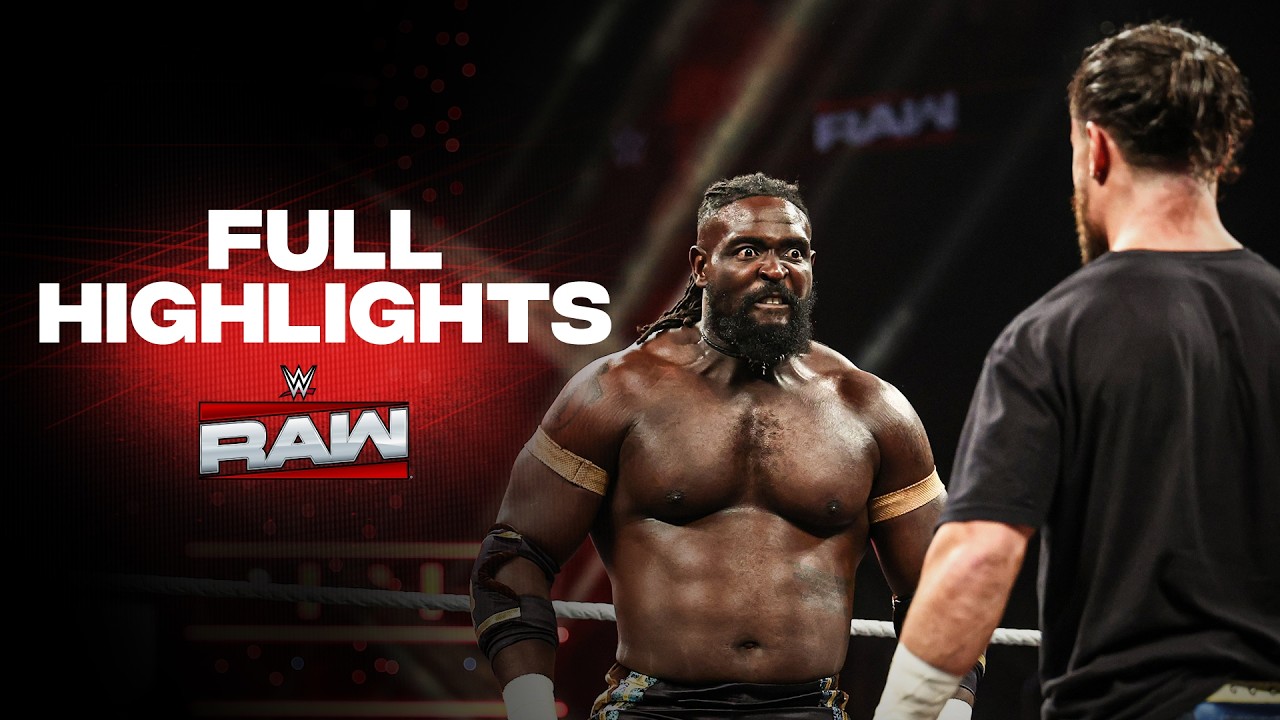
IYO SKY vs. Stephanie Vaquer on Raw: The Great Match WWE Refused to Finish—Until Wrestlepalooza
IYO SKY and Stephanie Vaquer did not produce a decisive winner on Raw in Houston. WWE officially recorded their July 21, 2025 singles match as a no-contest after Chelsea Green, Piper Niven and Alba Fyre disrupted the closing stretch. Naomi then attacked both wrestlers, Rhea Ripley arrived to restore the balance, and the segment ended with Ripley planting Green with a Riptide while the SummerSlam title picture crowded the ring.
That result answered the immediate question while creating a more interesting one. Why put two of the most accomplished, internationally seasoned wrestlers in WWE together for nearly a quarter of an hour, let them build toward a potentially defining finish, and then deny the audience a verdict for the second time in three months? The answer lies in the position of the match on the calendar. Raw was less than two weeks from SummerSlam, Naomi was the newly crowned Women’s World Champion, Ripley and SKY were already booked to challenge her, and Vaquer held a guaranteed world-title opportunity for Clash in Paris. The match was therefore not treated as an isolated contest. It was used as a junction where several women’s-division stories could collide.
As television booking, the strategy was efficient but frustrating. The wrestling itself demonstrated why SKY and Vaquer were credible at the top of the division. The finish protected both of them, advanced Chelsea Green’s conflict with Vaquer, reinforced Naomi’s opportunistic champion persona and gave Ripley a heroic final image. Yet a second inconclusive result also weakened the promise attached to a dream match. WWE asked viewers to invest in a sporting comparison—who was better, “The Genius of the Sky” or “La Primera”—then postponed the answer again.
History ultimately made the Houston match more valuable than it seemed that night. When Naomi later relinquished the Women’s World Championship, SKY and Vaquer were selected to decide the vacant title at Wrestlepalooza on September 20, 2025. There, with the championship at stake and no mass run-in to interrupt them, Vaquer defeated SKY with a Spiral Tap. The clean payoff transformed the July no-contest into the middle chapter of a trilogy: first contact after WrestleMania, a more developed rematch in Houston, and a decisive championship conclusion in Indianapolis.
Sponsored • Adults 18+ Only
Sexy People Who Share Your Interests
Explore an adult social-discovery platform designed for browsing profiles, starting conversations and finding connections at your own pace.
Availability, registration requirements and paid features vary by provider and location. Review the service terms before joining.
IYO SKY vs. Stephanie Vaquer at a Glance
- Promotion: WWE
- Program: Monday Night Raw
- Date: Monday, July 21, 2025
- Venue: Toyota Center
- Location: Houston, Texas, United States
- Match: IYO SKY vs. Stephanie Vaquer
- Stipulation: Standard singles match
- Championship: Non-title
- Official result: No-contest after outside interference
- Primary interference: Chelsea Green, Piper Niven and Alba Fyre
- Post-match involvement: Naomi and Rhea Ripley
- Broadcast: Raw streamed live on Netflix
- Upload format: WWE officially labels the supplied release as a full match, not a highlights package
Research cutoff: July 24, 2026. Later championship and storyline developments are separated from what was known on July 21, 2025.
The Official Result—and Why Some Reports List a Disqualification
WWE’s own results page classifies IYO SKY vs. Stephanie Vaquer as a no-contest. That is the result used throughout this feature. Several live recaps, however, recorded a disqualification victory for SKY or gave slightly different match times. PWTorch listed SKY as the winner by disqualification at 15:05, F4WOnline reported a disqualification at 15:04, and Pro Wrestling Dot Net described a non-contest lasting 15:50. The disagreement illustrates a common problem in television wrestling results: the bell can ring during an attack before the official presentation makes clear whether the referee has awarded a disqualification or simply thrown the match out.
The distinction matters for record keeping but changes little about the creative purpose. Neither wrestler pinned or submitted the other. Neither gained a meaningful competitive advantage from the ruling. WWE’s official classification therefore best captures how the segment was presented in subsequent storytelling: SKY and Vaquer were still without a decisive singles result against each other.
That unresolved record became part of the attraction when WWE later booked them for the vacant Women’s World Championship. The Houston bout was not erased. It was retroactively positioned as evidence that they were too evenly matched—and too frequently surrounded by chaos—to settle the issue on weekly television.
Why This Match Mattered Before the Bell
The July 21 meeting arrived at an unusually dense moment in WWE’s women’s division. SKY had entered July as Women’s World Champion and one of the company’s most protected in-ring performers. At WrestleMania 41 she had retained the title against Bianca Belair and Rhea Ripley, then continued toward a singles defense against Ripley at Evolution. That defense never reached a conventional conclusion because Naomi cashed in her Money in the Bank contract during the match and converted it into a Triple Threat, pinning SKY to take the championship.
Vaquer’s route was different but no less forceful. She had already won the NXT Women’s North American Championship, defeated Giulia in a title-versus-title match to become NXT Women’s Champion as well, and become the first woman to hold those two NXT singles titles simultaneously. She vacated the North American title in April, lost the NXT Women’s Championship to Jacy Jayne in May amid outside involvement, and then moved to Raw. On June 2, WWE presented her as a member of the Raw roster, and she qualified for the Money in the Bank ladder match by defeating Liv Morgan and Ivy Nile in a Triple Threat.
At Evolution on July 13, Vaquer won a battle royal to earn a world-title match at Clash in Paris. WWE’s official account records that she survived a final four that included Nikki Bella, Nia Jax and Lash Legend, helped eliminate Jax, and then used the Devil’s Kiss to remove Legend. That victory gave Vaquer a claim on the future champion. Naomi’s cash-in later the same night changed the identity of that champion, while SKY and Ripley were granted a SummerSlam rematch in the form of another Triple Threat.
By the time Raw reached Houston, four women occupied overlapping championship lanes. Naomi had the belt. SKY had the rematch argument because she had been champion and had been pinned during the cash-in. Ripley had been part of the original Evolution title match and had not been pinned. Vaquer possessed the guaranteed Clash in Paris opportunity. Putting SKY and Vaquer together was therefore an attractive way to demonstrate the division’s depth, but it also created a booking trap: a clean defeat could reduce one contender’s momentum immediately before a major title program.
The First Meeting: Raw After WrestleMania 41
SKY and Vaquer first met on April 21, 2025, the Raw after WrestleMania 41. The timing was important. SKY had just retained the Women’s World Championship in a celebrated Triple Threat against Ripley and Belair. Vaquer, then the NXT Women’s Champion, appeared on Raw and challenged the world champion to an impromptu non-title match. WWE framed the confrontation as Vaquer seeking “the best,” which made the bout less about animosity than professional ambition.
The match established the central idea later expanded in Houston: similarity without duplication. Both wrestlers could accelerate instantly, attack from the air, improvise counters and move through complicated sequences without making the action look cooperative. WWE’s official recap highlighted a mid-air collision on simultaneous crossbody attempts, Vaquer’s Devil’s Kiss and SKY’s top-rope Spanish Fly. Before either could win, Roxanne Perez and Giulia interfered. Rhea Ripley arrived to chase them away, leaving the sporting question unanswered.
That first finish was understandable. It introduced Vaquer to Raw without defeating her, protected the reigning world champion, continued NXT-related rivalries and kept Ripley near the title. The problem was repetition. When the same pairing returned three months later, viewers reasonably expected the rematch to resolve what the debut encounter had left open. Commentary explicitly emphasized that desire for a decisive winner. The Houston finish therefore felt more disappointing than the April finish because WWE itself had made closure part of the sales pitch.
The two matches also differed in status. On April 21, SKY was champion and Vaquer was visiting from NXT. On July 21, SKY was a former champion preparing for SummerSlam, while Vaquer was a Raw wrestler with a guaranteed world-title opportunity. They were no longer operating on separate tiers. WWE had moved them into the same competitive neighborhood.
Sponsored • Adults 18+ Only
Create a Virtual AI Girlfriend Around Your Preferences
Customize an AI character’s appearance, personality and conversation style for a private, adult-oriented virtual experience built around your choices.
AI companions are virtual characters and are not real people. Features, subscriptions and pricing may vary by provider.
Two Global Careers Converging in WWE
IYO SKY: Joshi precision adapted for WWE television
SKY’s WWE identity is built around flight, but reducing her to a high-flyer misses the foundation of her work. Before signing with WWE, she developed into a major star in Japanese women’s wrestling under the name Io Shirai. Her résumé in Stardom included major singles and tag championships, and the experience is visible in the way she constructs matches. She does not simply perform spectacular moves; she uses changes of pace, compact footwork and sudden direction changes to make those moves feel like consequences of an opponent’s mistake.
In WWE, SKY became NXT Women’s Champion, NXT Women’s Tag Team Champion, a Dusty Rhodes Tag Team Classic winner, a multi-time WWE Women’s Tag Team Champion, the 2023 Money in the Bank winner, WWE Women’s Champion and Women’s World Champion. By July 2025 she had already demonstrated that her style could function in very different contexts: long NXT title matches, Damage CTRL faction stories, ladder matches, multi-person stadium bouts and weekly television sprints.
Her most important attribute in the Vaquer match was not the moonsault. It was adaptability. SKY could match Vaquer’s grappling exchanges, transition into submissions, increase the tempo with a dropkick, then change the geometry by attacking through or over the ropes. That range prevented the match from becoming a sequence of two wrestlers waiting for aerial highlights.
SKY’s character position also shaped the psychology. She was a babyface former champion who had been deprived of her title by Naomi’s opportunistic cash-in. She was preparing for a Triple Threat at SummerSlam, where one mistake could cost her again. Commentary repeatedly framed the Vaquer match as a way for SKY to stay sharp. Whether or not that was the fictional motivation, it gave the contest a sporting purpose: SKY was testing herself against an opponent she could plausibly meet in a future championship match.
Stephanie Vaquer: Lucha structure, Japanese experience and immediate credibility
Vaquer’s career route made her unusually prepared for WWE’s main roster. Born in Chile and long based in Mexico, she worked extensively in lucha libre while also gaining experience in Japan. CMLL’s official coverage documented her 2023 victory over La Catalina to win the vacant CMLL World Women’s Championship, while her international work included appearances connected to New Japan Pro-Wrestling and challenges for major women’s titles. WWE’s own profile emphasizes that she had established herself across Japan and North and South America before arriving.
That background produced a style that looked distinctive on Raw. Vaquer could wrestle from conventional holds, attack with sharp knees, use springboard offense and introduce visually unusual sequences such as the Devil’s Kiss. Her movements were crisp but not delicate. Even when she flew, the impact usually looked abrupt. Her offense communicated control more than escape.
Her NXT rise was exceptionally fast. She won the NXT Women’s North American Championship from Fallon Henley at Vengeance Day in February 2025, then beat Giulia at Roadblock on March 11 to add the NXT Women’s Championship. WWE promoted her as the first woman to hold both NXT singles championships simultaneously. On April 1 she vacated the North American title, allowing the division to move forward while she concentrated on the NXT Women’s Championship. She then lost that title to Jacy Jayne on May 27 after a chaotic finish involving Fatal Influence.
By July, Vaquer’s presentation had changed from elite newcomer to immediate main-event candidate. Her battle-royal victory at Evolution confirmed that WWE did not view her as a wrestler who needed a long introductory period. The Houston match reinforced the message. She was trusted to work an extended television bout with SKY, to control complex sequences, and to stand beside SKY and Ripley in the final image of a segment involving the world champion.
Why their styles complement each other
SKY and Vaquer share enough athletic vocabulary to create fast counter-wrestling, but their emphases differ. SKY’s movement often creates distance and then collapses it. She runs, rebounds, changes levels and attacks from an angle. Vaquer often creates restriction. She traps limbs, turns the body, forces an opponent into a narrow space and then strikes. SKY makes the ring feel larger; Vaquer makes it feel smaller.
That contrast gives their sequences a logic. When SKY tries to escape into flight, Vaquer can intercept her. When Vaquer attempts to hold the match in a controlled grappling rhythm, SKY can break the pattern with speed. Their offense also targets different visual expectations. A SKY sequence often ends with the audience looking upward or toward the floor outside the ring. A Vaquer sequence often ends with the audience focused on an opponent folded, twisted or driven downward.
The Houston match did not need a villain. Both women were presented as admired competitors, and the tension came from comparison. That is difficult to sustain on weekly wrestling television, where clean hero-versus-hero matches can feel emotionally neutral. SKY and Vaquer solved the problem through escalation. Each counter suggested that the other had prepared. Each successful burst forced the opponent to reveal another layer.
Sponsored • Adults 18+ Only
Looking for a Different Kind of Conversation?
Browse an adult social-chat service where eligible users can explore profiles and start conversations when it suits them.
Services, eligibility, registration requirements and pricing vary. Review the provider’s terms before joining.
Detailed Match Analysis: A Contest Built on Recognition
The opening phase: respect expressed through preparation
The opening exchanges established that neither wrestler was encountering a mystery. They had already shared a ring in April, and the rematch was worked as though both had studied the first meeting. Rather than rushing toward signature offense, they tested balance, grips and pinning combinations. The early straightjacket control by Vaquer was especially useful. It did not threaten an immediate submission, but it forced SKY to spend energy and demonstrated Vaquer’s ability to dictate position.
SKY answered through movement. Roll-throughs and quick shoulder combinations prevented Vaquer from settling. The rapid covers were not merely decorative near falls. They communicated that either wrestler could lose during a transition, an idea that would become more important as the match accelerated. In a contest between athletes known for elaborate offense, the simplest threat—a three-count—kept the opening grounded.
The babyface-versus-babyface dynamic was supported by body language rather than handshakes. Neither wrestler stalled or mocked the other. They acknowledged counters by changing tactics. Commentary described their approach as cautious without calling it tentative, which was accurate. Their restraint suggested respect for danger. The match did not begin slowly because they lacked intensity; it began carefully because both understood the cost of overcommitting.
SKY expands the ring
The first major change arrived when SKY’s dropkick sent Vaquer to the floor and SKY followed with a suicide dive. That sequence established SKY’s preferred geography. Once the action moved beyond the ropes, she could use the apron, turnbuckles and open space as launching points. Her decision to break the referee’s count and continue attacking also reinforced that the match mattered beyond a routine television win.
Vaquer’s response was intelligent rather than passive. She avoided a springboard moonsault, kicked SKY in the head and returned to the ring to reset the count before launching a top-rope crossbody to the floor. The exchange was a concise statement of equality. SKY had moved the contest into an aerial environment, and Vaquer proved she could operate there too.
More importantly, Vaquer did not copy SKY. Her flight looked like an extension of aggression rather than a display of freedom. SKY’s dives often carry a sense of risk embraced; Vaquer’s crossbody looked like a direct attempt to flatten the person in front of her. Similar athletic tools produced different character impressions.
The knee detail: useful selling without an injury claim
When SKY leapt from the top rope and landed on her feet, she immediately favored her right knee. Commentary noticed the reaction and returned to it later. The safest interpretation is that the knee became a worked match detail. No reliable official report attached a legitimate injury to this moment, and the article should not convert televised selling into medical fact.
Within the match, however, the detail mattered. SKY was heading toward a SummerSlam title match and could not afford vulnerability. Vaquer’s offense increasingly threatened that base, while SKY continued using attacks that depended on explosive leg drive. The knee therefore created a conflict between urgency and self-preservation. SKY could reduce risk and possibly lose momentum, or continue escalating and make the damage worse.
The later Wrestlepalooza match would return even more explicitly to SKY’s knee, with Vaquer using dragon screws and SKY missing the Over the Moonsault before the finish. That repetition gives the Houston selling retrospective significance. Whether planned as a long-term thread or simply reused because it suited their chemistry, the damaged knee became a logical way to connect their matches.
Vaquer’s first major control period
After SKY’s awkward landing, Vaquer moved behind her and appeared to search for the SVB before changing direction and driving both knees upward into SKY’s face. The adjustment was important. Earlier attempts at Vaquer’s signature offense had been read and countered. Rather than forcing the same setup, she used SKY’s expectation against her.
That sequence reflected one of the match’s central themes: counters were not resets; they created information. When one wrestler escaped a move, the other did not simply try again unchanged. Vaquer altered the finish of the setup. SKY later borrowed a modified underhook attack that resembled the SVB, turning Vaquer’s own structure back on her. The match portrayed elite performance as rapid learning.
SKY responded by dragging Vaquer down and applying a crossface. The hold was a useful reminder that SKY could threaten without leaving her feet. Vaquer reached the ropes, but the escape required effort. The sequence also shifted the audience’s focus from spectacle to survival, preventing the middle of the match from becoming an uninterrupted highlight reel.
The apron sequence and the politics of the Devil’s Kiss
One of the most discussed sequences began with SKY threatening a sunset-flip powerbomb from the apron. Vaquer blocked it with a knee across the throat and then applied the Devil’s Kiss on the apron before repeating the signature sequence in the ring. The move is deliberately theatrical: Vaquer traps an opponent in a headscissors position and repeatedly drives the opponent’s head toward the mat.
On commentary, Michael Cole and Corey Graves referenced Booker T while joking about the move’s lineage and visual awkwardness. The exchange acknowledged that wrestling moves rarely exist without history. Vaquer’s version had become strongly associated with her presentation, but the broadcast also connected it to a familiar sequence from an earlier era.
The important match function was not the joke. The apron counter stopped SKY from converting a dangerous position into one of her biggest momentum swings. Vaquer then moved the action back inside and attempted a cover. The entire sequence flowed from defense to punishment to victory attempt. That structure kept a visually distinctive signature from feeling detached from the contest.
SKY’s comeback: rhythm as offense
SKY’s best comeback sequences are not defined by a single move. They work because several attacks arrive with almost no dead space. In Houston, she used a 619 variation into a headscissors that drove Vaquer face-first onto the apron, followed with a springboard moonsault to the floor, climbed for a missile dropkick, landed and immediately kipped up. The combination created the sensation that Vaquer had lost control of time as well as position.
The kip-up was not necessary to damage Vaquer, but it communicated that SKY’s confidence had returned. Professional wrestling often uses posture as punctuation. A wrestler who rises instantly after a major attack tells the audience that momentum has become emotionally self-sustaining. SKY’s grin on the turnbuckle and the speed of the follow-up made the comeback feel like a release after Vaquer’s more restrictive offense.
SKY then used a takedown into a double stomp, folding Vaquer and creating a direct route toward the Bullet Train Attack. Vaquer avoided the first attempt, sending SKY’s knees into the turnbuckles, and answered with a release German suplex. SKY soon produced a German suplex of her own. Again, the match used mirrored offense not as empty symmetry but as an argument: whatever advantage one woman claimed, the other possessed an answer in the same language.
Sponsored • Adults 18+ Only
Explore an Adult Experience Available in Your Region
The available destination may feature social discovery, dating, chat or an AI-powered experience, depending on your device, region and provider availability.
The destination and service may vary by device, region and provider. Registration, subscriptions or charges may apply.
The Five Turning Points That Defined the Match
1. Vaquer avoids the springboard moonsault
SKY’s first attempt to dominate the outside ended when Vaquer moved away from the springboard moonsault. That escape prevented the bout from becoming a showcase built entirely around SKY’s preferred pace. Vaquer’s immediate kick and later crossbody demonstrated that she could convert defense into offense without pausing to celebrate.
2. SKY’s right knee becomes a question
The awkward landing did not end the match, but it altered how later offense was read. Every climb carried more risk, and every attempt to accelerate asked whether SKY’s base would hold. Commentary’s repeated attention ensured the detail remained active rather than disappearing after one sell.
3. SKY turns to the crossface
The submission attempt disrupted Vaquer’s control and forced a rope break. It also expanded SKY’s threat profile. Vaquer could not defend merely by anticipating dives and knees; she had to protect transitions on the mat.
4. Vaquer stops the sunset-flip bomb on the apron
This was the match’s clearest example of danger recognition. SKY’s proposed move could have created a dramatic crash. Vaquer escaped with a knee across the throat and took control through the Devil’s Kiss. The sequence made her look prepared, ruthless and composed under pressure.
5. The top-rope reverse suplex leads directly to interference
Vaquer’s top-rope counter left both women down and appeared to bring the match to its decisive phase. Instead, Piper Niven and Alba Fyre appeared, drawing Vaquer toward the ropes before Chelsea Green attacked from behind. The timing was intentionally aggravating. WWE interrupted the match at the moment when the audience expected its largest final escalation.
The Finish: Productive Chaos and a Broken Promise
The interference began with Niven and Fyre on the apron, continuing their conflict with Vaquer after Evolution and the July 18 SmackDown match in which Vaquer defeated Fyre. Vaquer knocked both women down, but the distraction allowed Green to attack from behind. The bell rang, and the official contest ended without SKY or Vaquer defeating the other.
SKY then struck Green from the top rope and joined Vaquer in fighting the Secret Hervice. Their cooperation mattered. The match had been competitive, but not hateful. Once an outside faction violated the contest, the two rivals became allies of necessity. That choice preserved their mutual respect and made the post-match partnership feel earned rather than convenient.
Naomi’s entrance changed the scale of the angle. She attacked SKY and Vaquer from behind, targeting both a SummerSlam challenger and the woman guaranteed a later title opportunity. The attack fit her championship strategy. Naomi had won the title by entering an exhausted match at Evolution, and in Houston she again exploited opponents after they had already fought.
Ripley’s arrival completed the hierarchy. She dropped Naomi, confronted Green and delivered the Riptide while SKY and Vaquer stood nearby. The final image placed Ripley at the center of the SummerSlam build without requiring her to undermine either wrestler during the match. It also gave the audience a satisfying physical payoff after the no-contest, even if it was not the payoff the advertised singles contest had promised.
What the booking accomplished
- SKY avoided a loss before challenging for the Women’s World Championship at SummerSlam.
- Vaquer avoided a loss after earning a guaranteed world-title match at Clash in Paris.
- Green, Niven and Fyre advanced their conflict with Vaquer.
- Naomi appeared dangerous and opportunistic as champion.
- Ripley ended the segment with momentum.
- SKY and Vaquer maintained a respectful relationship that could support a future rematch.
What the booking sacrificed
The finish weakened trust in weekly dream matches. WWE had already used interference to stop SKY and Vaquer on April 21. Advertising—or, more precisely, announcing during the program—a rematch that again ended without a winner made the match feel like a trailer for a future event rather than a contest with its own value.
Jason Powell’s Pro Wrestling Dot Net assessment captured the central criticism: it was a hot match with a weak finish, and regular viewers could anticipate trouble because a premium-live-event-level pairing had been made during the show rather than promoted well in advance. That is not an absolute rule, but it describes the audience’s booking literacy. Experienced viewers understand that companies often protect major singles outcomes for larger platforms.
The problem was not interference by itself. Wrestling has always used interference to connect stories. The problem was the combination of repetition and timing. Once Vaquer’s top-rope counter left both wrestlers down, the match appeared ready to enter its final sequence. The run-in replaced climax with setup. It generated heat, but some of that heat was directed at the booking rather than the villains.
Sponsored • Adults 18+ Only
Discover Social Dating at Your Own Pace
Browse profiles and explore adult social connections without exaggerated promises or pressure. Choose when and how you want to start a conversation.
Profile availability and platform features differ by region. Registration or payment may be required.
Chelsea Green and the Secret Hervice: Why the First Run-In Made Sense
The interference was not random. Vaquer had become entangled with Chelsea Green, Piper Niven and Alba Fyre during the period around Evolution. On the July 14 episode of Raw, Vaquer helped Nikki Bella after Green and the Secret Hervice attacked. Four days later on SmackDown, Vaquer defeated Fyre. The Houston run-in therefore followed an active television conflict rather than introducing three attackers solely to prevent a clean SKY–Vaquer result.
Green’s group served a useful structural role in the women’s division. Green was a character-driven antagonist whose power came less from winning isolated athletic comparisons than from surrounding herself with physical backup. Niven offered size and force. Fyre offered speed and striking. Together they could plausibly interrupt a match involving top-level wrestlers without requiring Green to overpower either one cleanly.
The problem was scale. Once Green’s faction triggered the stoppage, Naomi and Ripley also entered, turning one feud into a six-woman collision. The segment successfully connected stories, but the accumulation reduced the clarity of the original match. Viewers who had tuned in to compare SKY and Vaquer were asked to shift rapidly from technical wrestling to faction defense, title politics and a SummerSlam preview.
Still, the alliance between SKY and Vaquer was a strong piece of characterization. Neither blamed the other for the stoppage. They immediately recognized a shared threat. That response preserved the possibility of rivalry without manufacturing hostility. In a division often organized around betrayals, their relationship remained based on competitive respect.
Naomi’s Role: Champion as Opportunist
Naomi entered Houston with a title reign built on timing. At Evolution she had competed earlier in the night in a No Holds Barred match against Jade Cargill and lost. She later returned with the Money in the Bank contract while SKY and Ripley were deep into their Women’s World Championship match. By cashing in during the contest, she converted it into a Triple Threat and pinned SKY to win the title.
The cash-in was legal within WWE’s established Money in the Bank framework, but the story emphasized exploitation. Naomi did not have to defeat a fresh champion in a scheduled singles match. She chose a moment when both competitors were exhausted. Her Houston attack repeated the pattern on a smaller scale. SKY and Vaquer had already wrestled an extended match and fought off Green’s faction. Naomi arrived after the work had been done.
That continuity strengthened her heel presentation. A champion who repeatedly attacks rested opponents would look dominant, but a champion who repeatedly waits for vulnerability looks calculating. Naomi’s character was not framed as fearful in a simple sense. She was framed as unwilling to respect the sporting conditions her challengers preferred.
Her targets also made strategic sense. SKY was one of her SummerSlam challengers. Vaquer held a future title opportunity. Attacking both allowed Naomi to address immediate and long-term threats at once. Ripley’s arrival prevented the champion from controlling the final image, which kept the SummerSlam build balanced.
Rhea Ripley’s Role: The Segment’s Final Authority
Ripley did not interfere in the match itself. She appeared after Naomi had attacked SKY and Vaquer, which positioned her as a responder rather than another person responsible for the no-contest. That distinction was important because Ripley had already been part of the April ending. Repeating the exact pattern—Ripley arriving to stop NXT invaders—would have made the rematch feel even more recycled.
Instead, Ripley’s function was to settle the post-match power struggle. Her Riptide to Green gave the crowd a definitive visual moment, and her presence reminded viewers that the Women’s World Championship story was headed toward a Triple Threat at SummerSlam. SKY and Ripley had an uneasy competitive history, but in Houston they were not forced into a premature confrontation. Naomi remained the shared problem.
The closing image also illustrated how WWE ranked the segment’s priorities. SKY vs. Vaquer supplied the in-ring quality. Green’s faction supplied the interruption. Naomi supplied the championship threat. Ripley supplied the final exclamation point. Each layer had a purpose, but the result was an angle in which the advertised match became the first act rather than the conclusion.
Sponsored • Adults 18+ Only
Explore Connections Beyond the Usual Scroll
Browse an adults-only social-discovery service focused on profiles, private introductions and conversations you choose to pursue at your own pace.
Profile availability, eligibility and paid features vary by provider and region. No connection or response is guaranteed.
The July 28 Follow-Up: Eight-Woman Tag Team Consolidation
On the final Raw before SummerSlam, WWE converted the Houston chaos into an eight-woman tag team match. Rhea Ripley, IYO SKY, Stephanie Vaquer and Nikki Bella faced Naomi, Chelsea Green, Alba Fyre and Piper Niven. The match was a logical television follow-up because it placed the alliances established on July 21 into an organized contest.
That follow-up confirmed that the Houston finish was designed as connective tissue. SKY and Vaquer were not immediately returned to singles competition because WWE’s priority had shifted to SummerSlam and the Green–Vaquer conflict. The multi-woman tag allowed the company to feature everyone, give the babyface side a measure of revenge and avoid another premature singles verdict.
From a booking perspective, the eight-woman match helped justify the run-in after the fact. Interference is most effective when it creates a consequence rather than merely cancelling a finish. The July 28 contest was that consequence. Yet it did not erase the disappointment of viewers who wanted SKY and Vaquer to finish what they started. It simply demonstrated that WWE had a plan for the chaos.
Sponsored • Adults 18+ Only
Build a Private AI Girlfriend for Conversation
Choose a virtual AI companion’s personality and style, then explore a personalized chat experience designed around adult users and individual preferences.
This service uses artificial-intelligence characters, not real people. Provider features and subscription options may differ.
SummerSlam 2025: The Title Story Moves Past Houston
At SummerSlam on August 3, 2025, Naomi defended the Women’s World Championship against Ripley and SKY in a Triple Threat. WWE’s official results describe SKY and Ripley briefly working together before their partnership broke down. The finish protected SKY from taking the fall: Ripley hit an avalanche Riptide on SKY, but Naomi rolled up Ripley and pulled the tights to retain.
That finish continued Naomi’s opportunistic pattern. She again won by entering the decisive moment after her challengers had created it. SKY was physically involved in the setup but was not pinned, preserving her claim that she had never received a fair one-on-one chance to regain the championship she lost at Evolution.
Vaquer was not part of the SummerSlam title match because her guaranteed opportunity was scheduled for Clash in Paris. The July 21 match had therefore served as a preview without directly changing the announced title programs. SKY moved toward SummerSlam; Vaquer remained pointed toward Paris.
In retrospect, the separation was temporary. Events outside the originally planned story would soon place SKY and Vaquer directly in the title picture together.
Naomi Relinquishes the Championship
Naomi’s title reign ended without a match. WWE later announced that she was pregnant, and she relinquished the Women’s World Championship on August 18, 2025. The development cancelled the expected Clash in Paris defense against Vaquer and changed the direction of the division.
This is a subject that should be stated precisely and without speculation. The pregnancy was publicly announced, the championship was vacated, and WWE reorganized its title plans. There is no need to invent backstage details or suggest private medical information beyond what Naomi and WWE made public.
The vacancy created a booking question. Vaquer had earned a championship match by winning the Evolution battle royal. SKY had been scheduled to challenge Naomi and had not been pinned at SummerSlam. Adam Pearce eventually selected them to meet for the vacant title at Wrestlepalooza.
That decision was not arbitrary. WWE could point to the unfinished April and July matches as evidence that SKY and Vaquer already had a competitive issue. The company had protected both women from a clean defeat, and the title vacancy transformed that protection into a ready-made championship story.
Wrestlepalooza 2025: The Clean Answer Houston Could Not Provide
On September 20, 2025, at Wrestlepalooza in Indianapolis, Stephanie Vaquer defeated IYO SKY to win the vacant Women’s World Championship. WWE’s official recap describes a match built around counters, SKY’s damaged knee, Vaquer’s dragon screws, an SVB near fall and SKY’s missed Over the Moonsault. Vaquer then landed a Spiral Tap to score the pinfall.
The finish mattered because it was decisive. No faction ran in. No champion attacked from behind. No referee controversy replaced the result. Vaquer pinned SKY after surviving SKY’s best offense and exploiting the same physical vulnerability that had appeared in Houston.
The Wrestlepalooza match was not simply a third attempt at the same bout. The stakes changed its psychology. In April and July, both women could wrestle as respected equals without an urgent reason to take extreme risks. At Wrestlepalooza, the vacant championship demanded escalation. SKY exposed the knee to increase the impact of the Bullet Train attack despite the damage. Vaquer repeatedly returned to the leg because championship wrestling rewards targeted strategy.
The Spiral Tap also gave Vaquer a finish distinct from the SVB. SKY had survived the underhook bomb, so Vaquer needed another answer. By winning from the top rope, Vaquer beat SKY in the aerial territory most closely associated with “The Genius of the Sky.” That choice made the victory feel complete rather than opportunistic.
For SKY, the loss was protected through performance rather than interference. She pushed Vaquer deep, survived signature offense and continued despite the knee story. A clean loss can strengthen a wrestler when the match demonstrates why the opponent had to reach a higher level to win.
Sponsored • Adults 18+ Only
Shape a Virtual AI Companion Your Way
Choose traits, conversation preferences and visual details for an adult-oriented AI character designed for personalized, private interaction.
AI companions are virtual artificial-intelligence characters, not real people. Features, subscriptions and pricing vary by provider.
How the Three Matches Form a Coherent Trilogy
Chapter one: introduction
The April 21 match answered whether Vaquer could look credible opposite the Women’s World Champion on Raw. She did. The interference preserved both wrestlers and introduced a future rivalry without requiring WWE to commit immediately.
Chapter two: expansion
The July 21 rematch gave them more time and a more sophisticated structure. They referenced counters, developed the knee detail, mirrored signature ideas and reached a higher dramatic level. The no-contest was more frustrating because the match had done more to earn a finish.
Chapter three: resolution
Wrestlepalooza took the competitive evidence from the first two encounters and attached a championship. Vaquer’s leg work, SKY’s risk-taking and the clean pinfall supplied the answer WWE had postponed.
Viewed together, the trilogy shows both the strength and weakness of long-form wrestling booking. Protection can preserve a major match until the stakes are right. Too much protection can also make weekly television feel disposable. WWE eventually delivered a meaningful conclusion, but the conclusion worked partly because viewers had tolerated two interruptions.
Comparing the Houston Match with Wrestlepalooza
The Houston match was faster in its transitions and more outward-facing. It had to function within a television episode, survive commercial-break rhythm, advance multiple feuds and lead into a mass post-match angle. Wrestlepalooza could focus more narrowly on the championship and the wrestlers’ accumulated knowledge of each other.
In Houston, the knee was a concern. At Wrestlepalooza, it became the strategic center. In Houston, signature moves were introduced and countered to establish equality. At Wrestlepalooza, those counters determined the winner. In Houston, outside wrestlers took over the closing minutes. At Wrestlepalooza, the protagonists owned the finish.
The July match may be the more energetic television showcase, while the title match is the more complete story. The former demonstrates chemistry; the latter demonstrates consequence.
Sponsored • Adults 18+ Only
Explore New Adult Social Conversations
Discover a social-conversation platform for adults who want to browse, connect and decide for themselves which discussions are worth continuing.
No conversation or response is guaranteed. Eligibility, registration and pricing depend on the provider.
Stephanie Vaquer’s Championship Reign and WrestleMania 42
Vaquer’s Wrestlepalooza victory began a Women’s World Championship reign that WWE’s title history records at 210 days, from September 20, 2025 to April 18, 2026. The reign converted the promise visible in Houston into an established main-roster position.
During that period, Vaquer defended against challengers including Nikki Bella and Raquel Rodriguez. She also defeated WWE Women’s Champion Tiffany Stratton at Crown Jewel to win the Women’s Crown Jewel Championship, further presenting her as one of WWE’s central women’s stars.
Her reign ended at WrestleMania 42, where 2026 Royal Rumble winner Liv Morgan defeated her for the Women’s World Championship. That loss did not erase the significance of the SKY rivalry. Vaquer’s first world title began with the clean victory that the July Raw match had delayed.
By July 24, 2026, WWE’s official title history listed Morgan as the reigning Women’s World Champion. Vaquer remained a former champion whose rapid ascent had been validated by a seven-month reign.
IYO SKY’s Road into SummerSlam 2026
SKY’s story also continued beyond the Wrestlepalooza loss. She became one half of the WWE Women’s Tag Team Champions with Rhea Ripley in early 2026, then moved back toward singles contention. At Night of Champions on June 27, 2026, SKY defeated Women’s World Champion Liv Morgan in the Queen of the Ring final.
That victory earned SKY the right to challenge a women’s champion at SummerSlam. She selected Morgan, setting a Women’s World Championship match for the two-night event on August 1 and 2, 2026. As of the research cutoff, the match had been announced but had not yet taken place.
The development underlines why the July 2025 match remains relevant. SKY and Vaquer were not temporary challengers assembled for a single angle. Both became central figures in the title’s next year of history. Vaquer won the championship from the vacancy; SKY later returned to challenge the woman who took it from Vaquer.
The Women’s World Championship Context
The championship involved in the later SKY–Vaquer match traces its modern lineage to the SmackDown Women’s Championship introduced in 2016 and renamed the Women’s World Championship in June 2023. WWE’s official title history records the sequence around the rivalry clearly:
- Rhea Ripley: January 6 to March 3, 2025
- IYO SKY: March 3 to July 13, 2025
- Naomi: July 13 to August 18, 2025
- Stephanie Vaquer: September 20, 2025 to April 18, 2026
- Liv Morgan: April 18, 2026 to the research cutoff
That sequence makes the Houston segment look like a compressed preview of the title’s next phase. SKY was the recent champion. Naomi was the reigning champion. Vaquer was the future champion. Ripley remained a perennial top contender. Four consecutive or adjacent title figures occupied one angle.
It also explains why WWE resisted a clean result. The company was protecting several championship paths at once. That is understandable from a planning perspective, but viewers experience matches rather than planning documents. The obligation of good booking is to protect future value without making the present feel false.
Sponsored • Adults 18+ Only
Open the Door to New Adult Conversations
Explore an adults-only chat platform where you can browse available social features and decide which conversations suit your interests.
Eligibility, registration requirements and pricing vary. Conversations and responses are not guaranteed.
Match Psychology: What SKY and Vaquer Communicated Without a Heel
Traditional wrestling psychology often depends on moral contrast. A heel cheats, stalls or targets an injury. A babyface survives and rallies. SKY vs. Vaquer had no clear villain until the run-in. Their task was to create investment through competitive intelligence.
They did this by showing recognition. Vaquer stopped attacks she had seen before. SKY borrowed or modified Vaquer’s underhook structure. Both women used pinning combinations as counters rather than waiting for a finishing move. The match suggested that preparation was occurring in real time.
They also escalated risk gradually. The opening grappling was contained. The dives expanded the danger. The apron sequences increased the consequences of a mistake. The top-rope reverse suplex signaled that ordinary offense might no longer be enough. That is a coherent dramatic curve even without personal hatred.
The selling supported the structure. SKY’s knee gave Vaquer a possible target, while Vaquer’s reactions to the crossface and double stomp made SKY’s offense feel cumulative. Neither wrestler treated the other’s signature attacks as temporary inconveniences.
The match’s deepest weakness was that the psychology pointed toward a result that the booking withheld. The wrestlers were telling a story about adaptation until one would finally solve the other. The run-in stopped the experiment before the conclusion.
A Technical Comparison: How SKY and Vaquer Solve the Same Problems Differently
The most revealing way to study IYO SKY and Stephanie Vaquer is not to list their moves but to compare how they answer the same competitive problem. Both wrestlers can operate at speed, both are comfortable in the air, both can control an opponent on the mat and both have offense that can end a match suddenly. Their similarity creates the attraction. Their different decision-making creates the match.
Creating an opening
SKY frequently creates openings by changing the geometry of the ring. She uses the ropes, corners and apron to make an opponent turn, chase or reset. Her suicide dive and springboard moonsault are not merely spectacular attacks; they force the opponent to defend spaces that conventional wrestling does not always prioritize. Once the opponent begins watching the ropes, SKY can return to direct offense such as the Bullet Train Attack, a missile dropkick or a compact pinning combination.
Vaquer more often creates openings by changing the opponent’s posture. The straight-jacket control in the early phase folded SKY’s shoulders and limited her ability to rotate. Her dragon screw changed the position of SKY’s leg. The Devil’s Kiss trapped SKY at the apron and removed ordinary defensive options. Even Vaquer’s double knees worked because she first put SKY in a position where escape required an immediate read. Vaquer’s offense often begins with capture; SKY’s often begins with displacement.
That distinction explains why the counters felt meaningful. When Vaquer moved away from the springboard moonsault, she denied SKY the space needed to complete her preferred attack. When SKY turned a scramble into the crossface, she denied Vaquer the posture needed to continue controlling her. Each woman’s best defense temporarily converted the match into her own preferred kind of contest.
Managing risk
SKY’s presentation encourages the audience to see risk as a resource. She can increase the match’s speed and height when a conventional exchange stops producing an advantage. The climb for Over the Moonsault is therefore more than preparation for a finisher. It is a declaration that SKY is willing to raise the cost of the next exchange. Vaquer’s urgent interception made sense because allowing SKY to dictate that altitude would have surrendered both position and momentum.
Vaquer manages risk differently. She often accepts a dangerous position long enough to redirect it. The apron knee that stopped the sunset-flip bomb is the clearest example. SKY had created a sequence in which Vaquer appeared vulnerable, but Vaquer waited for the forward commitment and struck before the move could be completed. Her offense rewards timing under pressure. That quality helps explain why she can look composed without appearing passive.
The top-rope reverse suplex combined both philosophies. Vaquer met SKY in the elevated environment SKY prefers, then converted the position into a controlled throw. It was a high-risk answer delivered through leverage. Because both women were left down afterward, the move also acknowledged the cost of solving the problem. Vaquer had prevented Over the Moonsault, but she had not escaped the consequences of fighting SKY on the top rope.
Using signature offense as information
In weaker television matches, signature moves can feel like items being checked off a list. Here, the recurring offense carried information. Vaquer’s attempts to secure her underhook-based attack taught SKY what she needed to defend. SKY’s counters forced Vaquer to alter the application, including the double-knee variation noted on commentary. Later, SKY briefly used an underhook structure of her own. The exchange suggested that she had not merely survived Vaquer’s offense; she had studied its mechanics closely enough to reproduce part of the idea.
The same principle applied to SKY’s aerial offense. Vaquer avoided the first springboard moonsault, but SKY later connected with another springboard moonsault after changing the setup. That adjustment mattered. It showed that a counter did not permanently remove a weapon; it required the attacker to create a better entry. The match became a contest of updated information rather than a sequence of isolated moves.
This is also why the repeated attempts at the SVB and Over the Moonsault mattered even when neither decided the Houston match. A finisher can influence a match before it lands. The threat changes where an opponent places her hands, how quickly she leaves a corner and whether she is willing to climb. Vaquer’s need to stop SKY at the top rope produced the reverse suplex. SKY’s awareness of the underhook produced multiple escapes. The finishers shaped the bout as possibilities.
Why a clean finish would have been especially valuable
A decisive result would not simply have established which finisher was stronger. It would have answered which problem-solving approach survived the final adjustment. Could SKY create one more angle after Vaquer had mapped her aerial routes? Could Vaquer capture SKY before the ring opened up again? That is the competitive question the match built.
The interference therefore cost the audience more than a pinfall. It interrupted an argument being made through technique. The wrestlers had reached the stage where early counters were being countered in turn, injuries and fatigue were narrowing the available choices, and each signature position carried history from the preceding minutes. The match was ready for a conclusion that would feel earned because the audience understood the alternatives.
Wrestlepalooza eventually supplied that conclusion on a larger stage. Vaquer’s victory did not erase the frustration in Houston, but it completed the technical story: after two matches in which neither could conclusively solve the other, Vaquer found the sequence that produced a clean championship win. Houston remains valuable because it shows the questions being developed. Wrestlepalooza is satisfying because it finally answers them.
Production and Commentary
WWE’s production emphasized the athletic scale of the match. The floor dives were framed to show distance, while close shots captured the physical strain of submissions and counters. The match benefited from being on Raw rather than compressed into a short highlight segment. It had enough time to establish themes before the interference.
Michael Cole and Corey Graves consistently framed SKY and Vaquer as elite wrestlers rather than novelty opponents. They referenced their international experience, the first no-contest, SKY’s SummerSlam stakes and Vaquer’s Clash in Paris opportunity. That context helped viewers understand why the match mattered even though it was non-title.
The commentary also made one important mistake in expectation management: it repeatedly emphasized the desire for a decisive winner. In a clean match, that framing would sharpen the result. In a second no-contest, it highlighted the failure to deliver. The commentary was likely following the intended story, but the words made the interruption feel like a more explicit broken promise.
Cole and Graves also noticed SKY’s knee, which kept the selling relevant. Their attention made the physical detail legible without claiming a legitimate injury. That is the correct role of wrestling commentary: explain what is visible, connect it to stakes and avoid pretending to know private medical facts.
The Houston Crowd and Critical Response
The live audience responded strongly to the later stages. PWTorch’s detailed report noted cheers for the Devil’s Kiss and chants during the closing stretch. Those observations support the conclusion that the match had engaged the building before the run-in. They should not be expanded into claims that every fan approved of the finish or that the response represented the entire WWE audience.
Independent reviews generally separated the wrestling from the booking. Pro Wrestling Dot Net praised the match’s heat while criticizing the weak, predictable finish. That distinction is fair. A poor ending does not retroactively make the preceding work poor, but it changes how the entire segment is remembered.
The official WWE description called the match scintillating, which is promotional language rather than neutral criticism. The more useful assessment is specific: the match featured fluid counter-wrestling, credible escalation and strong chemistry, but the repeated non-finish prevented it from becoming a complete television classic.
Its reputation improved after Wrestlepalooza. Once a clean result existed, the Houston match could be revisited as a developmental chapter rather than an abandoned promise. This is one of wrestling’s unusual qualities: later booking can change the meaning of earlier matches without changing a single move.
Sponsored • Adults 18+ Only
See Which Social or AI Offer Is Available
Explore an adult-oriented destination selected according to region and device. The service may involve social discovery, chat, dating or a virtual AI experience.
The destination may vary. Registration, subscriptions or charges can apply; review the provider’s terms before continuing.
What the Match Revealed About WWE’s Women’s Division
International experience was being treated as main-event currency
SKY and Vaquer arrived in WWE through different routes, but both had extensive careers outside the company. The Houston match did not hide those backgrounds. Commentary used Japan and Mexico as evidence of experience, and the match itself relied on a broader technical vocabulary than a basic television formula.
This matters because WWE historically introduced some international wrestlers through simplified character traits. SKY and Vaquer were instead presented as complete performers whose prior experience made them immediately credible. Their identities were distinct, but neither was reduced to nationality alone.
The division could support overlapping title stories
Naomi, Ripley, SKY and Vaquer all had legitimate title claims at the same time. Green’s faction supplied a secondary program without removing Vaquer from the championship orbit. The segment demonstrated roster depth, even if it became crowded.
A strong division requires more than one feud. The challenge is keeping those feuds legible. Houston showed both sides: abundant credible talent and a tendency to place too many stories into one finish.
Weekly television was being used to preview premium matches
SKY vs. Vaquer was premium-live-event quality on paper, but WWE presented it on Raw with limited advance promotion and an inconclusive finish. That approach can create surprise and make weekly television feel important. It can also train viewers to expect that the real conclusion will be reserved for a larger event.
The eventual Wrestlepalooza match confirms the latter dynamic. Raw supplied the chemistry test and narrative foundation. The premium event supplied the title and finish.
Was the No-Contest the Right Decision?
There are three reasonable answers.
Yes, from a protection standpoint
SKY was one of three women in the SummerSlam title match. Vaquer had already earned a future world-title shot. A clean loss could have complicated either push. The no-contest kept both strong and allowed several stories to advance.
No, from a viewer-trust standpoint
The first match had already ended through interference. Repeating the same broad outcome after commentary emphasized a decisive result made the rematch feel less honest. WWE could have protected the loser through a flash pin, rope-assisted controversy, time limit or immediate post-match attack while still producing a winner.
It became acceptable because WWE paid it off
The strongest retrospective defense is Wrestlepalooza. WWE eventually booked the clean match, attached a championship and allowed Vaquer to win decisively. Without that payoff, the July finish would stand as a more serious example of unresolved television booking.
My assessment is that the no-contest was understandable but not optimal. It accomplished company priorities at the expense of the match’s immediate integrity. The later payoff repaired the damage, but a future payoff should enhance a television match—not be required to justify it.
Historical Context: When Dream Matches Are Protected Too Long
Professional wrestling frequently delays decisive results between major stars. The logic is commercial as much as creative. A clean winner can reduce the perceived value of a rematch, while controversy preserves debate. Territories used time-limit draws and disqualifications to extend programs. Modern national promotions use interference, multi-person matches and protected finishes.
The best versions of this strategy make each incomplete match feel like progress. A first draw establishes equality. A second match reveals a new weakness. A final stipulation removes the excuse. The worst versions repeat the same obstruction until viewers stop believing that any scheduled match will finish.
SKY and Vaquer fall between those extremes. The April and July interruptions were different in detail but similar in result. However, the July match advanced their in-ring relationship through counters and the knee story, and Wrestlepalooza provided a clean conclusion. The trilogy therefore contains progression, even if the second finish tested patience.
The rivalry also fits a long wrestling tradition of respectful competition between elite wrestlers. Not every major match needs betrayal or personal insult. Championships, reputation and the desire to prove superiority are sufficient motives when performers can make technical adjustments visible.
Sponsored • Adults 18+ Only
Discover a Personalized Adult Entertainment Option
Continue to an adult-oriented offer that may include social, chat, dating or AI-powered features selected according to availability and region.
The destination and available service may vary by device, region and provider. Registration, subscriptions or charges may apply.
Related Matches Worth Watching
IYO SKY vs. Stephanie Vaquer — Raw, April 21, 2025
The first meeting establishes the challenge and the basic chemistry. It is shorter and less developed than Houston, but it explains why the rematch carried unfinished-business stakes.
IYO SKY vs. Rhea Ripley — Evolution 2025
This Women’s World Championship match leads directly to Naomi’s cash-in. It explains SKY’s status entering Houston and why Naomi’s later attack carried such specific resentment.
Naomi vs. Rhea Ripley vs. IYO SKY — SummerSlam 2025
The Triple Threat resolves the immediate title story promoted in Houston. Naomi retains by rolling up Ripley after Ripley’s avalanche Riptide on SKY.
IYO SKY vs. Stephanie Vaquer — Wrestlepalooza 2025
This is the essential conclusion. The vacant Women’s World Championship gives their counters greater stakes, the knee becomes central, and Vaquer finally wins cleanly.
Stephanie Vaquer vs. Giulia — Roadblock 2025
The title-versus-title match demonstrates Vaquer’s NXT rise and her ability to work a high-stakes contest against another opponent with major international experience.
IYO SKY vs. Bianca Belair vs. Rhea Ripley — WrestleMania 41
SKY’s successful title defense establishes the peak from which her 2025 summer story descends. It also shows her ability to remain the tactical center of a match involving larger opponents.
Frequently Asked Questions
Who won IYO SKY vs. Stephanie Vaquer on Raw?
No one won under WWE’s official result. WWE lists the July 21, 2025 match as a no-contest after Chelsea Green, Piper Niven and Alba Fyre interfered. Some independent live reports logged a disqualification, but WWE’s official classification is the authoritative result.
When did IYO SKY vs. Stephanie Vaquer happen?
The featured rematch took place on Monday, July 21, 2025, during WWE Raw.
Where did the match take place?
It took place at Toyota Center in Houston, Texas.
Was a championship on the line?
No. It was a non-title singles match. SKY was a former Women’s World Champion preparing for a SummerSlam title match, and Vaquer had earned a future world-title opportunity at Clash in Paris.
Was the official upload a full match or highlights?
WWE officially labels the supplied release “FULL MATCH.” It is not marketed as a standard highlights package.
Why did Chelsea Green interfere?
Green, Piper Niven and Alba Fyre were already feuding with Vaquer. Vaquer had helped Nikki Bella against the group on Raw and defeated Fyre on SmackDown shortly before the Houston match.
Why did Naomi attack IYO SKY and Stephanie Vaquer?
SKY was scheduled to challenge Naomi at SummerSlam, while Vaquer held a guaranteed future world-title opportunity. Naomi’s attack targeted both an immediate challenger and a potential later challenger.
Did Rhea Ripley cause the no-contest?
No. Ripley arrived after the match had been stopped and after Naomi attacked SKY and Vaquer. She fought off Naomi and delivered a Riptide to Chelsea Green.
Had IYO SKY and Stephanie Vaquer wrestled before?
Yes. Their first WWE singles match occurred on the April 21, 2025 Raw after WrestleMania 41. It also ended without a decisive winner because of interference.
Did SKY and Vaquer ever have a clean match?
Yes. They wrestled for the vacant Women’s World Championship at Wrestlepalooza on September 20, 2025. Vaquer defeated SKY by pinfall after a Spiral Tap.
Did Stephanie Vaquer become Women’s World Champion?
Yes. Vaquer won the vacant championship from SKY at Wrestlepalooza and held it for 210 days, according to WWE’s official title history.
Who is the Women’s World Champion as of July 24, 2026?
WWE’s official title history lists Liv Morgan as champion. She won the title from Vaquer at WrestleMania 42 on April 18, 2026.
What was next for IYO SKY as of the research cutoff?
SKY had won the 2026 Queen of the Ring tournament and was scheduled to challenge Liv Morgan for the Women’s World Championship at SummerSlam 2026.
Final Thoughts
IYO SKY vs. Stephanie Vaquer on July 21, 2025 was an excellent match trapped inside an overextended angle. The opening grappling established preparation. The dives expanded the risk. SKY’s knee created vulnerability. Vaquer’s counters showed adaptation. The apron sequence and top-rope reverse suplex pushed the match toward a genuine conclusion.
Then WWE stopped it.
The no-contest was creatively efficient. It protected two title contenders, advanced the Secret Hervice feud, strengthened Naomi’s opportunistic character and gave Rhea Ripley the closing image. It was also the second time WWE had denied the pairing a result. That repetition prevented the Houston match from standing alone as the television classic its wrestling deserved.
The later Wrestlepalooza payoff changes the verdict. Vaquer’s clean championship victory gave the trilogy a destination and transformed the knee detail into a meaningful through-line. Houston became the night both wrestlers proved that a decisive match between them belonged on a major event, even if the audience had every right to resent being asked to wait again.
The broader significance is visible one year later. Vaquer became Women’s World Champion and carried the title to WrestleMania 42. SKY became Queen of the Ring and returned to the SummerSlam title picture. Their Raw match was not a temporary collision between a champion and a newcomer. It was a preview of two wrestlers around whom WWE would continue building its women’s division.
The strongest lesson is simple: protection works best when it leads somewhere. On July 21, WWE borrowed against the audience’s patience. At Wrestlepalooza, it finally repaid the debt.
Sponsored • Adults 18+ Only
Find a New Social Experience That Fits You
Explore an adult social-discovery option for browsing profiles and starting conversations on your own terms, with features that vary by provider.
Adults only. Availability, registration and paid features vary; review all provider terms before using the service.
Affiliate Closure: This feature contains advertising and may include sponsored or affiliate links. We may earn a commission if readers click or register through selected links, at no additional cost to them. Some advertised services are intended only for adults aged 18 or over.
 Tony D’Angelo Survives Naraku in an NXT Street Fight — Then Mike Santana Walks In