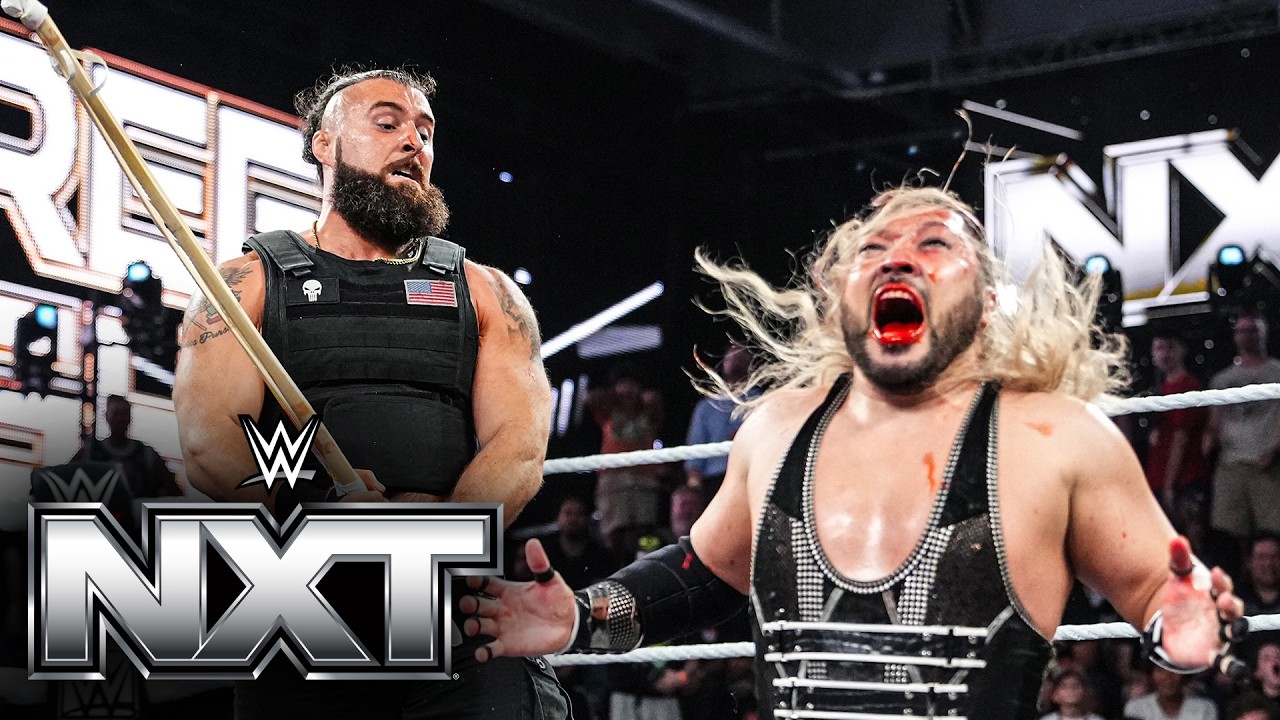
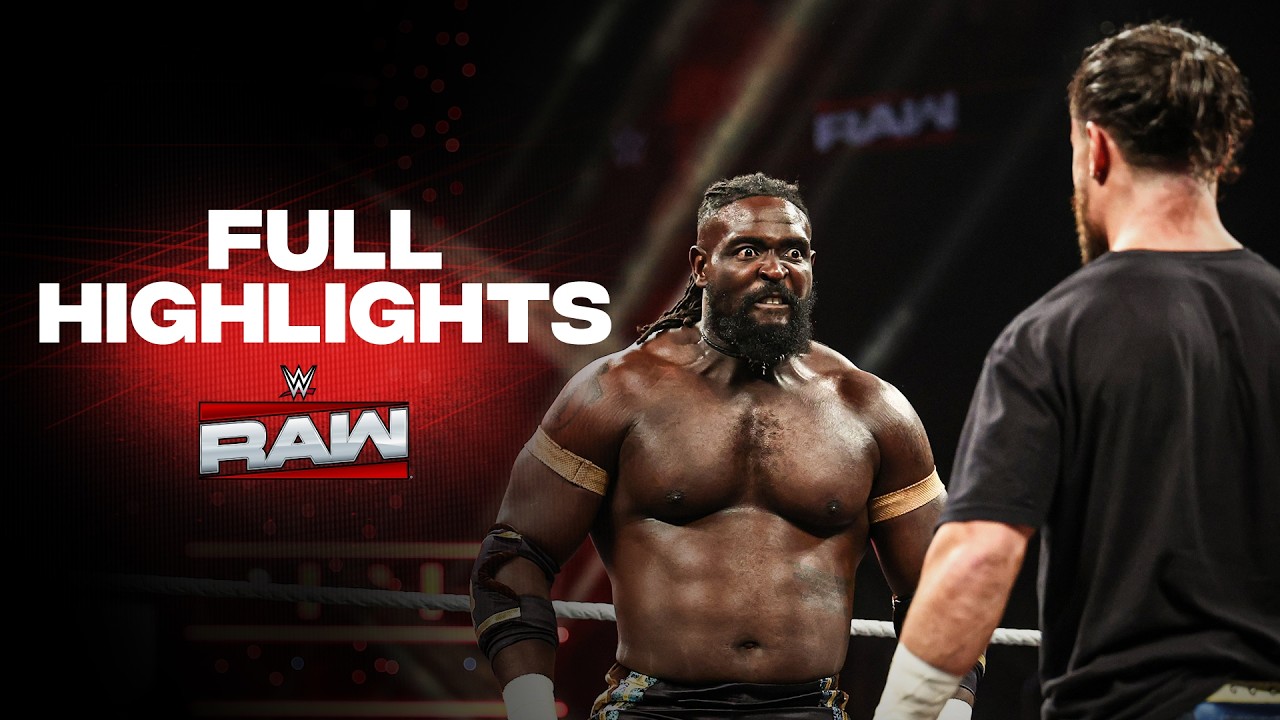
Shido Ash and Viktor Zanov Turn WWE Evolve Into a Judo Clinic — and Expose the ID 1.0 Problem Again
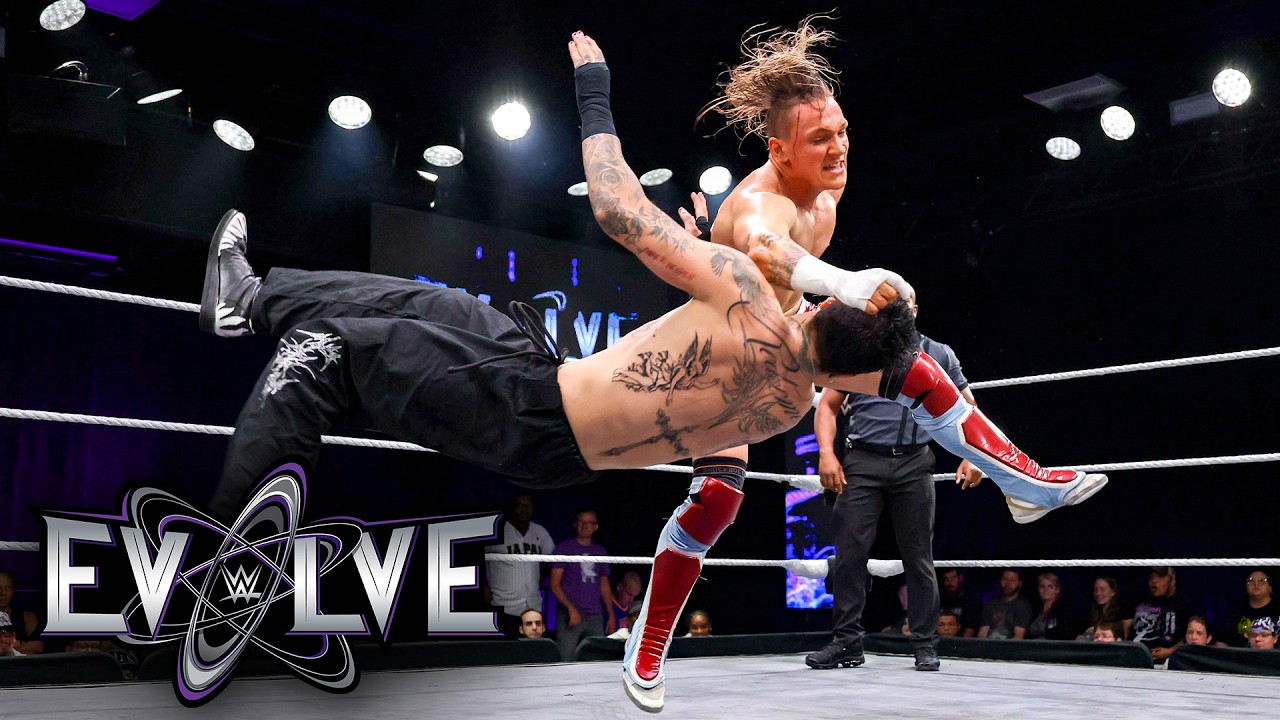
Two former elite judoka walked into a WWE ring pretending to be disgruntled ex-security guards, and in a little under five and a half minutes they told you almost everything you need to know about where WWE Evolve is trying to go. Shido Ash and Viktor Zanov beat Marcus Mathers and Cappuccino Jones in the opening match of the July 22, 2026 episode of Evolve, and while the finish read as a routine tag-team pinfall on paper, the way it happened — and who it happened to — is the actual story.
The result, up front, for anyone who searched for it: Shido Ash and Viktor Zanov defeated Marcus Mathers and Cappuccino Jones by pinfall at roughly the 5:27 mark. Mathers accidentally knocked his own partner off the apron during his comeback, was left alone with two heavyweight throwers, and got dumped on the back of his neck for the three-count. If you only wanted the winner, there it is. Everything after this paragraph is the context that makes those five minutes matter: who these four men are, why WWE keeps having the “ID 1.0” babyfaces lose, and how a judo-based monster team is quietly being built into something Evolve can lean on.
This was not a title match. It was not the main event. It was an opener on a developmental show that runs about 52 minutes and streams for free. And yet it is one of the more revealing segments WWE has produced on this brand in weeks, because it sits at the intersection of three separate projects the company is running at once: the reinvention of two international athletes into pro wrestlers, the long, slightly cruel storyline about a group of talented young babyfaces who cannot get out of their own way, and the broader question of what Evolve is even for. Let’s take all of it apart.
Shido Ash and Viktor Zanov vs. Marcus Mathers and Cappuccino Jones at a Glance
- Promotion: WWE (Evolve brand)
- Episode: WWE Evolve #70 (Tubi lists it as Season 2, Episode 21)
- Date streamed: Wednesday, July 22, 2026
- Taped at: WWE Performance Center, Orlando, Florida
- Match: Marcus Mathers & Cappuccino Jones (with Sam Holloway) vs. Shido Ash & Viktor Zanov
- Match type: Standard tag team match, non-title, opening contest
- Championship: None on the line
- Winners: Shido Ash & Viktor Zanov, by pinfall (roughly 5:27)
- Finish: Mathers was isolated after inadvertently bumping Cappuccino Jones off the apron; the judo team put him away with a German suplex, a move the commentary team branded the pair’s “Dead End.”
- Commentary: Blake Howard and Rob Stone
- How to watch: Evolve streams free on Tubi in the United States and on YouTube internationally.
What Actually Happened
The match opened with Viktor Zanov controlling the pace against the smaller Marcus Mathers, and that word — control — is the key to the whole thing. Zanov did not race Mathers. He grounded him, threw him, and generally treated a 23-year-old high-flyer like a training-hall crash-test dummy. Early on, Mathers reached for an opening and briefly found one, but the tone had already been set: this was going to be a match about power and leverage against speed and desperation.
Shido Ash tagged in and immediately showed off the judo foundation that defines this team, snapping off a throw so cleanly that the commentary called it as it happened. He tossed Cappuccino Jones around, added a release bulldog-style powerslam and a belly-to-belly suplex, and mixed in exactly the kind of taunting that tells a live audience which of these two teams they’re supposed to boo. The heels worked Jones over in their corner, isolating him and cutting the ring in half the way any competent veteran tag team would.
Jones fought to make the tag, sliding underneath at one point only to have Shido cut him off before he could reach Mathers — a small, smart bit of tag-team wrestling that kept the babyfaces from getting their moment too early. Eventually, Mathers did get the hot tag, and for about ninety seconds the match belonged to him. He came in with the frantic, everything-at-once offense that has made him a favorite on the independent scene: a heel-hook kick to the jaw that borrows from Will Ospreay’s playbook, a running kick on the apron, a springboard cutter, and a Blue Thunder Bomb that earned a two-count.
Then it fell apart, and it fell apart on purpose. In the middle of his comeback, Mathers collided with Cappuccino Jones and knocked his own partner clean off the apron to the floor. Suddenly it was one man against two throwers. Shido Ash exploded through Mathers with a German suplex, and the judo team collected the pin. The bell rang at approximately 5:27. Blake Howard and Rob Stone framed the finish as the heels sending Mathers “right to a dead end,” and the win went to Shido Ash and Viktor Zanov.
Standing at ringside for all of it was Sam Holloway, the 6-foot-8 associate of the ID babyface unit, plus the four members of the heel faction known as the Mog Squad, who watched from the VIP lounge. That crowded ringside picture matters, and we’ll come back to it, because the miscommunication that cost Mathers and Jones this match is not a one-off. It is the entire point of where WWE is taking these characters.
Sponsored • Adults 18+ Only
Get Your Sexy Weeknight Plans
If your ideal evening involves a screen, a solid match, and good conversation, there are social platforms built for finding people on the same wavelength. Browse profiles, chat at your own pace, and see where it goes.
Availability, registration requirements, and features vary by region and provider. Review the platform’s terms before signing up.
First, Understand What WWE Evolve Actually Is
You cannot properly read this match without understanding the show it lives on, because Evolve is a genuinely unusual product in the modern WWE ecosystem. Evolve is WWE’s weekly developmental in-ring program, taped at the WWE Performance Center in Orlando and released for free — on Tubi in the United States and on YouTube for the rest of the world. It launched in this current form in March 2025, reviving a name that older fans will recognize from the independent Evolve promotion that operated in the 2010s and served as a feeder to the original NXT.
The new Evolve is deliberately positioned below NXT on the developmental ladder. Where NXT is now effectively a third national brand with its own television deal and its own stars, Evolve is the layer beneath that: a place for very green Performance Center recruits, for NXT wrestlers who need more reps and more seasoning, and — crucially — for the prospects in WWE’s independent-development pipeline to get televised experience. It is closer to a proving ground than a destination. The stakes are rarely championships or pay-per-view spots. The stakes are whether you look like someone worth promoting.
That framing changes how you should evaluate a match like this one. On Raw or SmackDown, a five-minute opener that ends with a comedy-of-errors miscommunication finish might be filler. On Evolve, that same five minutes is a screen test. Shido Ash and Viktor Zanov are auditioning for a role — the imposing, credible heel duo a developmental brand can build babyfaces against — and Marcus Mathers and Cappuccino Jones are being used, week after week, to run a specific long-form character study. The show’s low stakes are exactly what make it a safe laboratory for that kind of storytelling.
It’s worth noting the on-air detail that Evolve is presided over by a storyline “foreman,” Timothy Thatcher, who functions as the brand’s authority figure. Thatcher’s blue-collar, no-nonsense gimmick — the man who runs the shop floor — is central to the Shido Ash and Viktor Zanov origin story, as we’ll see. Reviewers covering the July 22 episode also noted a behind-the-scenes shift: this taping introduced Rob Stone to the commentary booth alongside Blake Howard, with regular voice Peter Rosenberg absent, one of several small production changes that signaled a fresh set of tapings.
The WWE ID Program, and Why “1.0” Keeps Getting Said Like an Insult
The phrase that anchors this whole rivalry — the “ID 1.0 crew” — refers to WWE ID, the company’s Independent Development program. WWE announced ID in October 2024 as a first-of-its-kind initiative to identify promising wrestlers on the independent scene, place them with designated partner schools and promotions, and give them a formal pathway toward WWE without immediately signing them to full developmental contracts. The founding partner schools included Reality of Wrestling, Nightmare Factory, the Black and Brave Wrestling Academy, KnokX Pro Academy, and the Elite Pro Wrestling Training Center, with the roster of partners expanding over time.
In practice, ID prospects keep working the independents while carrying WWE’s imprimatur, and the best of them graduate onto Evolve television. The program even has its own championship — the WWE ID Championship — which Cappuccino Jones held as the inaugural titleholder before it moved on down the line. (As of late July 2026, the ID Championship was being carried by Chazz “Starboy” Hall, who was being featured in title-versus-title matches on the independent circuit.)
Here is where the “1.0” language comes from, and why it stings. The first wave of ID signees — the class that includes Marcus Mathers, Cappuccino Jones, Sam Holloway, and Aaron Rourke — are informally the “1.0” group. A newer wave of prospects, the “2.0” class, arrived on Evolve in 2026. On commentary and in the storylines, the 1.0 label has quietly curdled from a badge of being first into something closer to a knock: the guys who were here first, who are more polished, and who somehow keep losing anyway. One veteran reviewer put the contradiction bluntly, noting that the 1.0 ID roster is clearly more talented than the 2.0 crew, which makes it “frustrating to see them keep losing.” That frustration is not an accident. WWE is booking it on purpose, and this match is another brick in that wall.
Sponsored • Adults 18+ Only
Find a Naughty Space That Fits Your Pace
Prefer browsing first and talking later? Adult social-discovery services can help you explore profiles and decide when, or whether, to start a conversation.
Profiles, features, eligibility, and availability vary by service and region. Review all provider terms before registering.
Who Are Shido Ash and Viktor Zanov?
The winners are the more interesting half of this story, because they are two athletes in the middle of a genuinely difficult transition: from world-class competitive judo to professional wrestling, a discipline that shares judo’s throws but almost none of its rhythm, psychology, or purpose.
Shido Ash (Shady Elnahas)
Shido Ash is the ring name of Shady Elnahas, and his athletic résumé is real and substantial. Born in Alexandria, Egypt on March 27, 1998, Elnahas built his combat-sports career representing Canada out of Toronto, where he is billed from. In judo’s under-100-kilogram division he assembled the kind of medal collection most athletes only dream about: gold at the 2022 Commonwealth Games in Birmingham, gold at the 2023 Pan American Games in Santiago, a long string of Pan American Championship titles across multiple years, an IJF Grand Slam gold in Tbilisi, and — the headline result — a silver medal at the 2024 World Judo Championships in Abu Dhabi. Databases tracking his crossover list him plainly as a former Olympic-level judoka. When the commentary calls him “well versed in judo,” that is a considerable understatement.
At 6-foot-4 and around 220 pounds, bald and heavily tattooed in his current presentation, Elnahas looks the part of a heavyweight enforcer. He signed with WWE’s ID/NIL program in May 2025 and spent the back half of that year training at the Performance Center and working house shows before débuting on Evolve television. The Shido Ash character name and look date to April 2026; before that he appeared under his real name. What’s notable for a man with his amateur pedigree is that WWE did not immediately hand him a hero’s welcome. Instead, they turned him heel almost the moment he arrived on the brand, débuting him in April 2026 as a bad guy — a choice that fits the character work we’ll get to shortly.
Viktor Zanov (Aaron Fara)
Viktor Zanov is the ring name of Aaron Fara, an Austrian athlete born June 21, 1997, and like his partner he comes from judo. Fara was a multiple-time Austrian national judo champion — a junior champion several times over before capturing a senior national title in the under-100-kilogram class — who made the unusual decision to leave elite judo for professional wrestling. His in-ring career is extremely young: he began training and wrestling in late 2025, and made an early NXT appearance in a dark match on the February 24, 2026 episode, wrestling under his real name in a losing effort against the veteran luchador Lince Dorado. He is billed at a similar 6-foot-4, 220-pound frame to Elnahas, giving the team a matched, symmetrical look.
One housekeeping note for the detail-oriented: some wrestling databases render his ring name as “Viktor Zakov” rather than “Viktor Zanov,” and you’ll see both spellings floating around. WWE’s on-air presentation, the Evolve results as logged by independent outlets, and the commentary all use Zanov, so that is the spelling this article treats as correct. It’s a small thing, but it’s exactly the kind of detail that gets mangled when a wrestler is this new and this lightly covered.
The security-guard origin, and why it’s smart
The path Shido Ash and Viktor Zanov took onto the Evolve roster is one of the better pieces of low-budget character work the brand has done. Rather than debuting them as wrestlers, WWE first introduced the pair as a nameless pair of security guards hired by foreman Timothy Thatcher, beginning around late April 2026. For weeks they lurked at ringside as anonymous heavies, breaking up unsanctioned brawls and preventing interference — and doing it with noticeably excessive force, tackling and roughing up talent under the pretense of keeping order. They were furniture with menace, and the audience slowly started to wonder who they actually were.
On the June 3 episode, the duo was finally named on-air as Viktor Zanov and Shido Ash. Then came the turn that set up everything since: Thatcher, confronted with the reality that his hired muscle kept injuring people, “fired” them. Their response was the money. They didn’t beg for their jobs back as security — they demanded to wrestle, and when Thatcher refused to reward them for getting fired, they simply declared that they had learned the most important lesson of the job: that they could do whatever they wanted, whenever they wanted, to whomever they wanted. Thatcher, in a nicely played comedic beat, muttered that he had “made an error.” He had. He’d effectively unleashed two former judo champions on his own roster with a grudge and no rules.
It’s a clean, logical heel origin. It explains their look (the leftover security aesthetic, with Zanov adding a fluffy Russian-style hat as a sneering flourish), it explains their attitude (entitled bullies who feel wronged), it justifies their offense (they really are trained throwers), and it gives them a built-in reason to target the babyfaces of the brand. For two men who could not have more than a handful of televised matches between them, that is a lot of narrative scaffolding doing a lot of quiet work.
Sponsored • Adults 18+ Only
Build a Virtual AI Girlfriend Around Your Own Tastes
Choose the personality, the conversational style, and the vibe. AI companion apps let you shape a virtual character you can talk to whenever you want — no schedule, no small talk you didn’t ask for.
AI companions are virtual characters and are not real people. Features, subscriptions, and pricing may vary by provider.
Who Are Marcus Mathers and Cappuccino Jones?
If Shido Ash and Viktor Zanov are the project WWE is building up, Marcus Mathers and Cappuccino Jones are the project WWE is, for now, deliberately keeping down — and both men are considerably more accomplished than a string of Evolve losses would suggest.
Marcus Mathers
Marcus Mathers — real name Marc Anthony Mattiacci Jr., born March 23, 2003 in Philadelphia — is one of the most well-traveled young high-flyers of his generation despite being only 23. He broke in on the independents in 2019, wrestled early under the name “Darc Angel,” and became a standout through the Northeast indie ecosystem, including the H2O Wrestling school system, before graduating to a genuinely international schedule. His touring credits read like a passport: Game Changer Wrestling, where he remains a regular; PROGRESS Wrestling in the United Kingdom; Dragon Gate and Big Japan Pro Wrestling in Japan; and Major League Wrestling in the United States, among many others. He has held the Undisputed IWTV Independent Wrestling World Championship, DREAMWAVE gold, and H2O tag team gold, and he wrestles a fast, acrobatic, visibly Ospreay-influenced style built on springboards, kicks, and dives.
Mathers joined WWE ID in November 2024 and became a regular on Evolve from June 2025. Interestingly, he has spoken publicly about how the ID program has pushed him toward a more grounded, “realism”-focused approach and away from what he called the “silly stuff” — a maturation that squares with a wrestler being groomed for a company that prizes credibility. On the current roster he’s a babyface, and his finishers include a diving move he calls the 999 (a Diamond Dust variation) and a 450 splash. He is, by any reasonable measure, the most polished in-ring talent in this particular match. That is what makes his booking so pointed.
Cappuccino Jones
Cappuccino Jones, born August 16, 2002 in Tulsa, Oklahoma, is a different kind of prospect: a charisma-forward performer with a retro, funk-inflected presentation who has leaned hard into a 1960s-themed look, gaudy vintage gear, and a showman’s swagger that has drawn comparisons to the cult Pro Wrestling Guerrilla favorite Human Tornado. He debuted in 2022, was scouted for WWE ID out of the This Is Wrestling school, and signed to the program around November 2024. Billed around 5-foot-11 and a slight 161 pounds, he is the smaller, flashier counterweight to the bigger bodies around him.
Crucially, Jones is a decorated prospect in his own right: he was the inaugural WWE ID Champion, a distinction that put him at the front of the entire program’s first class, and he has collected regional titles across promotions like Core Pro Wrestling and others in his home region. He has also worked Evolve in various tag configurations, previously teaming with the athletic Jack Cartwheel as “Adrenaline Drip.” He is not a jobber who wandered into the wrong match. He is a former flagship champion of the very program whose name is being used as a taunt.
And the third man: Sam Holloway
The “company” the commentary noticed at ringside — the man who came out to cheer on his buddies — is Sam Holloway, another ID 1.0 talent and, at a billed 6-foot-8, the literal biggest presence in the babyface unit. Holloway functions as connective tissue for this group: he’s been in trios matches alongside Mathers and Jones, and later on the very same July 22 episode he wrestled a strong singles draw with NXT’s Dorian Van Dux. His presence at ringside is not decorative. In a story that is fundamentally about whether these babyfaces can trust and coordinate with one another, having a third friend hovering outside the ring is another variable that can go wrong — and in this genre of storytelling, variables that can go wrong eventually do.
Sponsored • Adults 18+ Only
Create a Virtual Character for Your Kind of Conversation
Some AI companion services let you select personality traits, interests, and conversation preferences for a virtual character designed for interactive entertainment.
AI companions are virtual characters, not real people. Features, pricing, data practices, and subscriptions vary by provider.
The Mog Squad and the Bigger Picture at Ringside
Watching from the VIP lounge during the match were the four members of the Mog Squad, a heel faction that has been a persistent antagonist for the ID babyfaces. The core trio — CJ Valor, Jacari Ball, and Santi Rivera, often accompanied by Max Abrams — represents a different flavor of villainy than the judo team: a numbers-game gang unit rather than a two-man wrecking crew. Just three weeks earlier, on the July 1 episode, the Mog Squad had beaten Mathers, Jones, and Holloway in a six-man elimination match, pinning all three babyfaces in sequence. The commentary’s uncertainty during the July 22 match about whether the Mog Squad were jeering the babyfaces or the security guards was doing intentional work: it kept multiple heel threats live at once and reminded viewers that the 1.0 crew is fighting a war on more than one front.
This is the environment Mathers and Jones are operating in. They are more talented than most of the people beating them. They are surrounded by rival factions. And they cannot, for the life of them, get on the same page long enough to win a match cleanly. That’s not a coincidence. That’s the storyline.
How We Got Here: The Road to July 22
The July 22 match didn’t come from nowhere. It’s a convergence point for two storylines that had been building separately, and laying them side by side shows how deliberately the pieces were arranged.
The judo team’s track. Shido Ash and Viktor Zanov entered the Evolve picture in the spring of 2026 not as wrestlers but as hired muscle. Around late April, foreman Timothy Thatcher brought in a pair of unnamed security guards, and over the following weeks they became a recurring presence — appearing at ringside, breaking up altercations, and enforcing order with a heavy hand. The slow build paid off on the June 3 episode, when the pair were finally named on-air. Shortly after, Thatcher fired them for their excessive force, and they responded not with contrition but with a declaration of independence: they’d wrestle, they’d do as they pleased, and no one could stop them. From that point, they were transformed from background enforcers into an active heel tag team, and their matches since have been showcases for their judo-based dominance. The July 22 win over Mathers and Jones is one of the most notable scalps of that young run.
The ID 1.0 babyfaces’ track. Running parallel was the growing frustration of the first ID class. Marcus Mathers, Cappuccino Jones, and Sam Holloway — talented, established, and increasingly snakebitten — kept coming up short on Evolve, often in ways that pointed to coordination problems rather than a lack of ability. The clearest prior chapter came on July 1, when the trio lost a six-man elimination match to the Mog Squad, with all three babyfaces pinned in succession and Holloway visibly hampered by a storyline rib injury. The commentary had already begun leaning on the “not on the same page” framing, planting the idea that this group’s biggest opponent was its own chemistry.
When those two tracks intersected on July 22, the outcome almost wrote itself. You had a rising, credible heel team that needed a meaningful win, and a talented babyface pairing whose defining flaw was miscommunication. Put them in a ring together and the story tells itself: the babyfaces generate hope, the flaw resurfaces at the worst moment, and the credibility heels capitalize. The apron collision between Mathers and Jones wasn’t a new idea dropped into this match — it was the payoff of weeks of seeded storytelling, delivered in the cleanest possible form.
It’s also worth flagging the commentary’s reference to “Succession III” during the match — a nod to an Evolve special-event banner used for the brand’s bigger episodes — as shorthand for the accumulated history between these acts. Whether or not a viewer caught the specific reference, its function was clear: to signal that this wasn’t a first meeting but the latest beat in an ongoing conflict, giving the short match a sense of weight it couldn’t have earned on its own in five minutes.
The Match, Analyzed: A Story Told in Throws and Miscommunication
For a sub-six-minute opener, this match is unusually legible. Every phase does a job, and the jobs stack into a clear thesis: the heels are more organized than the babyfaces, and the babyfaces’ biggest enemy is themselves.
The opening: establishing dominance without a squash
Zanov starting against Mathers is a smart matchmaking choice inside the match. You put your biggest, most controlling heel against the babyfaces’ most explosive flyer, and you let the size-and-leverage story write itself. Zanov didn’t need to do anything fancy; he needed to look immovable, and throwing Mathers to the mat and refusing to let him build speed accomplished exactly that. When Mathers hit a springboard crossbody and a mule kick around the one-minute mark, it registered not as the start of a babyface takeover but as the natural, expected flurry of a smaller man against a bigger one — a flurry the heels could absorb.
Shido Ash’s tag-in raised the ceiling on the offense. His judo throws are the team’s signature, and the commentary’s near-real-time reaction — essentially calling the throw as it happened — is the sound of announcers doing their job, selling a distinctive weapon as something the audience should find impressive and a little frightening. The release bulldog powerslam and the belly-to-belly that followed are meat-and-potatoes power moves, but paired with the throws they built a coherent picture: this team hurts you in ways the flippy guys can’t answer.
The middle: cutting the ring, and cutting off hope
The heat segment on Cappuccino Jones is textbook, and one beat in particular deserves credit. When Jones slid underneath in a bid to reach his corner, Shido Ash cut him off before he could make the tag. That is the single most important job of a heel in a tag match — denying the hot tag, stretching the audience’s anticipation — and doing it with a decisive counter rather than a lazy distraction is the difference between a match that feels competitive and one that feels choreographed. The heels kept Jones in their half of the ring, wore him down, and made the eventual tag feel earned.
The comeback: the trap inside the hot tag
Mathers’ hot tag is where his quality shows. The heel-hook kick, the apron kick, the springboard fadeaway stunner, the Blue Thunder Bomb for two — that’s a lot of high-end offense delivered at speed, and it’s the sequence that makes you understand why this man has main-evented indie shows on three continents. For a moment, the match tilted, and the Blue Thunder Bomb nearfall was designed to make you believe the 1.0 crew might finally get one.
But the comeback contained its own poison, and this is the craft of the finish. Mathers, in the chaos of his own flurry, ran into Cappuccino Jones and knocked him off the apron. The very thing that makes Mathers dangerous — his velocity, his all-gas offense — is the thing that undid the team. He was moving so fast and so recklessly that he took out his own partner. There is real character writing buried in that spot: the babyfaces don’t lose because they’re outclassed, they lose because their strengths, uncoordinated, become liabilities.
Sponsored • Adults 18+ Only
Looking for a Different Kind of Conversation?
When the show’s over and you’re still wide awake, adult chat and social-discovery platforms are a low-pressure way to meet people and talk about whatever’s on your mind.
Services, eligibility, registration requirements, and pricing vary. Review the provider’s terms before joining.
The Turning Points
Strip the match down and there are really only three moments that determined the outcome. Everything else is texture.
1. Shido Ash’s cut-off of Cappuccino Jones. Before the hot tag ever happened, the heels had to earn the right to control the finish, and the moment Shido caught Jones sliding for the tag is where they seized it. Had Jones made that tag cleanly and early, the whole rhythm of the match changes. Denying it kept the babyfaces one step behind for the duration.
2. The Blue Thunder Bomb nearfall. This is the match’s false dawn — the instant designed to make the audience believe. It’s important not because it changed the result but because it raised the stakes of the collapse that followed. You cannot have a gut-punch finish without a moment of hope first, and Mathers’ near-fall was that moment.
3. Mathers colliding with Jones. The actual hinge. One accidental collision converted a 2-on-2 fight the babyfaces were suddenly winning into a 2-on-1 execution. It’s the spot the entire match was built to deliver, and it recontextualizes everything before it: the story was never “can the babyfaces beat the judo team,” it was “can the babyfaces get out of their own way.” They couldn’t.
The Finish, Analyzed
With Jones dumped to the floor and Mathers alone, the finish was a formality — but the form it took is worth examining. Shido Ash hit a German suplex and pinned Mathers around 5:27. The commentary team packaged the finishing sequence under the heels’ branding, describing them sending Mathers “to a dead end,” positioning “Dead End” as the team’s signature closing statement. (One detailed independent match log recorded the specific decisive move as a German suplex; the on-air language leaned on the “Dead End” branding and the pair’s tandem judo dominance. Either way, the mechanics are the same: an isolated babyface, dropped on his neck by a trained thrower.)
Two things about this finish are smart, and one thing about it is a legitimate criticism.
The first smart thing: it protects Marcus Mathers. He was not out-wrestled. He was not tapped out or pinned clean after a lengthy beating. He got caught alone because of a mistake that was arguably as much bad luck as bad judgment. When WWE eventually wants to elevate Mathers — and everything about how they discuss him suggests they will — none of these Evolve losses will read as him being exposed. The book on him remains “immensely talented, just star-crossed.”
The second smart thing: it builds the heels the right way. Shido Ash and Viktor Zanov did not need to cheat, and they did not win by fluke. They won by being organized, patient, and physically dominant, and by capitalizing instantly when their opponents faltered. That’s how you build a team you eventually want a hero to overcome — you make them look like a problem that requires a real solution, not a con job that requires a lucky break.
The honest criticism: the “babyfaces lose because they can’t get along” beat is now a pattern on Evolve, not a surprise, and there is a real risk of diminishing returns. The July 1 six-man loss, the recurring “not on the same page” commentary, and now this apron collision are variations on a single theme. Repetition can build toward a satisfying payoff — the eventual moment when the babyfaces finally do get it together — but only if that payoff is actually coming. If it’s just churn, audiences will stop investing in a group that never wins. WWE is spending Mathers’ and Jones’ credibility on a slow burn, and slow burns have to end.
Why the Booking Works (and Where It’s Risky)
Let’s give the layered interpretation its due, clearly labeled as analysis rather than confirmed intent. The booking here appears designed to accomplish several things at once. It establishes Shido Ash and Viktor Zanov as a credible, self-sufficient heel team without giving them a cheap win. It keeps Marcus Mathers protected as a future prospect while still denying him the satisfaction of victory, which sustains the sympathetic underdog narrative. And it advances the ongoing character study about the ID 1.0 group’s inability to coordinate, feeding a story that has been running for weeks across multiple opponents.
The likely long game — again, this is interpretation — is that the ID 1.0 babyfaces are being set up for an eventual breakthrough. Stories about talented teams who keep tripping over themselves almost always resolve one of two ways: either the group finally clicks and gets a cathartic win, or the frustration boils over into a split, a betrayal, and a set of singles pushes born from the wreckage. Both are viable. Both would give this run of losses retroactive purpose. The risk is the third path — that the losing simply continues without direction until the characters are quietly cooled off. WWE has the pieces here to avoid that. Whether it does is the thing to watch.
For the judo team, the path is more straightforward. A monster heel duo on a developmental brand exists to be a measuring stick. In the near term, expect them to keep steamrolling the 1.0 and 2.0 prospects. In the medium term, the interesting question is whether WWE trusts two men this new to the business to carry longer, more complex matches — because so far their appeal has been built on short, dominant showings that hide how little ring experience Zanov in particular actually has. The security-guard gimmick is doing a lot of work to paper over that inexperience, and it’s working. But eventually the training wheels come off.
Sponsored • Adults 18+ Only
Keep the Conversation Going After the Bell
Adult chat services offer spaces to meet other users and exchange messages at your own discretion. Browse carefully and choose the setting that feels appropriate for you.
User availability, moderation, registration, pricing, and features vary by provider. Protect your personal information and review the terms.
Recent Form and Momentum
Momentum is a currency in wrestling, and right now these four are holding very different amounts of it.
Shido Ash and Viktor Zanov are on the upswing by design. Since transitioning from the security-guard role into an active team in June 2026, they’ve been booked as an ascending threat, and beating a name-value pairing like Mathers and Jones — even a pairing WWE is deliberately keeping cold — is another rung climbed. Their momentum is manufactured and carefully controlled, but it’s real within the story. They have not been made to look vulnerable, and on a brand full of young talent trying to establish themselves, “undefeated-feeling” is a valuable commodity.
Marcus Mathers entered this match riding one of the more curious cold streaks in recent developmental memory: an obviously elite worker who keeps coming up short on television. His schedule underscores the paradox. Just days before this Evolve aired, Mathers had worked a Game Changer Wrestling event — reviewers noted he and Cappuccino Jones had actually faced each other on a GCW show that same weekend — which is a reminder that on the independents, where ID talent still roams, Mathers is a featured attraction. On Evolve, he’s a talented man collecting losses. That gap between his indie stature and his WWE-brand booking is the single most interesting thing about his current run.
Cappuccino Jones carries a similar split. A former inaugural WWE ID Champion and a genuine draw on the indie scene, he continues to take televised losses in the 1.0 storyline while remaining a booked attraction elsewhere — independent roundups in the same window had him working featured singles matches against established names. His momentum on Evolve is low; his stock in the wider ecosystem is not.
Sam Holloway, the third man at ringside, actually had the better night of the babyface unit in a roundabout way: later on the same episode he wrestled NXT’s Dorian Van Dux to a double count-out, a finish specifically designed to protect both big men from a decisive loss. A draw is not a win, but for a 6-foot-8 project it’s a sign WWE isn’t in a hurry to expose him either.
What This Means for Each Man’s Career
None of these four is being made or broken by a five-minute Evolve opener — that’s not what this level of the pipeline is for. But the match does clarify each man’s current standing in WWE’s eyes.
For Shido Ash, the read is encouraging. WWE took a decorated international judoka, resisted the temptation to rush him onto the babyface hero track his amateur pedigree might suggest, and instead invested in teaching him to be a heel — the harder, more valuable skill. Learning to draw heat, control a crowd, and work a deliberate pace is exactly what a converted athlete needs, and the throws give him a hook no one else on the roster has. He is, quietly, one of the more sensibly developed prospects on the brand.
For Viktor Zanov, this is foundational reps. A man who was wrestling dark matches in February 2026 is being protected inside a gimmick that lets his inexperience read as menace rather than greenness. The partnership with the more physically imposing Ash is a smart pairing that lets Zanov contribute his judo and his sneering character while the team structure covers for the parts of pro wrestling he hasn’t learned yet.
For Marcus Mathers, the significance is almost entirely about patience. The losses aren’t the story; the protection within the losses is. WWE keeps him from being exposed, keeps talking him up as a realism-focused worker, and keeps him featured on partner indie shows. Everything points to a company that sees a long-term investment and is content to let the “star-crossed underdog” narrative marinate before the eventual push. The danger, as noted, is marinating too long.
For Cappuccino Jones, the through-line is character. His retro, Human Tornado-adjacent showmanship is the kind of distinct presentation that survives losses, because audiences remember a character even when they don’t remember a result. As the first-ever ID Champion, he has a credential no future prospect can take from him. The task in front of him is converting personality and history into wins that stick.
Historical Context: Judo in the Wrestling Ring
Shido Ash and Viktor Zanov are part of a long, rich tradition of judoka crossing into professional wrestling, and understanding that lineage helps explain why WWE is so willing to invest in two men with so few matches between them.
Professional wrestling and judo have been intertwined for over a century, most deeply in Japan, where the sport’s very foundations were laid by judo and catch-wrestling practitioners. The Japanese wrestling tradition treats grappling credibility as sacred, and generations of stars — from the earliest days of the business through the strong-style era — carried legitimate judo or amateur-wrestling backgrounds that gave their throws and holds an air of authenticity. A German suplex from a man who can actually throw hits differently than the same move from a man who only learned it in a wrestling ring, and audiences, even casual ones, feel that difference whether or not they can name it.
In the modern WWE system specifically, the company has repeatedly mined Olympic and elite combat-sports pipelines for talent, valuing the discipline, conditioning, and shootlike credibility those athletes bring. The logic behind signing a Commonwealth Games and Pan American Games gold medalist like Shady Elnahas is the same logic that has driven WWE toward amateur standouts for decades: you can teach a great athlete to wrestle, but you can’t teach a wrestler to have been a world-class athlete. What’s refreshing about the Shido Ash and Viktor Zanov presentation is that it doesn’t hide the judo behind generic power-wrestling — it foregrounds the throws as the team’s identity, which is both more honest and more marketable.
The other tradition this match draws on is the tag team built on dysfunction. Wrestling history is full of talented duos whose story was their inability to coexist — teams where the drama came from the partners as much as the opponents, and where the eventual explosion into a singles feud was the whole point. The Mathers-and-Jones “not on the same page” arc is a small, developmental-level version of that evergreen structure. It’s a formula precisely because, done well, it works: it makes losses meaningful, it builds toward a personal payoff, and it turns two midcard babyfaces into a story worth following. The question, always, is the follow-through.
Sponsored • Adults 18+ Only
Explore Adult-Oriented Entertainment Options
Social, dating, chat, or AI-powered services may be presented by the destination provider. Browse the available options and review the terms before deciding whether any service suits you.
The destination and available service may vary by device, region, and provider. Registration, subscriptions, or charges may apply.
Promotion and Business Context: Why Evolve Exists on Tubi
It’s easy to overlook the business machinery underneath a free developmental show, but it explains a lot about why matches like this are booked the way they are. Evolve’s home is Tubi, the ad-supported free streaming service owned by Fox, and that partnership is the whole ballgame. WWE gets a distribution platform for its developmental content and a funnel to introduce new characters to a broad, casual, cost-free audience; Tubi gets first-run weekly WWE programming to anchor its library and drive ad views. Internationally, the show lives on YouTube, WWE’s global shop window.
That distribution model shapes the content. Because the show is free and ad-supported, its job is reach and repetition, not blockbuster moments. Episodes run tight — this one clocked in around 52 minutes — and the booking favors clean, legible stories that a first-time viewer can follow without homework. A match like Shido Ash and Viktor Zanov versus Mathers and Jones is perfectly suited to that: you can drop in cold, understand within a minute who the bullies are and who the underdogs are, and walk away with a clear impression of four new faces. Developmental television on a free platform is, in a real sense, an advertisement for the talent pipeline itself.
The WWE ID program adds another layer to the business logic. By formally partnering with independent schools and promotions rather than immediately signing every prospect to a developmental deal, WWE gets to scout talent in live competition, build relationships across the indie ecosystem, and cherry-pick who graduates to Evolve and eventually NXT — all while spreading its brand across the grassroots of the industry. Putting ID prospects on Evolve is the visible tip of a much larger talent-acquisition strategy. Every Mathers springboard and every Shido Ash throw is data.
Critical and Audience Response
Because Evolve sits below the main WWE brands in coverage, critical response to any single match is limited, but the reviewers who do cover the show weekly gave this segment a consistent read. The dominant note was frustration on behalf of the ID 1.0 talent: the recurring observation that the 1.0 roster is more polished than the newer 2.0 crew, paired with visible exasperation at watching that polished group lose again. That’s a meaningful critical signal — not that the match was bad, but that the pattern is testing the patience of the show’s most engaged viewers. When your most attentive audience starts to feel a story is spinning its wheels, that’s worth the bookers’ attention.
On the match itself, the reaction was more neutral-positive: a tidy, well-worked opener that did its job without aspiring to be more than an opener. No one covering the show flagged it as a must-see, and no one flagged it as a disaster. It was, by design, a functional piece of a larger story. It’s worth being honest about that ceiling. This was a good five minutes of developmental wrestling with a clever finish, not a hidden classic, and inflating it beyond that would do the reader a disservice.
As for live and online reaction, the honest answer is that measurable data for an individual Evolve opener is thin, and anything drawn from scattered social-media posts should be treated as anecdotal rather than representative. What can be said with confidence is that the judo team’s presentation — the throws, the matched look, the security-guard backstory — has been landing as intended, generating exactly the kind of “who are these guys” curiosity a developmental brand wants around a new act.
What Could Happen Next
Let’s separate what’s reasonable to expect from what would be pure fantasy booking, and keep the analysis honest about its own uncertainty.
The most likely near-term direction is that Shido Ash and Viktor Zanov continue their ascent, working through more of the Evolve tag and trios ranks. A team booked this deliberately is usually being aimed at something — most plausibly a run at establishing themselves as the team to beat among the brand’s heels, and eventually a program against whichever babyface unit finally gets its act together. If WWE is building the ID 1.0 group toward a redemption arc, the judo team is a logical final boss for it.
For Mathers and Jones, the fork in the road is the thing to watch. One path is the cathartic team-clicks-and-wins payoff. The other is the split: a frustrated betrayal that turns one man heel and launches two singles stories. Given how much WWE talks up Mathers specifically, a scenario where the losses eventually curdle into tension — and Mathers or Jones snaps — is very much on the table. It’s important to label that as informed speculation, not reporting: WWE has not announced a direction, and the responsible read is that the pieces support multiple outcomes.
The broader backdrop is the developmental ladder itself. Evolve’s entire purpose is to graduate people upward, so the real “what’s next” for all four men is NXT and beyond. Any of them could get the call. Watching how they’re booked here — who’s protected, who’s pushed, who’s being taught which skills — is the best available tell for who WWE is actually high on. On the evidence of this match, the company is investing in the judo team’s rise and in Mathers’ long game, and asking Jones and Holloway to keep building character while they wait.
Sponsored • Adults 18+ Only
Browse a Mix of Adult-Oriented Entertainment Services
The destination may present social, dating, chat, or AI-powered entertainment services. What appears can vary, so review the provider and its terms before continuing.
The destination, service type, registration requirements, subscriptions, and charges may vary by device, region, and provider.
The Rest of the July 22 Evolve Card, and Where This Match Sat
Context matters, and part of understanding why this match was booked as a short, story-driven opener is understanding what it was opening for. Evolve #70 was a compact, roughly 52-minute episode, and the judo team’s win kicked off a night that leaned heavily on ongoing threads rather than blockbuster one-offs.
After the opener, the show delivered its critical highlight: a longer singles match between the babyface unit’s Sam Holloway and NXT’s Dorian Van Dux, a clash of a 6-foot-8 giant against a smaller, athletic upstart that went to a double count-out. Reviewers pointed to this as the match of the night, precisely because it was allowed the time and the protection that the opener wasn’t — both men were kept strong by a finish that avoided a decisive loss. That contrast is instructive. On the same show, WWE showed you two different tools: the short, story-serving tag opener that advances a character arc, and the longer, competitive singles match that showcases individual talent. Holloway appeared in both, which quietly made him the most-featured member of the ID babyface group on the night despite the opener’s loss.
Elsewhere on the card, Brooks Jensen beat Elijah Holyfield with a roll-up that used the ropes for leverage — a cheap-heel finish that mirrored the broader theme of the night, where villains kept finding shortcuts and edges. The main event was a WWE Evolve Women’s Championship defense in which Nikkita Lyons, accompanied by Sloane Jacobs, retained over Laynie Luck in a match reviewers found surprisingly brief, followed by a post-match beatdown angle that set up a multi-woman tag for the following week. Foreman Timothy Thatcher, largely absent from the episode until then, surfaced to make that match official.
Read as a whole, the episode is a portrait of what Evolve is: a show built from interlocking storylines at a developmental scale, where a title defense, a giant’s showcase draw, and a five-minute character-building tag loss all coexist inside under an hour. The Shido Ash and Viktor Zanov win wasn’t the biggest thing on the card. But it was the purest distillation of the show’s central ongoing story, which is why it’s the segment worth pulling apart.
Two Kinds of Heel: The Judo Team vs. the Mog Squad
One of the more sophisticated things Evolve is doing right now is running two very different heel threats against the same babyface group, and this match sharpens the contrast between them in a way worth appreciating.
Shido Ash and Viktor Zanov are credibility heels. Their entire appeal is that they’re legitimate — real throwers, real athletes, a real physical mismatch. They don’t need numbers and they don’t need to cheat; they beat you because they’re bigger, stronger, and better trained at hurting people. When they win, the message is “you weren’t good enough.” That makes them a measuring-stick villain: the kind of obstacle a babyface has to genuinely level up to overcome.
The Mog Squad, by contrast, are circumstance heels. A four-strong faction that wins through numbers, coordination, and the occasional shortcut, they represent a different problem: not that you’re outclassed, but that you’re outmanned and outmaneuvered. When they win, the message is “the deck was stacked.” That makes them a villain a babyface can overcome by evening the odds — finding allies, exposing the cheating, turning the numbers around.
Running both against the ID 1.0 group is smart because it stress-tests the babyfaces in two directions at once. Against the judo team, the question is whether Mathers, Jones, and company are good enough. Against the Mog Squad, the question is whether they can organize and trust one another. And here’s the elegant part: the “not on the same page” storyline answers both questions with the same flaw. The babyfaces aren’t good enough to beat the credibility heels because they can’t coordinate, and they can’t beat the circumstance heels for the same reason. One character weakness, two different villains exposing it. That’s tighter long-form booking than a free developmental show strictly needs, and it’s the strongest argument that WWE actually has a plan for this group rather than just an excuse to keep them losing.
The Hard Part of Turning a Judoka Into a Pro Wrestler
It’s easy to assume that a decorated judoka should slide effortlessly into professional wrestling — they already know how to throw people, take falls, and grapple, and their bodies are conditioned for combat. But the transition is genuinely difficult, and understanding why makes the careful booking of Shido Ash and Viktor Zanov look even smarter.
Judo and pro wrestling share a vocabulary of throws and holds, but almost nothing else. Judo is a competitive sport in which the goal is to win as efficiently as possible; concealment, surprise, and economy are virtues. Pro wrestling is a collaborative performance in which the goal is to tell a story to an audience; exaggeration, timing, and the deliberate stretching of moments are virtues. A judoka’s instincts — end the exchange quickly, give nothing away, waste no motion — are precisely backwards for a business built on selling drama to the cheap seats. The throws transfer. The philosophy does not.
Then there’s the performance layer that has no judo equivalent at all: cutting a promo, drawing and directing crowd heat, pacing a fifteen-minute match, selling an opponent’s offense to make them look good, and understanding the psychology of when to give and when to take. These are the actual crafts of pro wrestling, and they take years to learn. A world silver medal in judo tells you a man is a phenomenal athlete with elite grappling. It tells you nothing about whether he can make 300 strangers hate him on cue.
This is exactly why the security-guard gimmick was such a shrewd on-ramp. It gave both men a reason to be on television without needing to carry long matches. It let them perform menace through simple physical actions — standing, tackling, roughing people up — while they learned the harder stuff in developmental. And it turned their greenness into an asset: a stiff, slightly awkward, overly forceful “security guard” reads as intimidating, not inexperienced. By the time they were “fired” and unleashed as wrestlers, the audience had already accepted them as threats, which bought them the runway to work short, dominant matches like this one while the finer skills catch up. Viktor Zanov in particular went from a February dark-match loss to a credible, protected TV act in a matter of months, and the gimmick is a big reason why. It’s a case study in how to develop a converted athlete without exposing him.
Reading the Commentary
Commentary on a developmental show does unglamorous but essential work, and Blake Howard and Rob Stone’s calling of this match is a good example of announcing in service of a story rather than in competition with it. Their job here was threefold, and they hit all three marks.
First, they had to establish the heels’ identity for a casual audience. Emphasizing Shido Ash’s judo background and reacting to his throws in real time — essentially narrating the move as it landed — is how you turn an unfamiliar wrestler’s signature into something the viewer registers as special. When an announcer sounds impressed by a throw, the audience learns to be impressed too.
Second, they had to keep the wider story alive. Noting the presence of Sam Holloway at ringside and the Mog Squad in the VIP lounge — and pointedly wondering whether the Mog Squad were jeering the babyfaces or the security guards — kept several threads visible without derailing the match in front of them. That ambiguity was a feature, not a lapse: it reminded viewers that the 1.0 crew is besieged from multiple directions.
Third, they had to frame the finish so it read as intended. Branding the closing sequence the “Dead End” gave the judo team a catchphrase and a signature the audience can attach to them going forward, and framing Mathers’ collision with Jones as the cause of the loss reinforced the “not on the same page” through-line rather than letting the finish read as a random botch. Good developmental commentary makes the booking’s intentions legible, and on this match, it did.
Related Matches and Segments Worth Watching
If this match hooked you, these are the genuinely relevant follow-ups, each for a specific reason:
- The June 3, 2026 Evolve segment where Shido Ash and Viktor Zanov are named and “fired.” This is the origin of everything. If you want to understand why two ex-security guards are now wrecking the roster, this is the segment that explains it.
- The July 1, 2026 six-man elimination match: Mathers, Jones, and Sam Holloway vs. the Mog Squad. The clearest prior chapter of the ID 1.0 losing story, and essential context for why the miscommunication finish on July 22 lands the way it does.
- Sam Holloway vs. Dorian Van Dux (July 22, 2026 Evolve). From the same episode, a much longer big-man-versus-athlete draw that reviewers singled out as the night’s best match. A good showcase for Holloway and for NXT crossover talent.
- Marcus Mathers on the independents (GCW, PROGRESS, Dragon Gate). To see why WWE values Mathers, watch him off the WWE brands, where he wrestles as a featured high-flyer rather than a star-crossed loser. It reframes his entire Evolve run.
- Viktor Zanov (as Aaron Fara) vs. Lince Dorado, NXT dark match, February 24, 2026. A time capsule of just how new Zanov is to this, and a measuring stick for how far the security-guard gimmick has carried him since.
Frequently Asked Questions
Who won the match between Shido Ash and Viktor Zanov and Marcus Mathers and Cappuccino Jones?
Shido Ash and Viktor Zanov won by pinfall at approximately 5:27. Marcus Mathers was pinned after he accidentally knocked his partner Cappuccino Jones off the apron and was left alone against both opponents.
When and where did the match take place?
It opened the July 22, 2026 episode of WWE Evolve (Episode #70), which streamed that Wednesday. Like all current Evolve content, it was taped at the WWE Performance Center in Orlando, Florida.
Was a championship on the line?
No. This was a non-title tag team match and the opening contest of the show.
Was the YouTube upload the full match?
The widely circulated clip captures the match itself with commentary. Evolve airs full episodes on Tubi in the United States and on YouTube internationally, so the complete episode — including the other matches and segments — is available through those official platforms.
Who are Shido Ash and Viktor Zanov in real life?
Shido Ash is Shady Elnahas, an Egyptian-born, Canada-representing former elite judoka with Commonwealth Games and Pan American Games gold and a 2024 World Championships silver. Viktor Zanov is Aaron Fara, a former Austrian national judo champion. Both are now signed to WWE and work the Evolve brand as a heel tag team built around their judo backgrounds.
Why are Shido Ash and Viktor Zanov called former security guards?
They were introduced on Evolve as a nameless pair of security guards hired by foreman Timothy Thatcher. After they kept using excessive force, Thatcher “fired” them on-screen in June 2026, at which point they declared they would wrestle and do whatever they wanted. The firing is the storyline origin of their run as a team.
What is WWE ID, and what does “1.0” mean?
WWE ID (Independent Development) is a program announced in October 2024 that partners with independent schools and promotions to develop prospects and funnel them toward WWE. “1.0” informally refers to the first class of ID signees — including Marcus Mathers, Cappuccino Jones, and Sam Holloway — as distinct from the newer “2.0” wave.
Is Cappuccino Jones a champion?
He was the inaugural WWE ID Champion, a distinction he still carries as a career credential, though he was not the reigning ID Champion at the time of this match. As of late July 2026, the WWE ID Championship was associated with Chazz “Starboy” Hall.
Why does Marcus Mathers keep losing on Evolve if he’s so talented?
It’s a deliberate storyline. WWE is running a long arc in which the talented ID 1.0 babyfaces repeatedly lose because they can’t coordinate — the “not on the same page” theme — rather than because they’re outclassed. The losses are booked to protect the wrestlers while building toward an eventual payoff.
What is the Mog Squad?
The Mog Squad is a heel faction on Evolve — core members CJ Valor, Jacari Ball, and Santi Rivera, often with Max Abrams — who have repeatedly feuded with the ID 1.0 babyfaces, including beating Mathers, Jones, and Holloway in a six-man elimination match on July 1, 2026.
Where can I watch WWE Evolve?
Evolve streams for free on Tubi in the United States and on YouTube internationally. Both are official WWE distribution channels for the brand.
What move finished the match?
With Mathers isolated, the judo team put him away with a German suplex for the pin. The commentary branded the pair’s finishing statement the “Dead End.”
Final Thoughts
The temptation with a match like this is to shrug it off — an opener, no title, under six minutes, on a free developmental show. That would be a mistake, because this is precisely the kind of segment where WWE’s actual intentions are legible before the marketing catches up. In these five minutes you can see the company patiently converting two elite judoka into a heel team it clearly believes in, and you can see it spending the credibility of two genuinely gifted young babyfaces on a slow-burn story about failure and coordination.
The strengths are real. Shido Ash and Viktor Zanov have a clear, distinctive identity, a logical origin, and offense no one else on the brand can replicate. Marcus Mathers looked like a future star even in defeat, and the finish protected him while advancing a story. The match was tight, well-structured, and easy to follow — everything developmental television should be.
The weakness is just as real, and it’s worth stating plainly rather than papering over: the ID 1.0 losing streak is becoming a rut, and stories about repeated failure only work if the payoff arrives. WWE is writing a check here that it will eventually have to cash, either with a redemption or a rupture. If it does, this match becomes another meaningful chapter. If it doesn’t, it becomes another entry in a pattern that slowly drained two good prospects of their heat.
For now, watch the judo team — they’re the ones on the way up, and they’re being built with unusual care. And keep an eye on Marcus Mathers, because the day WWE finally lets him and his partners win, or finally lets the frustration explode, is the day all these quiet Evolve losses reveal what they were for. The pieces are on the board. The next move is WWE’s.
Sponsored • Adults 18+ Only
Ready to Start Something New Off-Screen?
The show ends, but the night doesn’t have to. Social-discovery platforms make it easy to browse, connect, and find people worth talking to — on your own schedule and your own terms.
Availability and features vary by region and provider. Adults 18+ only. Review the platform’s terms before registering.
Affiliate Disclosure: This article contains advertising and may include sponsored or affiliate links. Wrestling Army may earn a commission when readers click or register through selected links, at no additional cost to the reader. Some advertised services are intended only for adults aged 18 or over.
 Tony D’Angelo Survives Naraku in an NXT Street Fight — Then Mike Santana Walks In