Charlotte Flair vs. Nia Jax: How Jade Cargill Hijacked the SummerSlam Qualifier
Charlotte Flair defeated Nia Jax by disqualification in an Interim WWE Women’s Championship Ladder Match qualifier on the July 24, 2026 episode of SmackDown. The result put Flair into the five-woman ladder match at SummerSlam, but the official winner was not the person who controlled the closing image. Jade Cargill entered the ring, struck Flair in full view of the referee, caused the disqualification, and then planted The Queen with Jaded while B-Fab and Michin helped overwhelm her. Nia Jax, meanwhile, was denied a SummerSlam place by outside interference for the second consecutive week.
That basic result answers the immediate question, but it does not explain why the segment mattered. This was not simply Charlotte Flair qualifying at Nia Jax’s expense. It was the latest chapter in a widening dispute created by Rhea Ripley’s knee injury, the introduction of an interim championship, and WWE’s decision to funnel several overlapping rivalries into one ladder match. Flair advanced. Cargill demonstrated that she could manipulate the bracket through violence. Jax became the division’s most aggrieved outsider. The finish transformed a qualifier into a statement about who could impose order on an increasingly chaotic title picture.
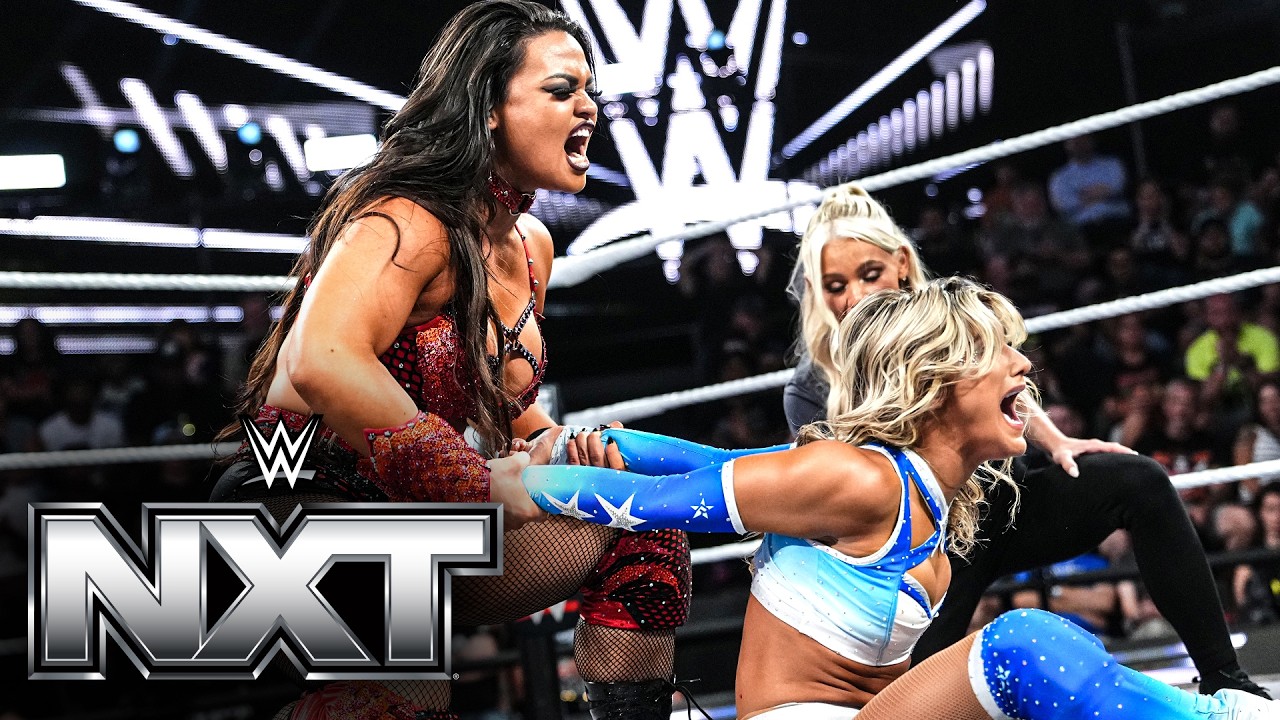
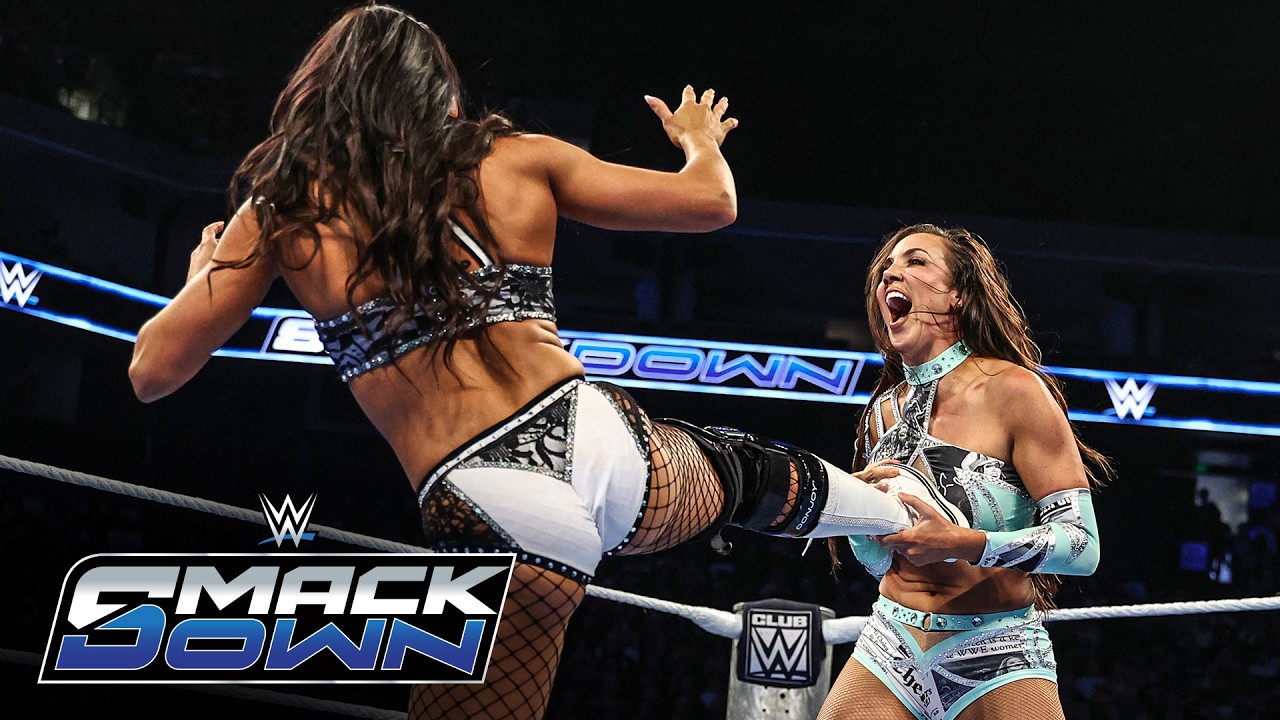
The match itself lasted 8:15 according to ProWrestling.net’s live report and was presented on television as a compact power contest interrupted by the arrival of Cargill, B-Fab and Michin. Jax controlled substantial portions through mass and leverage. Flair survived a sit-out powerbomb, a second-rope leg drop and repeated attempts to limit her movement, then rallied with strikes, a cross-body, the Queen’s Boot and an impressive display of strength. The decisive sequence arrived just as Flair appeared to have solved the physical problem in front of her. She escaped a Samoan Drop, connected with another boot and positioned herself to finish—only for Cargill to enter and make the referee’s decision unavoidable.
WWE’s official July 24 SmackDown results confirm Flair’s disqualification victory and identify Cargill’s attack as the reason Jax lost another qualifying opportunity. The company’s SummerSlam match preview lists Flair alongside Tiffany Stratton, Jade Cargill and Chelsea Green, with the fifth position to be determined by Giulia versus Lash Legend on the July 31 SmackDown.
Sponsored • Adults 18+ Only
Explore New Social Connections at Your Pace
Browse an adult-oriented social-discovery platform designed for people who want to explore profiles, shared interests and private conversations without unrealistic promises.
Availability, eligibility and features vary by provider and location. Registration or payment may be required.
Charlotte Flair vs. Nia Jax at a Glance
- Promotion: WWE
- Program: Friday Night SmackDown
- Date: Friday, July 24, 2026
- Venue: Oakland Arena
- Location: Oakland, California, United States
- Match: Charlotte Flair vs. Nia Jax
- Stakes: Qualification for the five-woman Interim WWE Women’s Championship Ladder Match at SummerSlam
- Winner: Charlotte Flair
- Method: Disqualification after Jade Cargill struck Flair
- Reported match time: 8:15
- Outside involvement: Jade Cargill, B-Fab and Michin
- Post-match development: Cargill hit Flair with Jaded; Jax protested the result
- Broadcast: USA Network in the United States and Netflix in international markets where WWE programming is carried
- SummerSlam: August 1–2, 2026, at U.S. Bank Stadium in Minneapolis, Minnesota
The Oakland location is supported by WWE event listings, Ticketmaster’s event page and PWTorch’s show preview. The episode aired live as WWE’s penultimate Friday-night television program before SummerSlam. That placement matters. With only one SmackDown remaining before the stadium event, every qualifying result had to accomplish more than moving a name into a graphic. WWE also needed to intensify personal conflicts, clarify the tournament’s field and create urgency around an interim title that did not exist two weeks earlier.
What Happened in Charlotte Flair vs. Nia Jax?
Nia Jax entered the qualifier with a logical advantage and an understandable grievance. She had already attempted to qualify on July 17 against Jade Cargill. Charlotte Flair interfered in that match, attacking Cargill and giving Jade a disqualification victory. Jax therefore arrived in Oakland having lost a place in the ladder match without being pinned or submitted. Her second opportunity placed the person responsible for the first failure directly across from her.
The match opened around the simplest and most effective physical question available: could Flair create enough space to use her athleticism, or would Jax compress the ring and turn every exchange into a strength contest? Jax absorbed early strikes, forced Flair to work from underneath and used a sit-out powerbomb for a near fall. She also came off the second rope with a leg drop, a high-impact choice that made the qualifier feel consequential without requiring an extended move exhibition.
Flair’s offense was built around resistance rather than effortless dominance. She used the Queen’s Boot repeatedly because it allowed her to attack from distance. She found a cross-body and a sudden reversal sequence, then attempted to lift Jax in a moment that reinforced the commentary team’s emphasis on her strength. The visual was important because Flair’s character is often presented as physically complete: tall, explosive, technically accomplished and comfortable in championship environments. Jax is one of the few opponents who can make Flair appear undersized and force her to solve a problem rather than simply outclass an opponent.
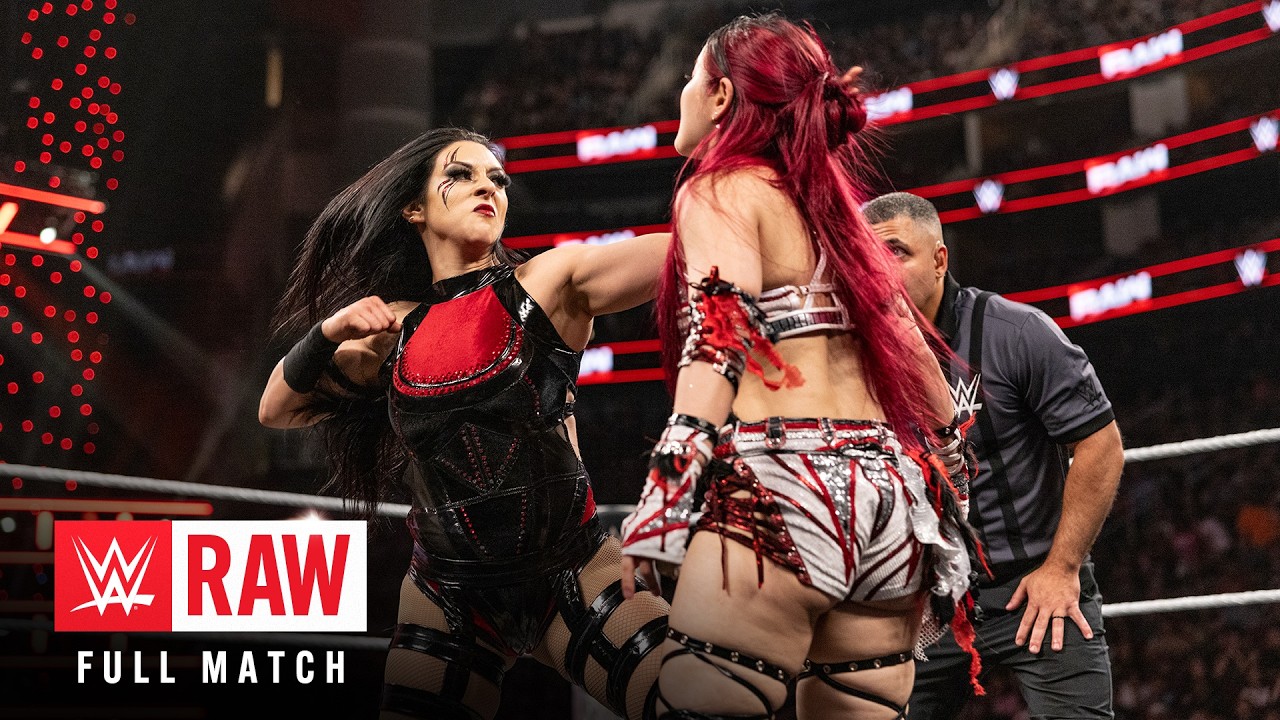
The contest changed when Cargill’s music played and she walked to ringside with B-Fab and Michin. Jax temporarily shifted her attention toward the group, aware that Cargill had benefited from Flair’s interference one week earlier. Cargill then directed B-Fab and Michin toward Flair. The Queen fought both women off, sent Jax over the top rope, struck Cargill from the apron and returned to the immediate match.
That sequence preserved Flair’s stature. She was outnumbered but not helpless. She handled two attackers, stayed aware of Jax and regained control. Jax attempted a Samoan Drop; Flair escaped and hit the Queen’s Boot. At that instant, the match appeared poised for a decisive pinfall attempt. Cargill entered the ring and punched Flair in front of the referee. The bell sounded immediately.
WWE announced Flair as the winner, but Cargill’s group took possession of the ring. Jade hit Jaded on Flair. B-Fab and Michin reinforced the numbers advantage. Jax reacted with fury because, from her perspective, Cargill had just repeated what Flair had done seven days earlier: an enemy’s attack had produced a disqualification and removed Jax from the championship path.
The official result was therefore straightforward, but the dramatic result was deliberately untidy. Flair gained the SummerSlam opportunity. Cargill gained physical revenge. Jax gained another reason to claim that the qualifying system had failed her. WWE gained a ladder match in which at least two entrants had already demonstrated that they were willing to sabotage matches rather than wait for a clean competitive resolution.
Why the Finish Matters More Than the Result
A conventional qualifier would answer one question: which wrestler advances? This finish answered that while opening several others. Can Flair reach SummerSlam healthy enough to compete after being targeted by a three-person group? Does Cargill care about winning the interim championship more than hurting Flair, or does she view those goals as the same thing? Will Jax accept exclusion after two non-decisive losses? Could Lash Legend’s final qualifier become an indirect route for Jax to influence the ladder match? What happens when four wrestlers who have spent weeks interfering in one another’s business are placed in a match with no disqualifications and ladders as legal instruments?
The booking appears designed to make the ladder match feel like a collision of unresolved stories rather than an emergency replacement contest. Rhea Ripley’s injury forced WWE to change direction. An interim championship can easily feel administrative—a solution created because the recognized champion cannot defend. WWE has tried to avoid that feeling by making qualification itself volatile. The belt is not simply waiting for a substitute champion. It has become the object around which Flair, Cargill, Jax, Stratton, Green and the final qualifier are reorganizing their alliances and priorities.
Flair’s victory also avoids a clean loss for Jax. That protection is not subtle, but it is functional. Jax remains dangerous because neither Cargill nor Flair defeated her by pinfall or submission in the two qualifiers. Flair advances without beating the obstacle cleanly, which leaves open the question of whether she could have finished the match. Cargill receives the clearest heel-style agency in the segment: she chooses when the match ends, takes revenge in public and stands over Flair afterward.
The weakness is equally apparent. Two consecutive Nia Jax qualifiers ending by disqualification risks making the tournament feel less like a sporting structure and more like a device that rewards whoever gets attacked. The first finish sent Cargill through. The second sent Flair through. Both winners had adversarial reasons to interfere, and Jax was the common victim. That repetition may be intentional characterization, but it also makes the authority figures look reactive. If interference is predictable, why was the second match not given additional security? Why did Cargill’s entire group reach ringside without resistance? The story gains heat at the expense of competitive credibility.
That tradeoff can still work if WWE follows through. Jax’s frustration must produce a meaningful development rather than disappear after one backstage complaint. Cargill and Flair must use the ladder match to escalate their rivalry rather than merely exchange one more interference spot. The interim champion must emerge with a clear relationship to Ripley’s eventual return. Without those payoffs, the DQ finish will look like delay. With them, it becomes the hinge connecting an injury-driven tournament to the division’s major post-SummerSlam stories.
Sponsored • Adults 18+ Only
Explore a Social-Discovery Experience at Your Pace
Review an adults-only social platform, browse the features it makes available, and decide whether its profile and communication options match your interests.
Availability, account requirements, communication tools and pricing vary by provider and region.
How Rhea Ripley’s Injury Created the Interim Championship
The SummerSlam ladder match exists because WWE Women’s Champion Rhea Ripley is unable to defend the title. Ripley publicly said in July that she was dealing with a slight meniscus tear and that the timetable for her return remained uncertain. In POST Wrestling’s report on her comments, Ripley explained that the knee was improving but still had limited movement and could become painful or fatigued. WWE had previously announced on the June 12 SmackDown that she suffered a knee injury during the company’s European tour and was being evaluated.
Ripley’s most recent televised match occurred at Clash in Italy on May 31, when she retained the WWE Women’s Championship against Jade Cargill. POST Wrestling reported that her last match of any kind took place at a June 3 live event in Lisbon, where she teamed with Charlotte Flair and Tiffany Stratton. She appeared in a knee brace at the following night’s event in Madrid but did not wrestle. That sequence provides a useful distinction: the injury was not introduced solely as a television plot point. Ripley discussed the meniscus tear herself, and WWE adapted the championship story around her absence.
Ripley began the reign by defeating Cargill at WrestleMania 42 on April 19. The program established Jade as the former champion trying to reclaim a title and Ripley as the wrestler who had taken it from her on WWE’s largest stage. Their rematch at Clash in Italy kept Ripley on top. An injury after that defense interrupted what would ordinarily have been the next phase of the reign: a SummerSlam defense against a top contender.
On July 17, Raw General Manager Adam Pearce appeared on SmackDown and announced that WWE would crown an interim WWE Women’s Champion in a five-woman ladder match at SummerSlam. The decision preserved Ripley’s status as recognized champion rather than vacating the title. It also established an eventual champion-versus-interim-champion confrontation as a built-in destination, provided Ripley returns while the interim title remains active.
The language matters. An interim champion is not the same as a new undisputed champion. The interim holder possesses a sanctioned version of the championship because the recognized champion is temporarily unable to compete. That arrangement makes every title celebration conditional. The winner at SummerSlam can call herself champion, defend the belt and shape the division, but Ripley’s claim remains unresolved. The future unification match is not an optional fantasy-booking idea; it is the logical endpoint of the title’s temporary structure.
WWE’s choice also protects the championship from inactivity. Ripley’s recovery timeline was described as uncertain, and meniscus injuries do not fit a single universal schedule. Rather than strip her immediately or leave the title absent from SummerSlam, WWE created a mechanism that keeps the division active. A ladder match allows multiple contenders to participate and lets the winner capture the title without pinning every rival. That is useful when the field includes established stars whose momentum WWE may wish to preserve.
Sponsored • Adults 18+ Only
Build a Virtual Companion Around Your Preferences
Customize an artificial-intelligence character’s style, personality and conversation settings for a private virtual experience shaped by the options you select.
AI companions are virtual characters and are not real people. Features, subscriptions and pricing may vary by provider.
The Qualifying Tournament Before Charlotte Flair vs. Nia Jax
The ladder-match field began forming on the July 17 SmackDown. Tiffany Stratton defeated Jacy Jayne to become the first qualifier. Fatal Influence attacked Stratton before the bell, but Paige and Brie Bella neutralized the group’s involvement. Stratton then countered Jayne’s Rolling Encore and won with the Prettiest Moonsault Ever. The result added the reigning Women’s United States Champion to the interim-title match and created the possibility of a double champion.
Later that night, Jade Cargill faced Nia Jax. Charlotte Flair attacked Cargill, producing the first disqualification result. WWE’s official July 17 results state that Cargill qualified because of Flair’s attack and that Flair then attempted to damage Jade’s arm before Jax attacked Charlotte from behind. The sequence linked three wrestlers who had separate reasons to dislike one another and ensured the tournament would not proceed as a clean bracket.
On July 24, Chelsea Green defeated Kiana James with the Unprettier to take the third place. Green’s qualification was the only one of the first four decided by a straightforward pinfall without the featured qualifier being attacked by someone outside the match. That distinction makes Green an interesting variable. She is presented as opportunistic and comedic, but her path into SummerSlam was procedurally cleaner than those of Cargill and Flair.
Flair then defeated Jax by disqualification to become the fourth entrant. After the show, Jax confronted Pearce and requested another opportunity or direct entry into the ladder match. Pearce declined. WWE instead announced Giulia versus Lash Legend for July 31, a development documented by Fightful’s report on the final qualifier.
As of the July 26 research cutoff, the confirmed field is:
- Tiffany Stratton: defeated Jacy Jayne on July 17.
- Jade Cargill: defeated Nia Jax by disqualification on July 17 after Charlotte Flair interfered.
- Chelsea Green: defeated Kiana James on July 24.
- Charlotte Flair: defeated Nia Jax by disqualification on July 24 after Jade Cargill interfered.
- Final entrant: winner of Giulia vs. Lash Legend on July 31.
This structure gives the ladder match several different competitive identities. Stratton is a current secondary champion with a credible aerial game and previous ladder-match success. Cargill is the former WWE Women’s Champion whose physical presence can dominate short exchanges. Green is the opportunist most likely to exploit chaos rather than control it. Flair is the experienced major-event wrestler with direct history in women’s ladder matches. Giulia would add striking intensity and a more direct singles-championship ambition; Legend would add size, reach and an immediate connection to the excluded Nia Jax.
It also gives WWE an answer to a common problem in injury-created matches: why should viewers care about a substitute champion? Because the participants are not substitutes. Each has an existing claim, grievance or ambition. Ripley’s absence creates the vacancy in active competition, but the ladder match is being populated by wrestlers who were already colliding around the championship and the wider SmackDown women’s division.
Charlotte Flair’s Position: Experience Without Control
Charlotte Flair entered the qualifier as the most decorated wrestler in the developing field. WWE regularly identifies her as a 14-time women’s champion, and her official profile describes her as the record holder for women’s title reigns in the company’s modern presentation. Numbers alone do not explain her role, however. Flair’s central characteristic is expectation. She is presented as someone who assumes championship opportunities are the natural environment for her career. A qualifier therefore creates an unusual tension: she must earn access to a match she believes she belongs in by default.
That confidence has historically made Flair adaptable as either hero or antagonist. When she is chasing an abusive champion or defending a partner, her certainty can read as leadership. When she inserts herself into title pictures or dismisses rivals, the same certainty becomes entitlement. The July storyline uses both interpretations. Flair said she attacked Cargill on July 17 because she was protecting Alexa Bliss after Jade had targeted Bliss’s arm. That gives Charlotte a sympathetic motive. Yet the attack also handed Cargill a SummerSlam opportunity and cost Jax a fair result. Flair’s attempt to protect a friend created consequences for everyone else.
Before facing Jax, Flair told Cathy Kelley that she did not regret the interference. She framed the qualifier as a chance to go through Nia and become Jade’s greatest obstacle at SummerSlam. The wording made the championship opportunity inseparable from the personal rivalry. Flair was not discussing the interim title as an abstract career achievement. She was discussing access to Cargill.
That focus helps explain the finish. Flair was physically winning the immediate confrontation when Cargill intervened. She had fought off B-Fab and Michin, escaped Jax’s Samoan Drop and landed a big boot. The DQ did not make Flair look lucky in the usual sense; it interrupted a sequence in which she appeared ready to capitalize. At the same time, the post-match attack reminded viewers that she could not control every variable. The woman who entered the match talking about becoming Jade’s obstacle ended the segment laid out by Jade.
Flair’s ladder-match experience is also relevant. She participated in the first women’s Money in the Bank ladder match in 2017, a match whose disputed finish led WWE to run a second ladder match on SmackDown nine days later. She has spent much of her career in championship bouts where the rules change—triple threats, elimination matches, cages and multi-person contests. That history makes her the field’s institutional expert. It also makes her a natural target. Every other entrant knows that Flair has repeatedly converted chaotic major-event environments into title reigns.
The SummerSlam match can therefore serve two versions of Charlotte at once. It can present her as the veteran trying to survive a younger, faster and more hostile field. It can also present her as the established star whose presence threatens to pull another title story toward familiar ground. WWE will need to balance those readings. A Flair victory would be credible, but it would require a clear story beyond adding another reign. A Flair loss can still advance the Jade rivalry if Cargill is directly responsible.
Jade Cargill’s Role: Former Champion, Group Leader and Disruptor
Jade Cargill’s interference was not random heel behavior. It was rooted in a title history and a personal escalation. WWE’s official profile lists Cargill as a former WWE Women’s Champion, the 2025 Queen of the Ring winner and a former WWE Women’s Tag Team Champion. She won the WWE Women’s Championship from Tiffany Stratton in November 2025, then lost it to Rhea Ripley at WrestleMania 42. Ripley defeated her again at Clash in Italy.
Those defeats place Jade in a specific emotional position. She is not an untested contender demanding her first chance. She is a former champion who believes the division moved through her and should return to her. Ripley’s injury removes the woman who defeated her from active competition, but it does not erase those losses. Winning the interim title would allow Cargill to claim that she reclaimed control while Ripley was unavailable. It would also guarantee that Ripley must eventually come back through her.
Cargill’s association with B-Fab and Michin changes the mechanics of that pursuit. The group gives her advantages before the ladder match begins. In ordinary singles qualifiers, allies can trigger disqualifications, distract referees or soften opponents. In a ladder match, where disqualification does not apply, their potential involvement becomes even more threatening unless WWE explicitly bars them from ringside. The July 24 segment demonstrated the group’s basic pattern: surround the target, force her to divide attention, then let Jade deliver the decisive power move.
The presentation also marks an evolution from the superhero-style powerhouse who entered WWE amid enormous hype. Cargill is still visually and athletically framed as exceptional, but she is now using calculation and numbers. That is a meaningful character change. Pure dominance asks the audience to watch whether anyone can match her physical gifts. Group-led dominance asks whether opponents can survive an environment she controls.
Charlotte’s earlier attack on Cargill gave Jade a justification that stops short of moral innocence. Flair interfered first and attempted to target Jade’s arm. Cargill’s revenge is understandable. The excess—bringing B-Fab and Michin, ending Jax’s match, and continuing the attack after the bell—defines the heel edge. She did not merely answer Charlotte. She chose a moment that maximized damage to Flair and collateral damage to Jax.
One possible interpretation is that Cargill wanted Flair in the ladder match. By striking Charlotte openly, Jade guaranteed Flair’s qualification. That may sound counterintuitive, but it gives Cargill direct access to her rival under no-disqualification rules at SummerSlam. It also prevents Jax, one of the field’s largest threats, from qualifying. WWE has not stated that this was Jade’s private calculation, so it should remain analysis rather than reported intent. Still, the outcome benefits her in two ways: the rival she wants to hurt advances, and the powerhouse she may prefer to avoid does not.
Sponsored • Adults 18+ Only
Find a Conversation That Fits Your Evening
Explore an adults-only chat or social platform where available features may include profile browsing, private messaging and interest-based conversation.
Services, eligibility, registration requirements and pricing vary. Review the provider’s terms before joining.
Nia Jax: The Strongest Case From Outside the Match
No wrestler was more affected by the first two weeks of qualifying than Nia Jax. She competed twice. She was not pinned. She did not submit. She lost both matches because a third party attacked her opponent. On July 17, Flair attacked Cargill. On July 24, Cargill attacked Flair. The qualifying rules treated both attacks correctly—an illegal strike by an outsider causes a disqualification—but the combined outcome made Jax the victim of a system that never tested whether either opponent could beat her.
That distinction is central to her character’s next step. A heel can have a legitimate complaint. In fact, grievances often become more effective when the audience can see the procedural unfairness. Jax does not need to claim conspiracy. She only needs to point to the record: two matches, two opponents awarded victories because someone else interfered.
WWE’s official profile lists Jax as a two-time WWE Women’s Champion, a three-time WWE Women’s Tag Team Champion and the 2024 Queen of the Ring winner. She is not positioned as a marginal contender who should quietly accept exclusion. She has recent world-title credibility and a long-established role as one of the division’s most difficult physical matchups. Leaving her out of a ladder match may reduce the field’s size advantage, but it also creates a dangerous wrestler with no reason to respect the event’s boundaries.
Her alliance with Lash Legend offers the most immediate route back into the story. Legend faces Giulia for the final spot. If Legend qualifies, Jax gains a representative and potential ally inside the ladder match. She could support Legend at ringside, attack other entrants before the event, or use her own exclusion to justify interference. If Giulia wins, Jax loses that indirect access and may become even more likely to disrupt SummerSlam independently.
The match with Flair also showed why Jax would have been a compelling ladder participant. Her strength changes how ladders can be used. She can prevent climbs by pulling opponents down, use the hardware as a crushing barrier and create multi-person collision spots without needing to perform the field’s most acrobatic sequences. Her absence makes the match quicker and potentially more fluid, but it removes a distinctive obstacle.
From a booking perspective, excluding Jax may be deliberate protection. A five-woman ladder match requires one winner and four wrestlers who fail without necessarily being pinned. Jax could have lost safely. Yet keeping her out allows WWE to preserve a separate singles or tag direction, especially through Legend. It also gives the division a post-SummerSlam challenger who can truthfully say the interim champion never defeated her.
The danger is repetition without resolution. Jax’s anger after the match was entertaining because it matched the facts. ProWrestling.net’s Jason Powell joked that, if given another qualifier, Jax should hire someone to punch her immediately so she could finally win by disqualification. The joke works because the loophole is obvious. WWE should close the loop with action: a sanctioned match, a SummerSlam interference, a challenge to the interim champion or a sustained alliance story with Legend.
Detailed Match Analysis: Power, Distance and Interrupted Momentum
Nia Jax’s control phase
The match’s central physical logic was established quickly. Jax could absorb more than Flair could, and every successful collision threatened to erase Charlotte’s previous work. Flair’s kicks and movement created openings, but Jax’s power compressed those openings into short windows. This is the correct basic psychology for the matchup. Charlotte is not a small wrestler, yet Jax forces her to behave like one.
Jax’s sit-out powerbomb was especially effective because it punished Flair’s attempt to operate vertically. Charlotte’s offense often depends on posture: standing tall for chops, extending through the big boot, rotating through aerial attacks and using her long frame to create leverage. A powerbomb folds that posture and drives her onto the mat. It also creates a believable near fall without requiring the finishers to appear too early.
The second-rope leg drop served a related purpose. Jax did not need to match Flair’s athletic style. She used elevation to multiply body weight. The move carried risk, and Flair surviving it reinforced the resilience expected from a multi-time champion. More importantly, the leg drop created the impression that Jax was willing to spend more of her offense than usual because SummerSlam qualification mattered.
Charlotte Flair’s response
Flair’s comeback relied on strikes, sudden changes of angle and refusal to remain flat. The Queen’s Boot was the natural weapon because it does not require her to lift Jax or stay tied up in a prolonged grapple. Each boot offered a clean visual: Flair’s reach against Jax’s mass. When Jax remained upright or recovered quickly, the match reinforced how difficult she was to stop.
The cross-body was more ambitious. Against many opponents, Charlotte’s aerial offense functions as dominance. Against Jax, it became an act of commitment. Flair had to throw her full frame at the larger wrestler and trust that momentum could accomplish what isolated strikes had not. The near fall preserved the idea that Charlotte was accumulating damage rather than discovering one magical solution.
The strength display later in the match was equally important. Flair attempted to lift Jax and briefly created the visual of a wrestler overcoming a weight disadvantage through technique and explosive force. The commentary emphasized the feat. Such moments can become empty if they ignore earlier selling, but here it fit the story: Charlotte had spent the match being forced into Jax’s physical world and finally demonstrated that she could survive there.
The arrival of Jade Cargill’s group
Cargill’s entrance music interrupted the match’s competitive rhythm. That interruption was the point. The match stopped being a two-person problem and became a field-position problem. Jax looked toward Jade because of the previous week. Flair had to account for B-Fab and Michin. The referee’s attention became a resource everyone could manipulate.
Flair’s response was booked strongly. She attacked B-Fab and Michin and sent them into the ringside environment with enough force to move the barricade. She returned to Jax rather than forgetting the match. She struck Jade from the apron. This sequence prevented the numbers advantage from making Charlotte look passive.
It also exposed a key weakness in Jax’s position: distraction. Jax had legitimate reason to watch Cargill, but shifting attention away from Flair allowed Charlotte to recover. The story did not present Jax as physically inferior. It presented her as unable to control the social chaos around the match. That is consistent with both disqualification losses. Jax’s body is not the problem; everyone else’s vendettas are.
The final counter
Jax attempted the Samoan Drop, a move that would have returned the match to her preferred terms. Flair escaped behind her and landed the Queen’s Boot. The counter was clean, readable and appropriately late. It suggested that Charlotte had learned from the earlier power sequences and was now anticipating Jax’s attempts to load her onto the shoulders.
Had the match continued, Flair would likely have covered Jax or moved into another finishing attempt. The segment intentionally withheld that answer. Cargill entered before viewers could learn whether the boot was decisive. That preserves Jax and gives Flair a plausible claim that victory was close, but it also denies the match a complete internal arc. The competitive story ended at the moment it was ready to resolve.
Sponsored • Adults 18+ Only
Shape a Virtual AI Character Around Your Choices
Explore software that lets adults customize a virtual AI companion’s appearance, personality and conversation preferences for a private digital experience.
AI companions are virtual software characters, not real people. Features, subscriptions and pricing vary by provider.
Five Turning Points That Defined the Qualifier
1. Jax surviving repeated Queen’s Boots
Flair’s big boot is normally a momentum-changing strike. Jax’s ability to absorb it forced Charlotte to repeat the weapon and prevented the comeback from feeling automatic. The resilience established Jax as more than an obstacle waiting for a signature move.
2. The sit-out powerbomb near fall
The powerbomb demonstrated that Jax could convert one catch into a potential victory. It made Flair’s aerial and running offense dangerous to herself because every approach created a chance for Jax to catch, fold and drive her down.
3. The second-rope leg drop
Jax’s decision to climb elevated the stakes and altered the pace. The move forced Flair to sell a concentrated impact and gave Jax one of the match’s strongest near falls. It also showed that Nia was not content to win through routine control.
4. Flair fighting off B-Fab and Michin
This was the segment’s protection mechanism for Charlotte. The group arrived to create a three-on-one problem, but Flair temporarily solved two-thirds of it. The sequence justified the “one-woman wrecking crew” framing without making her immune to the final attack.
5. Cargill striking in front of the referee
The final punch was intentionally blatant. Jade did not sneak, distract or pretend the contact was accidental. She chose the disqualification. That choice gave her ownership of the result and communicated that hurting Flair mattered more than preserving Jax’s opportunity.
Sponsored • Adults 18+ Only
See Which Adult Experience Is Available
Continue to a region- or device-selected adult offer that may feature social discovery, chat, dating or an AI-powered virtual experience.
The destination and available service may vary by device, region and provider. Registration, subscriptions or charges may apply.
Why WWE Chose a Disqualification Finish
Disqualification finishes are often criticized because they deny viewers a conclusive answer. That criticism is justified when the finish exists only to avoid choosing a winner. In this case, WWE did choose a winner—Flair advanced—and used the DQ to protect multiple relationships at once. The relevant question is whether those protections created enough future value to compensate for the incomplete match.
First, the finish protected Jax from a pinfall loss. She had already been denied qualification by interference one week earlier. A clean loss to Flair could have ended her claim to the title picture. Instead, Jax can argue that she was never beaten. The record book says two losses; the story says two stolen opportunities.
Second, the finish protected the first major singles resolution between Flair and Cargill from happening on television before SummerSlam. Fightful reported that WrestleVotes had learned WWE originally considered a Charlotte Flair versus Jade Cargill match for SummerSlam before Ripley’s injury forced changes. That is independently reported information, not an official announcement, and plans can change before reaching television. Still, the report helps explain why WWE has preserved direct physical tension between the two while moving them into the same multi-person match.
Third, the finish advanced Flair without requiring her to submit or pin a wrestler WWE may want to keep strong. Charlotte’s status means qualification was expected; the method prevents the expected result from consuming Jax’s credibility.
Fourth, the finish made Cargill the active force. Interference can make the winner appear passive, but Jade’s attack was not designed to help Charlotte. It was designed to punish her. The fact that it also qualified Flair creates dramatic irony: Jade gave her rival access to the same championship match.
Fifth, the finish establishes the rules environment for SummerSlam. Cargill’s group could manipulate a singles match because normal disqualification rules existed. At SummerSlam, no such protection will exist. Flair can use a ladder against B-Fab or Michin if they interfere. Jax can attack anyone without causing a match-ending DQ. The same chaos that corrupted qualification becomes legal inside the final match.
The finish arguably succeeded as storyline construction and fell short as competitive satisfaction. Viewers who wanted Charlotte and Nia to settle their long-running power matchup did not receive a definitive ending. The match’s most interesting internal question—could Flair finally keep Jax down after surviving the leg drop and powerbomb?—was interrupted. That is a real cost, especially on an episode where commercial breaks already limited the amount of televised wrestling. ProWrestling.net’s review criticized the show’s heavy commercial load and noted that even brief matches lost substantial time.
The ideal follow-up would acknowledge both sides. WWE should not pretend Flair conclusively beat Jax. It should let Charlotte claim she was seconds away while allowing Nia to reject that claim. Their disagreement can support a later singles match. At the same time, Jade’s deliberate decision to trigger the DQ should become part of SummerSlam strategy. If she wanted Flair in the match, commentary should raise that possibility. If she simply lost control, Flair should exploit that impulsiveness.
Did the Finish Protect Everyone—or Protect Too Much?
Modern WWE frequently uses interference to preserve multiple stars, particularly when a major event is close. The logic is understandable. A clean television loss can make one participant feel secondary just before a stadium match. Yet protection becomes less valuable when everyone is protected all the time. Wrestling requires consequences. A competitor’s choices should produce wins, losses and changes in status.
Charlotte received the most direct benefit: she advanced. Jade received the strongest closing image: she stood over Charlotte after Jaded. Nia avoided a pinfall and gained a grievance. B-Fab and Michin remained useful as a group even though Flair briefly fought them off. On paper, every major figure left with something.
The person who lost the most was the referee’s authority. Cargill entered openly. The group reached ringside without a manager’s license or competitive role. No official security response prevented the post-match attack. Adam Pearce later denied Jax a direct place, but the tournament had already rewarded two interference victims. The rules were technically applied and practically exploited.
This is where overprotection can weaken stakes. If every wrestler remains strong because no one loses cleanly, the audience may stop treating qualifiers as tests of superiority. They become narrative checkpoints. The July 24 match was close to that line. It remained compelling because the personalities and physical sequences were clear, but the finish asked viewers to care more about the rivalry network than about the winner of Charlotte versus Nia.
That may be the correct priority. The SummerSlam match is not a conventional tournament final. It is a ladder match, a stipulation built around opportunism, interference and timing. Clean competitive hierarchy is less important than conflict density. WWE appears to be constructing a field in which every participant has someone to watch and something to avenge.
Still, the interim champion must eventually earn legitimacy. The ladder stipulation already allows victory without a pinfall. If the buildup and the match both rely entirely on interference, the winner may feel like a temporary plot holder rather than a champion. The best version of SummerSlam uses the chaos to create danger but gives the winner one unmistakable act of skill or courage: a decisive climb, a major save, a strategic betrayal or a refusal to stay down.
Two Disqualifications, One Victim: The Booking of Nia Jax
The symmetry of Jax’s two losses is too exact to ignore. On July 17, Charlotte attacked Jade and Jade advanced. On July 24, Jade attacked Charlotte and Charlotte advanced. Jax stood in the middle both times. The rivals traded attacks; Nia paid the competitive price.
This makes Jax a narrative measuring stick. Flair and Cargill’s feud has become so consuming that it can redirect other wrestlers’ careers. Their actions removed Jax from SummerSlam without either woman defeating her. That can be used to show the destructive reach of their rivalry, but it can also elevate Jax as the one contender with a grievance against both.
Her backstage request to Pearce was therefore more than heel complaining. It was a rational appeal. A sporting authority might have ordered a triple threat, barred seconds from ringside, or granted Jax a last-chance match. Pearce instead selected Giulia versus Lash Legend. That decision keeps the field at five and provides new representation, but it does not repair the harm done to Jax.
If Lash Legend qualifies, the story gains layered strategy. Legend and Jax have been associated as the Irresistible Forces and have tag-team history. Jax could help Legend while insisting that her partner is carrying their shared claim. Legend could welcome the assistance, reject it or eventually decide that the interim title matters more than the alliance. A ladder match is particularly suited to that tension because partnerships are temporary. Only one woman can retrieve the belt.
If Giulia qualifies, Jax becomes an outsider with no sanctioned stake. That may be more dangerous. WWE could have her attack the field before the bell, remove someone, demand entry or target the eventual champion afterward. The simplest and strongest path may be the last: let SummerSlam produce an interim champion, then have Jax argue that the champion’s claim is incomplete because she never survived The Irresistible Force.
Jax’s exclusion also affects match composition. Without her, Jade or Lash Legend—if Legend qualifies—becomes the largest physical presence. If Giulia wins, Jade holds a unique power advantage. That can make Cargill feel more dominant. If Legend wins, the field retains a second super-heavy power style and creates the possibility of temporary cooperation between the two strongest entrants.
The key is that Jax should not become a punchline. The repeated DQs are funny at a structural level, but the character has evidence. Treating her anger seriously would strengthen the division’s internal logic. She can be dangerous, unfair and still correct that the process failed her.
Sponsored • Adults 18+ Only
Discover a Social Platform Built for Exploration
Take a look at an adult social-discovery service where you can review the available features and decide whether its profiles and communication tools suit you.
Provider availability and communication features differ. Check age, location and account requirements before registering.
How the SummerSlam Ladder Match Changes the Rivalries
A ladder match converts the title from an object awarded after a pinfall into a physical objective suspended above the ring. The winner must climb and retrieve it. That rule changes every rivalry because defeating an opponent is no longer sufficient. A wrestler can hit her strongest move, dominate the ring and still lose if someone else climbs at the right moment.
For Charlotte Flair, the stipulation rewards experience and awareness. She has competed in women’s Money in the Bank matches and understands that ladder positioning matters as much as damage. Her long reach and athleticism make her a natural climber. Her weakness is the number of people who may prioritize stopping her even when doing so does not immediately help them win.
For Jade Cargill, the stipulation rewards strength but tests timing. She can remove opponents from ladders, catch bodies in midair and use power to create clear space. Yet a ladder match can neutralize dominance because attacks arrive from every direction. B-Fab and Michin could help, but their presence would also make Jade the obvious collective target.
For Tiffany Stratton, the match connects directly to her 2024 Money in the Bank victory and her aerial identity. She has already demonstrated that she can navigate ladders under pressure. As Women’s United States Champion, she also enters with the chance to leave as a double champion. That possibility gives her a concrete ambition beyond temporary participation.
For Chelsea Green, chaos is an asset. Green rarely needs to be the strongest wrestler to be the most strategically relevant. A ladder match allows her to disappear from the central brawl, let larger opponents damage one another and climb when attention shifts. Her qualification over Kiana James gives her momentum, while her relationship with Stratton creates a temporary friendship that almost certainly cannot survive the sight of the title.
For Giulia, qualification would add a hard-striking wrestler who can make short exchanges feel decisive. Her path through WWE’s women’s division has included championship success and conflicts with several people in the field. She would likely approach the match as a direct fight, but the stipulation would require her to balance punishment with climbing.
For Lash Legend, qualification would create a power duel with Cargill and connect Jax to the match from outside. Legend’s height and reach could make her dangerous on the ladder itself. Her alliance with Jax could provide an advantage, but it could also make every opponent assume interference is coming.
The stipulation also legalizes the kind of behavior that caused both DQ qualifiers. At SummerSlam, Cargill can strike Flair without ending the match. Flair can attack Jade with a ladder. Jax can interfere without automatically awarding anyone a victory. The qualifying controversy therefore becomes a preview of the final match’s environment. Rules that protected competitors on SmackDown will not protect them in Minneapolis.
Breaking Down the Confirmed SummerSlam Field
Charlotte Flair: the proven major-event closer
Flair’s strongest advantage is not merely title count. It is pattern recognition. She has worked nearly every major WWE women’s stipulation and understands how television matches are structured around cameras, referees, entrances and sudden changes. In a ladder match, that experience can translate into efficient movement. She is less likely to climb at the wrong time or become fixated on one opponent—although the Cargill rivalry is specifically designed to test that discipline.
Her likely route to victory is to let power wrestlers cancel one another out, use the Figure Eight or targeted leg work to slow climbers and create a final opening through a big boot or Natural Selection. Her likely route to defeat is obsession. If she chooses to punish Jade instead of climbing, another wrestler can take the title.
Jade Cargill: the field’s central physical threat
Cargill’s best path is control through removal. She does not need to out-climb every opponent if she can throw them out of the ring and create an empty lane. Her group may be decisive, but WWE must decide whether outside assistance enhances or reduces her credibility. A Jade victory after B-Fab and Michin do all the work would fit heel strategy but weaken the claim that she is the division’s dominant force.
Her rivalry with Flair is the obvious vulnerability. Jade may have intentionally qualified Charlotte, but that means she invited the most experienced participant into the match. Their exchanges are likely to receive the greatest attention, creating openings for everyone else.
Tiffany Stratton: the double-champion possibility
Stratton enters as Women’s United States Champion and a former WWE Women’s Champion. WWE’s official profile also lists her 2024 Money in the Bank victory, making her the only confirmed participant whose resume directly includes winning a main-roster women’s ladder match. She can perform high-risk offense from ladders and reach the belt quickly.
Her friendship with Green is strategically unstable. Before Chelsea’s qualifier, they discussed reaching SummerSlam together. Green suggested she should win because Stratton already had a title; Stratton imagined becoming “Tiffy Two Titles.” The conversation communicated mutual affection and immediate conflict. Both cannot get what they want.
Chelsea Green: the opportunist with the cleanest qualification
Green may be the field’s most underestimated participant. She defeated Kiana James by pinfall and did not need a disqualification to advance. Her character invites opponents to dismiss her as comic relief, but ladder matches reward exactly the qualities she emphasizes: survival, timing, manipulation and willingness to take an indirect route.
Green does not need to dominate a long stretch. She needs one unobserved climb. The more Flair and Cargill focus on each other, and the more Stratton attempts spectacular offense, the more plausible Green’s opportunity becomes.
Giulia or Lash Legend: two very different final pieces
Giulia would make the match faster and more strike-heavy. She brings singles-title ambition and a style that can interrupt climbers with sudden impact. Her presence would also make the field less dependent on alliances, because she is not directly tied to Jax’s complaint.
Legend would make the match larger and more politically complicated. She would enter with Jax’s public support and likely carry the Irresistible Forces’ grievance. The other four women would have reason to treat her as a proxy for Nia. Legend could also match Jade’s power in a way the current field cannot.
Neither outcome is merely about filling the fifth slot. Giulia produces a more individually competitive ladder match. Legend produces a more faction-driven one. The July 31 result will indicate which kind of chaos WWE wants at SummerSlam.
Sponsored • Adults 18+ Only
Create a More Personalized AI Conversation
Choose from virtual AI-character options and adjust appearance, personality and conversation preferences for an experience tailored through software.
The characters are generated by artificial intelligence, not human partners. Provider features and paid plans may differ.
What an Interim WWE Women’s Champion Actually Means
WWE’s announcement did not vacate Rhea Ripley’s championship. It created an interim titleholder. The distinction is more than terminology. Ripley remains the recognized WWE Women’s Champion while medically unable to defend. The SummerSlam winner becomes authorized to represent and defend the championship in the meantime.
Professional wrestling has used interim championships less consistently than combat sports. In boxing and mixed martial arts, sanctioning bodies or promotions may create interim belts when a champion is injured or unavailable. The interim holder is generally expected to face the returning champion. Wrestling promotions can use the same structure, but because outcomes and stories are planned, the device is primarily a narrative promise: two legitimate claims will eventually collide.
WWE has a relevant modern precedent in the NXT Cruiserweight Championship story of 2020–21. Travel restrictions prevented Jordan Devlin from defending in the United States, and a tournament crowned Santos Escobar as interim champion. The two later met in a ladder match at NXT TakeOver: Stand & Deliver to determine the undisputed champion. WWE’s retrospective coverage identifies their ladder match as a championship unification point.
The current situation is different in scale and division, but the basic logic is similar. Ripley’s claim is based on having defeated Cargill at WrestleMania and retained at Clash in Italy. The SummerSlam winner’s claim will be based on winning a sanctioned five-woman ladder match. Neither claim automatically erases the other. A future match must do that work.
This structure creates valuable tension for the interim champion. Every defense can be framed as both real and incomplete. The wrestler can insist she is carrying the division while Ripley is absent. Rivals can accuse her of holding a temporary belt. Ripley can return grateful that the title remained active, furious that someone else calls herself champion, or both.
The strongest booking would allow the interim reign to develop its own identity before unification. If Ripley returns too quickly, SummerSlam risks feeling like a brief detour. If she remains out longer, the interim champion can build defenses and relationships that make the eventual match meaningful. Fightful reported that WWE hoped Ripley could return by the fall, but that is a reported hope rather than a guaranteed date. Her own public comments emphasized uncertainty.
The champion’s identity will shape the unification story. Cargill would create a direct trilogy with Ripley. Flair would revive one of WWE’s defining modern women’s rivalries while adding the question of whether Charlotte can claim another reign during Ripley’s absence. Stratton would bring generational competition and the possibility of two belts. Green would create an underdog-opportunist story. Giulia would offer a fresher major singles match. Legend would turn the return into a power confrontation and potentially involve Jax.
Sponsored • Adults 18+ Only
Discover an Adults-Only Space for New Conversations
Explore an adult chat and social-conversation service, review the available messaging features, and choose whether the platform suits the way you prefer to connect online.
Messages and responses are not guaranteed. Eligibility, registration, pricing and service terms vary by provider.
The WWE Women’s Championship Lineage at Stake
The current WWE Women’s Championship lineage began in 2016. WWE introduced a new Women’s Championship at WrestleMania 32, replacing the Divas Championship. The title became the Raw Women’s Championship after the 2016 brand split and returned to the WWE Women’s Championship name in June 2023. WWE’s official championship history maintains that lineage separately from the Women’s World Championship.
That separation matters because WWE currently has multiple women’s singles titles. Ripley’s belt is the WWE Women’s Championship. Liv Morgan is listed as Women’s World Champion. Tiffany Stratton holds the Women’s United States Championship, and Sol Ruca holds the Women’s Intercontinental Championship as of the research cutoff. The SummerSlam ladder match is not for a generic “women’s title.” It concerns the specific championship Ripley won from Cargill.
The interim designation should not create a separate permanent lineage unless WWE later chooses to recognize it that way. More likely, the SummerSlam winner will be recorded as an interim champion within the existing title story and then face Ripley to consolidate the claim. WWE’s official match page calls the prize the Interim WWE Women’s Championship rather than announcing an entirely new championship.
For Flair, that nuance is important because her career record is frequently discussed through title reign counts. An interim reign could create debate over whether it counts toward the 14-time figure. WWE’s presentation will determine the official answer. The article should not assume a counting method before the company records the result.
For Cargill, the lineage is personal. She held this championship before Ripley. An interim victory would be a route back to a belt she can claim was taken from her. For Stratton, it would be a return to the world-title level while she still holds the U.S. title. For Green, Giulia or Legend, it would be a career-defining elevation.
Charlotte Flair and the History of Women’s Ladder Matches in WWE
Charlotte Flair’s presence connects the 2026 interim-title match to the beginning of WWE’s modern women’s ladder-match history. In 2017, Flair joined Becky Lynch, Natalya, Tamina and Carmella in the first women’s Money in the Bank ladder match. WWE promoted the match as a historic first, but its finish immediately became controversial when James Ellsworth climbed the ladder and handed the contract to Carmella.
The controversy was significant enough that SmackDown General Manager Daniel Bryan stripped Carmella of the contract and ordered the five women to compete again on the June 27 SmackDown. Carmella won the second match herself. The episode demonstrated a principle that remains relevant to the 2026 story: a ladder match can produce a technically valid result that still lacks legitimacy in the eyes of the audience or authority figures.
The SummerSlam interim-title match is not Money in the Bank. The suspended object is a championship, not a contract for a later title opportunity. Yet the dramatic challenge is similar. The winner must emerge from a match designed around interference, opportunism and the absence of pinfall finality. WWE must make the climb feel legitimate even if alliances and outside involvement shape the result.
Women’s ladder matches have become more common since 2017. Money in the Bank turned the stipulation into an annual platform. NXT used a six-woman ladder match at Battleground 2024 to crown the inaugural NXT Women’s North American Champion. Those matches expanded the range of styles WWE could present around ladders. High flyers could use the structure for dives. Power wrestlers could create collisions. Technical wrestlers could target limbs to prevent climbing. Opportunists could wait for the correct moment.
Charlotte’s advantage is that she has lived through the stipulation’s evolution. She was present when the first match’s legitimacy collapsed under outside involvement. She knows that retrieving the object is the only result that matters, but she also knows that how the object is retrieved determines whether the audience accepts the winner.
Jade Cargill’s group raises the same legitimacy question in advance. If B-Fab or Michin climb and hand the title to Jade, WWE would echo the disputed 2017 finish. That could generate heat, but the company has already used the idea and corrected it once. A more satisfying heel victory would require Jade to use assistance while making the final climb herself.
Chelsea Green is the participant whose character most naturally recalls Carmella’s opportunism. She can win by being alert rather than dominant. Tiffany Stratton represents the modern athletic ladder specialist. Flair represents experience. Jade represents power and faction control. The fifth entrant determines whether the final balance adds striking or additional size.
The history also warns against overloading the match with unrelated spectacle. Ladder matches can become collections of carefully arranged falls that stop feeling like competition. The best versions keep the suspended prize visible in the wrestlers’ decisions. Every attack should either clear a climbing path, prevent someone from climbing or settle a rivalry that has become more important than the belt. Charlotte and Jade’s feud gives WWE a reason for personal violence, but the match cannot forget the championship.
Charlotte Flair vs. Nia Jax: A Rivalry Built on Physical Contrast
Charlotte Flair and Nia Jax have crossed paths repeatedly across singles, tag-team and multi-person matches. Their shared history includes WrestleMania 33’s Raw Women’s Championship elimination match, tag-title programs in 2020 and 2021, two notable Raw singles matches in August and September 2021, later SmackDown meetings, and several 2026 multi-person encounters. Cagematch’s match database records their recurring opposition across 2017, 2020, 2021, 2025 and 2026.
The rivalry’s most useful quality has always been physical contrast. Flair is presented as the complete athlete, but Jax challenges the assumption that her size and strength will be superior. Charlotte must use timing, reach and persistence. Nia must withstand athletic bursts and deny Flair the space needed for combinations.
The August 30, 2021 Raw match became widely discussed because of visibly forceful exchanges and an unusually rough tone. Jax defeated Flair in that non-title encounter, then challenged her for the Raw Women’s Championship the following week. Flair retained in the September 6 title match. Those bouts established that Jax could defeat Charlotte and that Charlotte could adjust in a rematch.
Later interactions added tag-team politics. Flair and Asuka defeated Jax and Shayna Baszler for the WWE Women’s Tag Team Championship at TLC 2020, while Jax and Baszler regained the belts at the 2021 Royal Rumble Kickoff. The rivalry therefore extends beyond isolated singles results. Each has cost the other championships or opportunities in different configurations.
In 2026, their paths converged again through the crowded SmackDown women’s division. Flair and Alexa Bliss opposed Jax and Lash Legend in tag-title stories. Charlotte and Nia were also part of an Elimination Chamber qualifier with Kiana James, who won the triple threat. Those encounters kept the physical rivalry active without settling a definitive current hierarchy.
The July 24 qualifier could have answered that question. Jax controlled much of the match; Flair built a late comeback. The DQ preserved their uncertainty. From a long-term storytelling perspective, that is useful only if WWE intends to return to the singles match. A later bout could carry a simple selling point: no allies, no Cargill, no disqualification escape, and a result that determines who is actually superior.
The match also highlighted how their roles have changed. Earlier in their careers, Flair was often the reigning champion and Jax the challenger trying to overpower the division’s standard-bearer. In Oakland, both were chasing access to a title held by someone else. Flair’s motive was entangled with friendship and revenge. Jax’s motive became procedural justice. The physical matchup stayed familiar while the emotional positions shifted.
Sponsored • Adults 18+ Only
Explore a Different Kind of Social Conversation
Review an adults-only conversation platform that may offer private messaging, profile discovery and social features for users who meet the provider’s requirements.
No conversations or responses are guaranteed. Access, pricing and account rules vary by service and region.
How the Match Fit the July 24 SmackDown
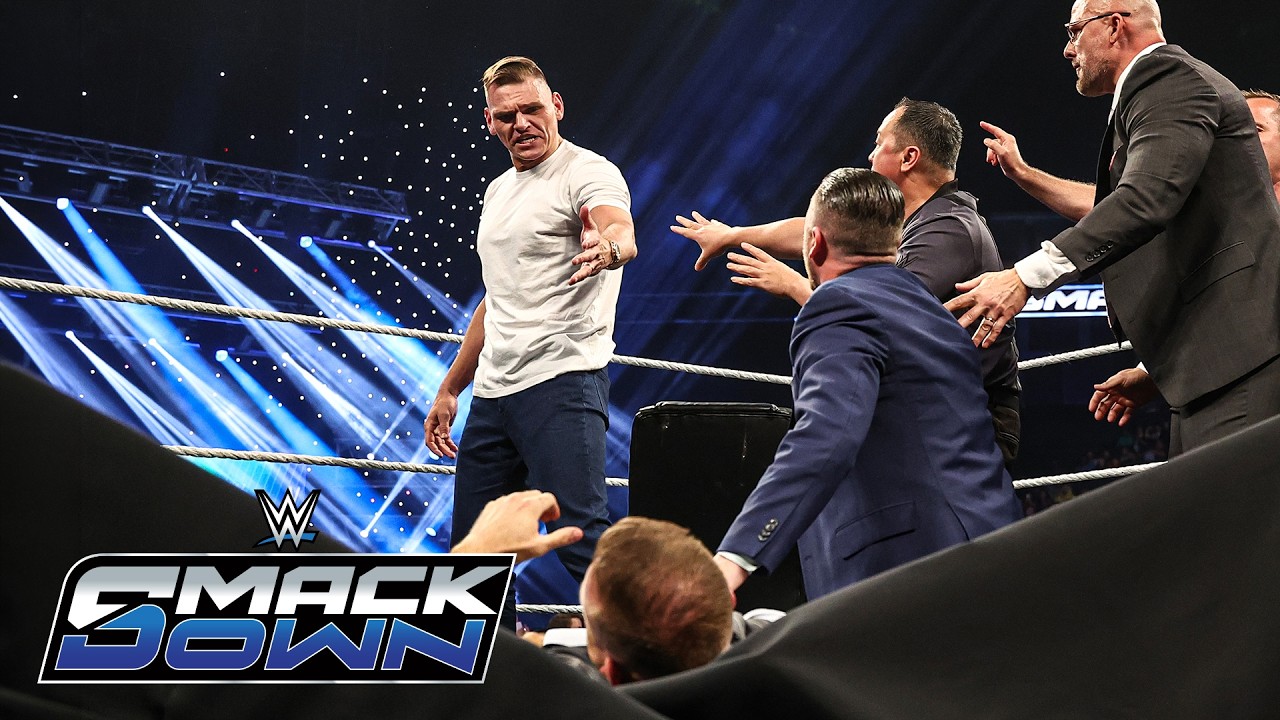
The qualifier took place on a SmackDown episode built primarily around SummerSlam story advancement. The show opened with Nick Aldis and Gunther signing a contract for their SummerSlam match, a segment that temporarily removed Aldis from his general-manager responsibilities and ended with Gunther putting him through a table. Brie Bella defeated Lainey Reid before Nikki Bella returned to help Brie and Paige against Fatal Influence, leading to a SummerSlam six-woman tag challenge.
Chelsea Green’s victory over Kiana James added the third interim-title entrant. CM Punk and Cody Rhodes then delivered a long verbal confrontation for their Undisputed WWE Championship match. Flair versus Jax followed that major promo segment. The show concluded with Finn Bálor defeating Damian Priest, Trick Williams and Royce Keys to earn a SummerSlam No. 1 contender’s match against Sami Zayn.
Within that lineup, Flair versus Jax served as the women’s division’s primary physical angle. Green’s qualifier delivered a clean result. The Charlotte match delivered conflict. That division of labor allowed WWE to advance two entrants while giving the second bout the more dramatic post-match image.
The episode’s venue, Oakland Arena, gave Jax and Flair a live setting with a major-show scale, but television production limited the match’s continuity. Jax’s entrance was not televised, and a commercial break interrupted her control period. ProWrestling.net’s review noted that the episode repeatedly placed commercials inside short matches. That criticism applies directly here. An 8:15 match cannot lose much uninterrupted time without becoming fragmented for television viewers.
The supplied WWE upload is a highlights package rather than the complete match. Its title identifies Flair’s qualification and Jade’s attack, and its edited runtime focuses on major near falls, the ringside arrival and the finishing sequence. The video therefore supports analysis of the visible key moments but should not be mistaken for a full bell-to-bell record. The official result and independent live coverage are necessary for match time, omitted entrance information and the television structure.
Commentary framed Jax as difficult to keep down, emphasized Flair’s resilience and repeatedly connected the match to the interim championship. The call became more urgent once Cargill’s group arrived. The strongest commentary contribution was the recognition that Flair was facing a four-on-one situation while still fighting through the numbers. The weakest element was unavoidable confusion created by the crowded ringside action: viewers had to track Jax, Flair, Jade, B-Fab, Michin and the referee in a short window.
The post-match camera priorities were clear. Flair’s official win announcement played over the image of damage rather than celebration. Jax’s anger remained visible. Jade’s music and group presentation framed her as the dominant personality. WWE did not allow the qualifying graphic to erase the conflict; it used the result as one piece of a larger composition.
Critical Assessment: What Worked
The match had a clear physical story
Flair and Jax did not need elaborate exposition. Jax’s size forced Charlotte to use distance and timing. Charlotte’s athleticism forced Jax to absorb repeated attacks. The sit-out powerbomb, leg drop, cross-body and Queen’s Boots all belonged to that central contrast.
Charlotte’s comeback protected her credibility
Flair fought off B-Fab and Michin, remained aware of Jax and landed the final significant move before the DQ. The booking made her look capable rather than rescued. She benefited from Cargill’s illegal attack, but she was not portrayed as asking for it.
Jade Cargill controlled the narrative
Cargill’s interference changed the result and the post-match image. She did not merely appear for a distraction. She acted, accepted the consequence and delivered Jaded. That decisiveness strengthened her heel presentation.
Nia Jax gained a legitimate grievance
The second disqualification turned bad luck into a pattern. Jax now has a stronger story than she would have received from a routine clean loss. Her complaint can drive future matches with Flair, Cargill, Pearce or the eventual interim champion.
The finish connected directly to the ladder stipulation
The attackers who corrupted normal qualifiers will operate in a no-disqualification environment at SummerSlam. The buildup is teaching viewers that legal chaos will favor the most prepared participant.
Critical Assessment: What Did Not Work
The second DQ repeated the same device too quickly
Using interference in one Jax qualifier created controversy. Repeating it seven days later created symmetry, but also predictability. Viewers could reasonably feel that the tournament rewarded outside attackers more than winning wrestlers.
The match did not receive enough uninterrupted television time
An 8:15 match with a commercial break and an untelevised entrance had limited room to build. The highlight package contains the central action, but the live broadcast’s fragmentation reduced the chance for sustained crowd investment.
The authority structure looked unprepared
After the July 17 interference, WWE had every reason to anticipate retaliation. Allowing Jade, B-Fab and Michin to walk to ringside without security or a ringside ban made the officials appear passive. Pearce’s later refusal to help Jax addressed the bracket but not the failure to protect the qualifier.
The finish withheld the most interesting answer
Flair had escaped the Samoan Drop and landed the Queen’s Boot. The audience was about to learn whether Jax could survive or whether Charlotte could complete the comeback. Cargill’s punch stopped the match at its peak. That is effective cliffhanger booking, but unsatisfying match resolution.
The post-match numbers advantage risks becoming repetitive
Jade’s group gives her a strong identity, but every segment cannot end with B-Fab and Michin creating the same three-on-one attack. Flair already showed she can temporarily defeat them. Future angles need variation: strategy, betrayal, a ringside ban, a reluctant alliance or a direct Jade–Charlotte confrontation.
Audience and Review Response
Immediate reaction was mixed in the way overbooked television finishes often produce. Some viewers appreciated the continuity between the July 17 and July 24 qualifiers and the escalation of Flair versus Cargill. Others focused on Jax being denied twice and the absence of a clean finish. Cagematch users had submitted a modest early rating for the match by the research cutoff, but such numbers were based on a limited and self-selecting sample and should not be treated as representative of the entire audience.
ProWrestling.net’s live review treated the finish with humor and criticized the episode’s commercial interruptions. Cageside Seats emphasized the broader storyline movement: Flair qualified after interference from Jade and her allies, while the show moved several SummerSlam programs forward. Neither response suggests the match itself was being discussed as a major in-ring classic. The attention was on booking and consequences.
That is an appropriate assessment. The match was not structured to become a definitive Flair–Jax performance. It was a television chapter designed to send Charlotte to SummerSlam and intensify the Cargill feud. Judged as a self-contained contest, it was incomplete. Judged as a segment, it was efficient and consequential.
The live crowd’s audible reactions rose for Flair’s strength display, the late near falls and Cargill’s arrival. The available clip does not support claims about specific chants beyond what can be heard, and no reliable attendance figure was confirmed for this article. The responsible conclusion is limited: the audience responded to the major physical feats and the interference, while the production centered those moments.
Business and Broadcast Context
SummerSlam 2026 is scheduled as a two-night stadium event on Saturday, August 1, and Sunday, August 2 at U.S. Bank Stadium in Minneapolis. WWE announced the location in partnership with Minnesota Sports and Events. The event is scheduled to stream on the ESPN App with an ESPN Unlimited plan in the United States and on Netflix internationally, according to WWE’s current event pages.
The interim-title ladder match gives WWE a way to keep a major women’s championship visible on one of its largest annual events despite Ripley’s injury. Multi-person ladder matches are also efficient card construction. They place several recognizable wrestlers in one bout, create highlight-friendly visuals and avoid requiring four separate singles programs.
That efficiency has a cost. Fightful’s report on changed creative plans stated that WrestleVotes had learned a proposed Flair–Cargill singles match and a Women’s United States Championship defense for Stratton were among the ideas affected by Ripley’s injury. Because this information comes from reporting rather than an official WWE announcement, it should be treated as a description of discussed plans, not a cancelled advertised card.
If accurate, the report explains why the ladder match feels unusually dense. It combines people who may otherwise have occupied separate SummerSlam matches. Flair and Jade bring a singles rivalry. Stratton brings a championship program and a Minnesota home-state connection. Green brings her alliance with Stratton. The final qualifier brings either Giulia’s singles ambition or Legend’s partnership with Jax.
The broadcast strategy also matters. SmackDown airs on USA Network in the United States, while WWE’s international distribution increasingly uses Netflix. The official YouTube highlight extends the segment’s reach beyond the live broadcast, but edited highlights naturally prioritize the finish over complete pacing. That makes long-form written analysis valuable: it can distinguish the match’s internal structure from the upload’s promotional emphasis.
Sponsored • Adults 18+ Only
Explore an Adult Social or AI-Powered Option
The available destination may include an adult social, chat, dating or virtual AI service selected according to your region, device and provider availability.
The destination may vary. Review the provider’s identity, terms, subscription details and cancellation rules before registering.
What Happened After the Match?
The immediate post-match development was Cargill’s group attack and Jax’s anger. WWE then released a digital exclusive in which Jax complained to Adam Pearce about being denied twice. Pearce did not place her directly into the SummerSlam match. He announced Giulia versus Lash Legend as the final qualifier for the July 31 SmackDown.
That announcement confirms that WWE does not currently intend to add Jax as a sixth participant. The match remains advertised as a five-woman ladder match. It also confirms that Jax’s relationship with Legend is the most direct continuation of her story.
No later televised episode had occurred by the July 26 cutoff. Claims about the final entrant, SummerSlam winner or Ripley’s return would therefore be predictions rather than results. The article’s currentness ends with the announced July 31 qualifier and the four confirmed entrants.
The next SmackDown card also includes Damian Priest and R-Truth against the War Raiders. The final qualifier is likely to receive substantial attention because it completes a title match scheduled for the following weekend. WWE must also decide whether Flair and Cargill will appear in person, whether Jax will accompany Legend and whether Stratton and Green will continue presenting themselves as allies.
Sponsored • Adults 18+ Only
See Which Personalized Adult Offer Is Available
Continue to an adult-oriented entertainment option selected according to provider availability, which may include social discovery, chat, dating or a virtual AI experience.
The destination varies by device, region and provider. Registration, subscriptions or charges may apply.
What Could Happen Next?
Scenario 1: Giulia qualifies and the match becomes more individual
A Giulia victory would remove the clearest faction bridge to Jax. The field would contain four confirmed women with existing alliances or rivalries and one entrant whose primary claim is competitive. Giulia could enter as the wrestler least distracted by the Flair–Cargill feud and the Stratton–Green friendship.
That makes her a plausible winner even if WWE does not position her as the favorite. Ladder matches often reward the participant who remains outside the central rivalry. Giulia could strike through a late opening and climb while everyone else is focused on personal conflict.
Scenario 2: Lash Legend qualifies and Jax becomes a ringside factor
Legend’s victory would make outside involvement almost inevitable as a storyline question. Jax could accompany her, be barred from ringside or appear later. The alliance could give Legend an advantage until the championship creates tension. Jax may support her partner sincerely, but she could also believe the opportunity should have belonged to her.
A Legend victory would give the match two exceptional power wrestlers in Legend and Cargill. Their confrontation could become a central visual, allowing Flair, Stratton and Green to work around them.
Scenario 3: Flair and Cargill eliminate each other
This is the most straightforward route if WWE wants their singles rivalry to continue after SummerSlam. Charlotte and Jade can become so consumed with fighting that neither climbs. One could knock the other from a ladder, follow her to the floor and allow a third wrestler to win.
The finish would protect both from appearing inferior in the title chase, but it must avoid making the championship feel secondary. Their fight should create the opening, not occupy the entire closing sequence.
Scenario 4: Tiffany Stratton becomes a double champion
Stratton’s home-state connection and ladder-match history make this a natural possibility. “Tiffy Two Titles” was introduced on television. A victory would give WWE a marketable double champion and create multiple challengers across two titles.
The complication is scheduling. A double champion can elevate both belts or cause one to become inactive. WWE would need to define whether Stratton continues defending the Women’s United States Championship while carrying the interim world title.
Scenario 5: Chelsea Green steals the championship
Green is the field’s strongest opportunist. She can win while the favorites destroy one another. Such a result would generate immediate character material: Green celebrating an interim title as if she had conquered the division, opponents dismissing the victory, and Ripley eventually returning to confront a champion who survived through timing.
The risk is credibility. WWE would need to let Green defend successfully afterward. A purely comedic reign would weaken the interim concept.
Scenario 6: Jade Cargill wins and awaits Rhea Ripley
Cargill is the most direct choice if WWE wants the interim title to continue the Ripley rivalry. Jade lost to Ripley at WrestleMania and Clash in Italy. Winning at SummerSlam would let her insist that she reclaimed the division and force Ripley into a unification match.
A Jade victory could also deepen the Flair program. Charlotte may claim Jade needed B-Fab and Michin or used their rivalry to reach the belt. WWE could run Flair versus Jade before Ripley returns, with the interim title at stake.
Scenario 7: Charlotte Flair wins another championship
Flair is always credible in a major title match. An interim reign would create immediate discussion about how WWE counts it and whether Charlotte used Ripley’s absence to expand her record. The eventual Ripley match would have substantial history behind it.
The challenge is freshness. WWE would need to present a specific reason for another Flair reign, not rely solely on her résumé. Her friendship with Alexa Bliss, rivalry with Jade and responsibility for the first DQ provide material, but the reign would need a distinct identity.
Scenario 8: Nia Jax disrupts the match without entering it
Jax has the strongest motive to interfere. She can attack Flair and Jade for costing her opportunities. She can help Legend if Legend qualifies. She can target the belt and demand recognition. Because the match has no disqualification, her involvement would not automatically end it.
This scenario should be used carefully. If Jax determines the winner after being excluded, the authority structure will look even weaker. If she intervenes to settle a personal score and the remaining wrestlers still decide the title, the angle can work.
What the Result Means for Each Principal Wrestler
Charlotte Flair
Flair achieved the necessary result but lost the physical closing image. She enters SummerSlam with championship access and a revenge motive. Her challenge is to avoid letting Jade dictate her decisions.
Nia Jax
Jax is out of the match as currently advertised, but more protected than a clean loser. She has a documented grievance and a connection to the final qualifier through Lash Legend. Her next action may determine whether the two DQs become meaningful character development or disposable television.
Jade Cargill
Cargill strengthened her control over the feud. She qualified one week earlier because Flair attacked her, then qualified Flair by attacking back. She has shaped half the field through disqualification. SummerSlam tests whether that control survives a match where the same tactic no longer ends proceedings.
B-Fab and Michin
The group members remain important force multipliers. Flair fighting them off prevents them from appearing unbeatable, but their presence created the opening for Jade. Their SummerSlam status—permitted, barred or unannounced—could be a key stipulation detail.
Rhea Ripley
Ripley did not appear, yet the entire match revolved around her absence. Every qualifier is competing for a temporary claim connected to her title. The more intense the field becomes, the greater the anticipation for the champion’s eventual response.
Related Matches Worth Watching
- Jade Cargill vs. Nia Jax, SmackDown, July 17, 2026: The direct prequel. Flair’s interference gave Jade the DQ win and created the mirrored finish one week later.
- Rhea Ripley vs. Jade Cargill, WrestleMania 42: Ripley won the WWE Women’s Championship and established the title history behind the interim match.
- Rhea Ripley vs. Jade Cargill, Clash in Italy 2026: Ripley’s successful defense was her last televised match before the knee injury removed her from competition.
- Charlotte Flair vs. Nia Jax, Raw, August 30, 2021: A rough, physical non-title match that Jax won and that shaped perceptions of their rivalry.
- Charlotte Flair vs. Nia Jax, Raw, September 6, 2021: The title rematch in which Flair adjusted and retained.
- First Women’s Money in the Bank Ladder Match, June 18, 2017: Flair participated in WWE’s first main-roster women’s ladder match, which ended in controversy because of outside involvement.
- Women’s Money in the Bank rematch, SmackDown, June 27, 2017: The redo demonstrated WWE’s concern with legitimacy after a disputed ladder-match finish.
- NXT Women’s North American Championship Ladder Match, Battleground 2024: A useful example of WWE using a multi-woman ladder match to crown an inaugural champion.
Readers following the broader division can also explore our latest WWE match analysis, WWE championship histories and global professional-wrestling calendar.
Frequently Asked Questions
Who won Charlotte Flair vs. Nia Jax on July 24, 2026?
Charlotte Flair won by disqualification. Jade Cargill entered the ring and struck Flair in front of the referee, causing the bell to be called. The victory qualified Flair for the Interim WWE Women’s Championship Ladder Match at SummerSlam.
Why was Nia Jax disqualified if Jade Cargill attacked Charlotte Flair?
Jax was not personally disqualified for committing the illegal act. In professional-wrestling rules, an outside person attacking one competitor generally causes that competitor to win by disqualification because the opponent has benefited from illegal interference. Cargill attacked Flair, so Flair was awarded the match against Jax.
Did Charlotte Flair pin Nia Jax?
No. Flair did not pin or submit Jax. The match ended immediately after Cargill’s illegal strike. That fact is central to Jax’s complaint that she lost two qualifiers without being decisively defeated.
How long was Charlotte Flair vs. Nia Jax?
ProWrestling.net reported a match time of 8:15. The WWE YouTube upload is an edited highlights package and does not show the complete television presentation, including Jax’s entrance and all action around the commercial break.
Where did the match take place?
The match took place at Oakland Arena in Oakland, California, during the live July 24, 2026 episode of Friday Night SmackDown.
What was at stake?
The winner earned a place in the five-woman ladder match at SummerSlam to crown an Interim WWE Women’s Champion while Rhea Ripley recovers from a knee injury.
Why is WWE crowning an interim women’s champion?
Rhea Ripley has a slight meniscus tear and does not have a firm return timetable. WWE chose to keep her recognized reign intact while creating an interim champion who can represent and defend the title during her absence.
Is Rhea Ripley still the WWE Women’s Champion?
Yes, as of the July 26, 2026 research cutoff, WWE lists Ripley as WWE Women’s Champion. The SummerSlam winner will be the interim champion rather than a replacement created through a vacancy.
Who has qualified for the Interim WWE Women’s Championship Ladder Match?
Charlotte Flair, Jade Cargill, Tiffany Stratton and Chelsea Green have qualified. The fifth entrant will be the winner of Giulia versus Lash Legend on the July 31 SmackDown.
Why did Jade Cargill attack Charlotte Flair?
The attack continued their current rivalry. Flair interfered in Cargill’s qualifier against Nia Jax on July 17 and had also positioned herself as Alexa Bliss’s protector after Jade targeted Bliss’s arm. Jade retaliated in Oakland with B-Fab and Michin.
Did Jade Cargill help Charlotte Flair qualify intentionally?
Cargill’s punch directly caused Flair’s qualification, but WWE had not officially confirmed by the research cutoff whether Jade’s character intended that competitive consequence or simply prioritized attacking Flair. It is reasonable analysis that Jade may want direct access to Charlotte in a no-disqualification ladder match, but that motive should not be stated as confirmed fact.
Why is Nia Jax not in the SummerSlam ladder match?
Jax lost two qualifiers by disqualification. She asked Adam Pearce for another opportunity after the second loss, but Pearce declined and announced Giulia versus Lash Legend as the final qualifier.
Could Nia Jax still appear at SummerSlam?
She could appear as part of the storyline, particularly if Lash Legend qualifies, but she was not an announced participant as of July 26. Any claim that she will interfere or be added would be a prediction, not confirmed information.
When and where is SummerSlam 2026?
SummerSlam is scheduled for Saturday, August 1, and Sunday, August 2, 2026, at U.S. Bank Stadium in Minneapolis, Minnesota. WWE currently advertises a 6 p.m. ET start for the streaming presentation.
Where can viewers watch SummerSlam 2026?
WWE advertises SummerSlam on the ESPN App with an ESPN Unlimited plan in the United States and on Netflix internationally. Availability can vary by market, so viewers should check WWE’s official “How to Watch” information for their location.
Has Charlotte Flair competed in women’s ladder matches before?
Yes. Flair participated in the first women’s Money in the Bank ladder match in 2017 and the subsequent SmackDown rematch. Her experience gives her a strategic advantage in the SummerSlam field.
Could Tiffany Stratton become a double champion?
Yes. Stratton is the reigning Women’s United States Champion and is confirmed for the interim-title ladder match. If she retrieves the interim championship at SummerSlam, she would hold both titles unless WWE announces a change before or after the event.
What happens when Rhea Ripley returns?
The logical outcome is a match between Ripley and the interim champion to determine an undisputed WWE Women’s Champion. WWE had not announced the date or exact format of such a match by the research cutoff.
Final Thoughts
Charlotte Flair versus Nia Jax succeeded because its consequences were larger than its runtime. Flair advanced to SummerSlam. Jade Cargill took physical control of their rivalry. Nia Jax became the division’s most justified complainer. Rhea Ripley’s absence continued to shape every decision without requiring the injured champion to appear.
As a match, it was a compact power contest with a coherent structure and an incomplete ending. Jax used size and impact to deny Flair’s usual dominance. Charlotte survived, adjusted and appeared close to a decisive opportunity. The interference stopped the competitive story before it could answer its most interesting question. That makes the bout less satisfying as a standalone match than as a chapter in a larger program.
As booking, the finish accomplished several objectives at once. It protected Jax from a pinfall, gave Flair the necessary qualification, intensified Cargill’s heel presentation and created a visual link to the no-disqualification environment of the ladder match. The repetition of the previous week’s DQ was clever in symmetry but risky in execution. Two consecutive matches rewarded the person who was attacked and punished Jax for other people’s hostility.
The value of that choice will be judged by the follow-up. If Jax’s complaint leads to meaningful action, the double disqualification becomes character development. If Flair and Cargill use SummerSlam to advance toward a major singles match, the interference becomes escalation. If the interim champion establishes a credible reign before Ripley returns, the emergency ladder match becomes a productive new chapter for the division.
The weakest possible outcome would be for the story to forget its own complications. Jax cannot simply disappear. B-Fab and Michin cannot repeat the same attack indefinitely. The interim designation cannot become decorative language. WWE has created specific questions and should answer them: who truly controls the division, who can win without normal rules, and what does a temporary champion owe the recognized titleholder?
The strongest possible outcome is a SummerSlam match in which each wrestler’s behavior reflects the build. Flair should struggle between revenge and championship discipline. Jade should attempt to control the field through power and allies. Stratton should use her ladder experience and chase double gold. Green should wait for the opening everyone else creates. Giulia or Legend should change the match’s balance. Jax should remain a threat even from outside the official field.
Charlotte Flair officially won in Oakland, but Jade Cargill authored the ending. That difference is the story. Flair owns the place in the ladder match. Jade owns the provocation. Nia owns the grievance. SummerSlam will determine which of those forms of power matters when the bell rings and disqualification is no longer available to stop the fight.
Research cutoff and last updated: July 26, 2026, 12:00 CEST.
Sponsored • Adults 18+ Only
Choose Your Next Online Social Experience
Explore a selected adult-oriented platform and review its available profile, messaging or discovery features before deciding whether to create an account.
Access and features depend on the provider, device and location. Registration, identity checks or payment may apply.
Affiliate Disclosure: This feature contains advertising and may include sponsored or affiliate links. We may earn a commission when readers click, register, or purchase through selected offers, at no additional cost to the reader. Some advertised services are intended exclusively for adults aged 18 or over.